


Why Teething Toys Wear Out Fast—and How We Fix Cleaning, Storage, and Replacement
If you have ever pulled a teether out of a diaper bag or drying rack only to find it sticky, cloudy, nicked, or smelling a little off, you know how quickly a baby's favorite chew toy can go downhill. Babies gnaw on teethers constantly, drop them on every surface imaginable, and move from gentle gumming to much harder chewing faster than we expect, so figuring out why cleaning teething toys and everyday safe teething toys routines run into trouble—and how small fixes with drying, storing, and replacing keep them going—saves a lot of daily hassle.

Why Teething Toys Go Bad: Common Mix-Ups Behind Wear and Grime
When a teether looks rough after a few weeks instead of lasting through a stage, three everyday mix-ups usually sit behind it:
- Treating every teether like a baby bottle: Teethers are not all made of the same stuff—you see silicone, wood, natural rubber, and cooling or gel styles—yet boiling, steam-sterilizing, or running every piece through a hot dishwasher cycle can warp, swell, crack, or dry out materials and multi-part designs that were not built for repeated high heat.
- Putting damp teethers away too soon: Trapping leftover water inside a closed container, wet bag, or tight drawer creates a warm, damp spot where odors linger and mildew can show up.
- Overlooking daily friction and floor drops: A teether that gets chewed for hours a day takes real mechanical wear, and every drop onto a cafe floor, stroller wheel, or living room rug picks up dirt and grit that build up in grooves and edges.
How to Clean and Sanitize Teething Toys Safely Without Ruining Them
You do not need to break out the heavy-duty sterilizer every time a teether gets a little drool on it. Matching how you clean to what actually happened—and to what the toy is made of—keeps your routine sane and saves your teethers from getting zapped before their time.
Check the individual toy's care tag or listing first. Silicone teethers often tolerate mild soap and water well and sometimes allow dishwashing or sanitizing depending on the design, while wooden teethers usually want gentle wiping or quick hand care rather than soaking or high heat, and natural rubber or gel-filled pieces have their own heat and moisture limits. Before a brand-new teether goes into your baby's mouth for the first time, give it its initial wash or sanitizing pass according to that specific toy's instructions so packaging dust or factory residue is cleared out right from the start.
Once it is in regular rotation, keep everyday cleaning separate from occasional sanitizing:
- Everyday cleaning: After drooly play or a routine drop at home, wash with warm water and mild dish or baby soap, rinse well, and let the piece air-dry completely. When you need extra help cutting lingering odors, food oils, or mineral buildup on compatible surfaces, simple household swaps like a diluted white vinegar rinse or a light baking soda wash work well—just rinse thoroughly with clean water afterward and skip anything harsh or soak-heavy on wood or sensitive finishes unless the maker allows it.
- Targeted sanitizing: Save sanitizing for specific moments—such as first-time use, after illness, or when the toy has been exposed to heavily soiled surfaces—and stick to a sanitizing method that fits that specific product.
If you are out and a teether hits the floor, set it aside until you can clean it properly rather than handing it straight back.
Everyday Checks, Storage Habits, and When to Replace a Teether
Washing and sanitizing only cover half the job; the other half is deciding whether a teether is still in good shape to go back in your baby's mouth.
Give every teether a quick look before handing it over. Check around ridges, tips, and any joined or textured areas for small tears, bitten-off bits, deep gouges, tacky patches, or unusual discoloration. Light surface marks from normal play are one thing, while cracked edges, loose parts, or a teether that feels sticky or damaged are clear signs to pull it out of rotation right away.
Storage habits help prevent avoidable wear between uses:
- Dry completely before putting away: Shake off extra water and lay pieces out in an airy spot so moisture evaporates instead of pooling in crevices before they go into storage.
- Keep storage dry and breathable: Store clean, dry teethers in a clean basket, open bin, or well-ventilated spot rather than sealing wet pieces inside an airtight box.
- Pack smart for outings: Bring a clean backup teether when heading out, and keep used or dropped items separate from clean ones until you can wash them.
- Replace when wear crosses the line: Do not wait for a teether to snap in half before replacing it. Once a piece shows tears, chewing damage, lingering odor that does not clear with proper care, or no longer matches where your child is at, retire it and move on.
Picking Safer, Easier-to-Clean Teething Options When It's Time to Replace
When an old teether wears out or you need a swap that fits your child's habits better, look at what they actually like to hold and chew, how easy the piece is to clean and dry, and the age guidance on the listing.
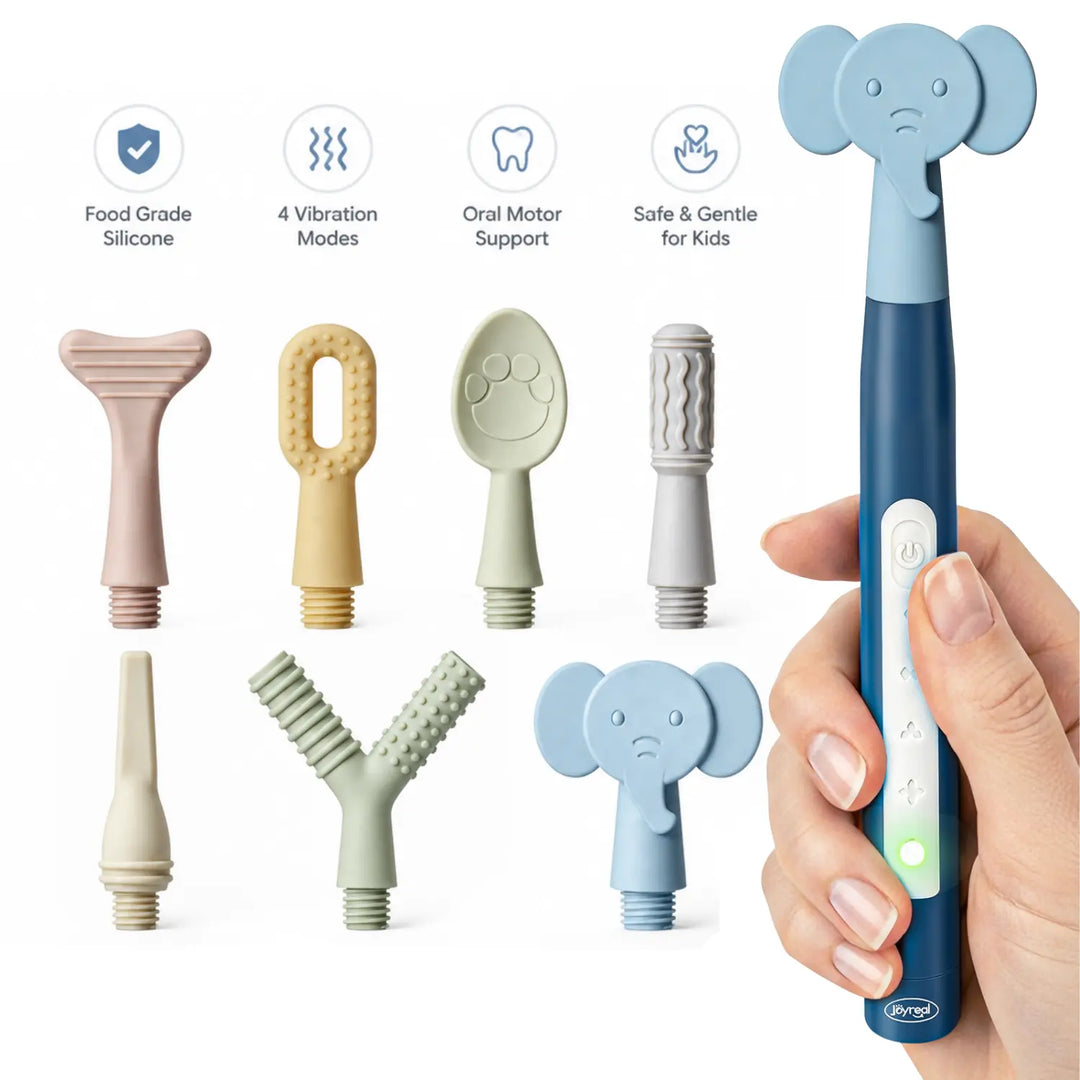
Lots of babies already love reaching for little cars and wheels during playtime, which makes silicone car teethers a fun way to mix chewing relief with rolling play when you want something fresh in the rotation. If your child needs more targeted oral motor and sensory input than a basic teether gives, an oral motor sensory tool brings multiple modes and tips for speech and feeding support—and both of these options come with a storage box or case so keeping pieces together once they are completely dry is built right into your storage setup, provided you check each listing's age and care notes first or browse the teething collection to see what else fits.

A Final Note
Caring for teethers does not have to mean constant sterilizing or replacing toys every week. A first wash before day one, a quick clean when needed, paying attention to what each material can handle, keeping dry storage simple, and checking for real wear will keep daily teething routines calm and practical.
Frequently Asked Questions
Do I need to sanitize a teething toy every single time it hits the floor?
Not necessarily. If a teether is approved for that sanitizing method and hit a dirty or high-risk spot, sanitizing makes sense, while routine drops or everyday play often call for a good wash with warm soapy water—and if you are out without a way to wash it properly, switching to a clean backup is the easiest move.
Why do silicone teethers sometimes smell or feel cloudy after washing or sanitizing?
Lingering soap film, food or formula oils, minerals from hard water, trapped moisture, or heat that is too strong for that particular item can leave silicone looking hazy or smelling off. Rinsing well, letting pieces dry all the way before putting them away, and sticking to what the item's care notes allow usually cuts down on repeat issues.
How often should I replace a teething toy if it still looks mostly fine?
There is no single calendar date that fits every baby or every teether. A lightweight teether chewed gently for a few weeks wears differently than one that gets gnawed hard all day, so check it regularly and swap it out whenever you spot cracks, nicks, worn-down areas, stubborn odor or cloudiness, or when your child outgrows how it fits their stage.


Guides populaires pour les parents
- Table d’activités DIY : guide pour fabriquer la vôtre
- Jouets en bois Montessori : choisissez des jouets d’éveil à la marche pour stimuler les premières compétences de bébé
- Panneaux d’activités Montessori par âge : des jouets sûrs pour développer les compétences des enfants de 10 mois à 4 ans
- Comment les différentes couleurs affectent-elles la surcharge sensorielle chez les enfants autistes ?
- L’arche de Noé : développer ses compétences en jouant
- Les meilleurs tableaux d’activités pour les enfants d’un an : guide des parents pour les jeux sensoriels
Article récent

Why Teething Toys Wear Out Fast—and How We Fix Cleaning, Storage, and Replacement
If you have ever pulled a teether out of a diaper bag or drying ra...

How to Choose Silicone Teething Toys: Material, Shape, Texture & Care
Your baby has started chewing on sleeves, rattles, and anything el...

Newborn Teething Toys: How to Choose for a 3- or 4-Month-Old
Your baby has started chewing on their hands and drooling more tha...

Busy Board vs. Busy Book: Which Is Better for your Toddler?
Looking for a screen-free toy that gives your toddler’s hands s...

Busy Board Not Working? Common Problems with Buttons, Lights & Switches
The light won’t turn on, a button doesn’t respond, or a switc...

How to Choose a Durable Busy Board: What Should Check Before Buying
Shopping for a busy board for your little one? With curious han...

Busy Board Sizes, Shapes & Setups Explained: A Guide to Common Types
Ever found a busy board that looks just right, then paused when y...

Is an LED Busy Board Right for Your Child? What to Consider Before Buying
If you're thinking about getting an LED busy board for your littl...

Best Christmas Gift Guide for 1-Year-Olds: Montessori Busy Boards
Christmas is coming, and you've got a one-year-old on your gift li...

Jouets musicaux en bois ou jouets musicaux électroniques : lesquels sont les meilleurs pour le jeu libre ?
Pour les parents qui souhaitent un environnement de jeu plus calme...