
How AAC Devices Help Autistic Individuals Manage Overwhelm

Autistic people can feel overwhelmed when their brains receive more input than they can comfortably process. This experience is often called overload and can be sensory, emotional, social, or cognitive. What overwhelms one autistic person may not affect another—needs vary widely.
1. Sensory overload
Many autistic people have heightened or reduced sensitivity to sensory input. Too much stimulation can quickly become overwhelming.
- Loud or sudden noises (sirens, crowds, appliances)
- Bright, flickering, or fluorescent lights
- Strong smells (perfume, cleaning products)
- Certain textures (clothing tags, rough fabrics, sticky hands)
- Being touched unexpectedly or for too long
2. Too much social interaction
Social situations often require rapid processing of unwritten rules.
- Large groups or crowded spaces
- Small talk or unstructured conversations
- Having to read facial expressions, tone, or body language
- Social pressure to “perform” or mask autistic traits
3. Unexpected change
Predictability helps many autistic people feel safe.
- Sudden schedule changes
- Last-minute plan cancellations
- Transitions without warning
- Unclear expectations
4. Emotional overload
Strong emotions—both negative and positive—can be overwhelming.
- Conflict or criticism
- Feeling misunderstood or invalidated
- Anxiety about social or sensory situations
- Excitement that becomes too intense
5. Cognitive overload
Processing too much information at once can exhaust the brain.
- Multitasking
- Too many instructions at once
- Fast-paced environments
- Time pressure or being rushed
6. Environmental chaos
Busy environments combine many triggers at once.
- Shopping malls
- Classrooms or open offices
- Public transport
- Parties or events
What overload can look like
Overwhelm doesn’t always look the same:
- Shutdowns (withdrawal, silence, exhaustion)
- Meltdowns (crying, yelling, pacing, needing to escape)
- Physical symptoms (headaches, nausea, fatigue)
- Difficulty speaking or thinking clearly
How to Help Reduce Overwhelm
- Provide quiet, low-stimulation spaces
- Give clear expectations and advance notice
- Allow breaks and alone time
- Use noise-canceling headphones, sunglasses, or comfort items
- Respect communication preferences and boundaries
Regulating Autistic Emotions Through External Support Tools

Emotional regulation does not always happen internally—and it doesn’t have to.
For many autistic individuals, the ability to manage emotions depends heavily on external support systems. When sensory input becomes overwhelming or emotions rise too quickly, expecting self-regulation through internal language or reasoning alone can place an unrealistic burden on the individual.
This is where external tools play a vital role.
AAC devices offer a way to offload emotional pressure by making thoughts, feelings, and needs easier to access from the outside. Instead of requiring someone to pause, reflect, and find the right words in the middle of distress, AAC allows emotions to be expressed as they are—clearly, safely, and without delay.
Often, emotional discomfort appears before it can be clearly understood. Visual emotion symbols, simple intensity scales, or body-based cues help transform a vague sense of unease into something recognizable. When feelings are externalized and named, they become less overwhelming and more manageable.
As emotions build, there is usually a practical need underneath—wanting quiet, needing a break, or asking for an activity to stop. AAC devices provide an immediate bridge between that need and the surrounding environment. With a single tap, messages like “too loud,” “I need a break,” or “I want to go” can be shared and understood.
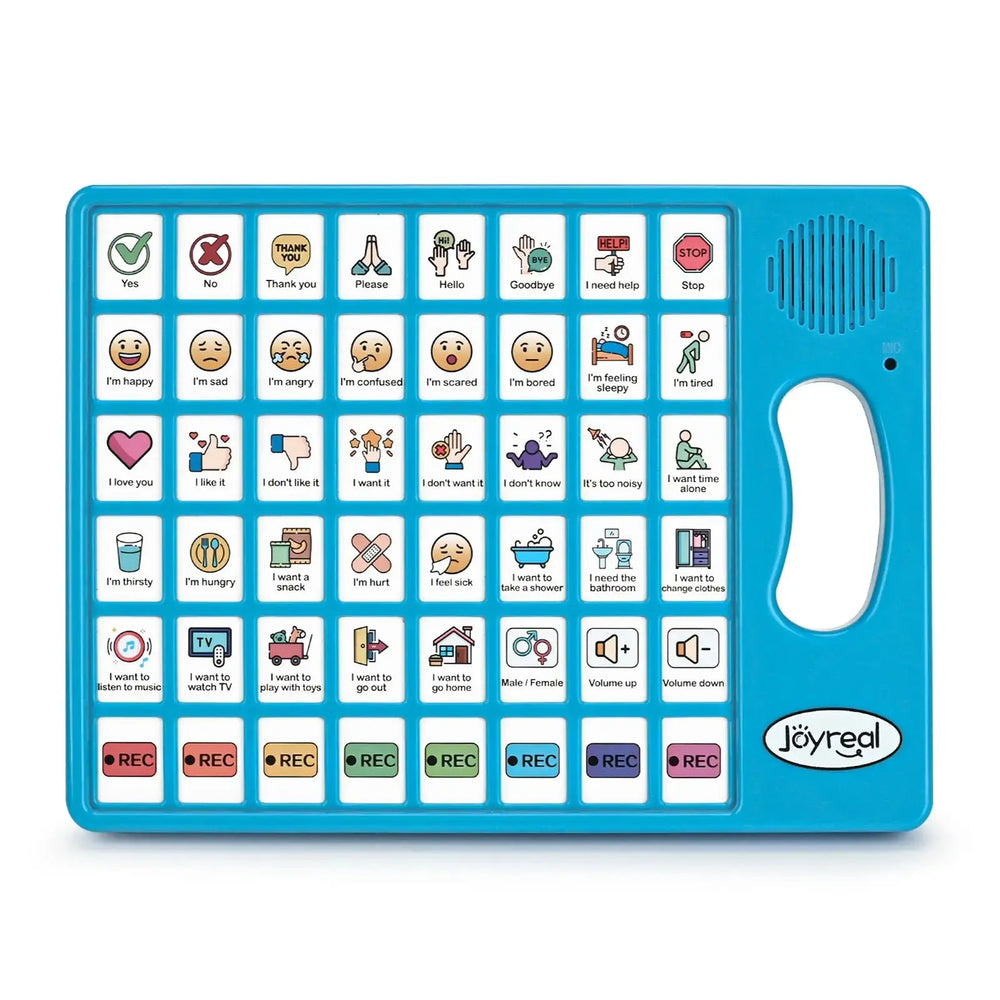
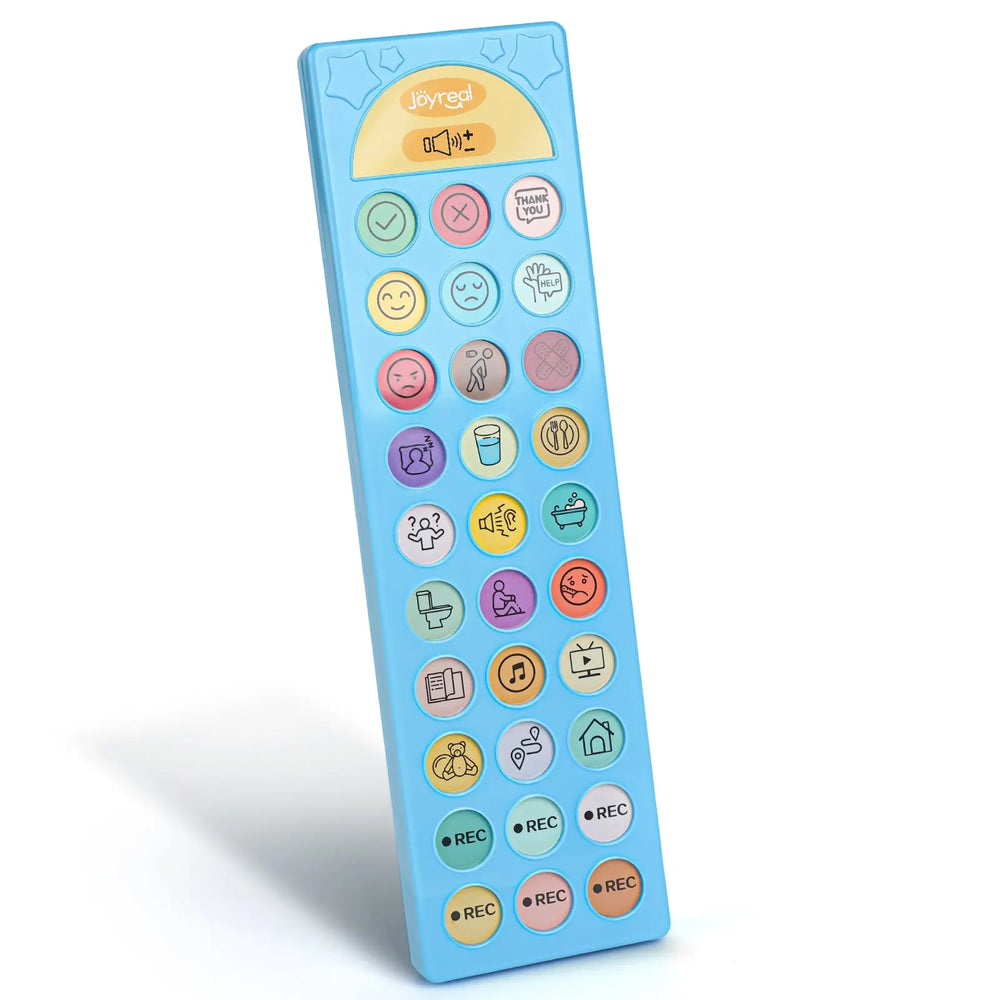
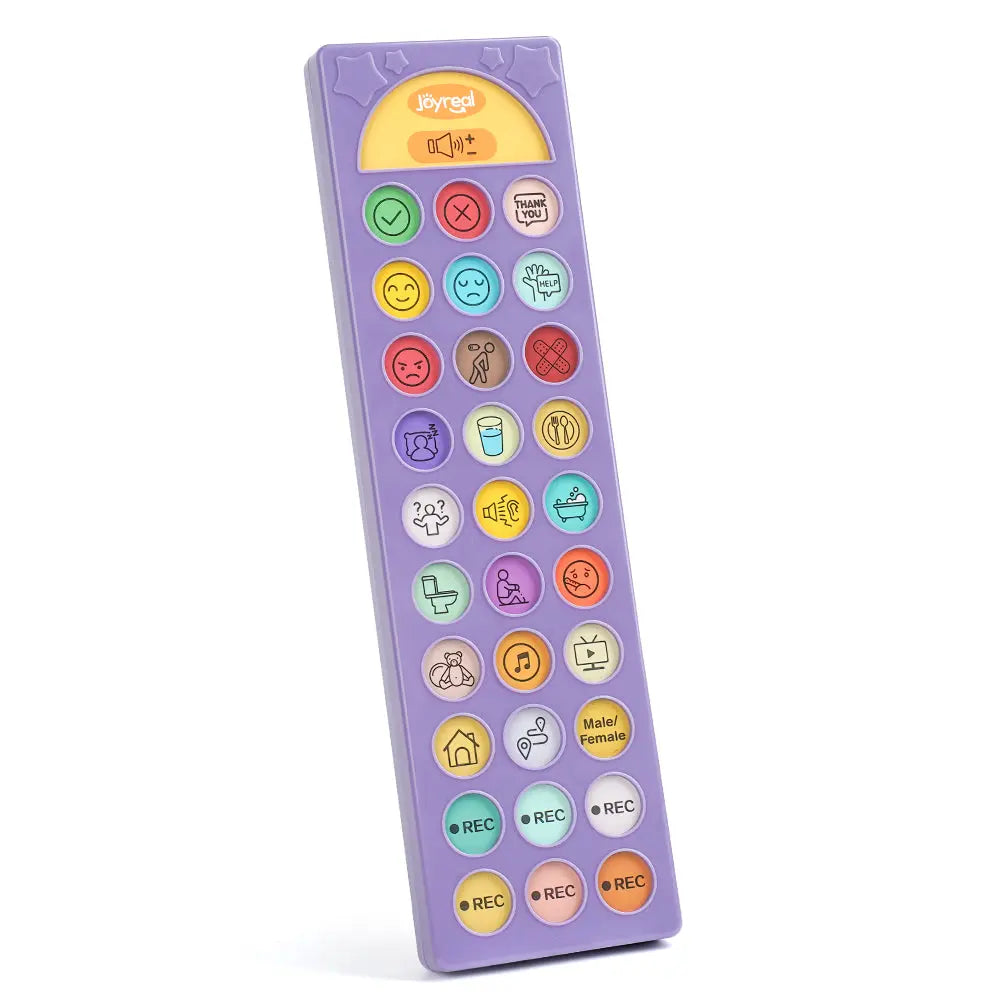
Tools such as the Joyreal Talking Aid are designed to support this exact moment. By offering simple, one-touch communication, they reduce the risk of emotional escalation and allow caregivers and educators to respond before distress turns into shutdown or meltdown.
During periods of heightened stress, spoken language often becomes unreliable. Emotions and speech draw on the same mental resources, which means verbal expression may fade just when it is needed most. AAC reduces this load by shifting communication from speech to visual or touch-based interaction.
This is not a substitute for emotional growth—it is a support for it.
By relying on external tools to regulate emotions, autistic individuals are not avoiding self-regulation; they are accessing regulation through a system that matches how their nervous system works. When internal language falls away, communication continues—and emotional safety is preserved.
Why the Joyreal Communication Device Fits Emotional Regulation Needs

Not all AAC tools are equally suited for emotional support. The Joyreal aac communication device is designed with simplicity, clarity, and speed, which are critical during emotional overload.
Key advantages for emotional regulation
- Intuitive visual layout that reduces cognitive demand
- Quick access to emotion and need-based phrases
- Reliable voice output for immediate understanding
- Portable and durable for daily use
As an aac device for autism, Joyreal is especially effective in:
- Preventing meltdowns before escalation
- Supporting non-speaking and minimally speaking users
- Providing consistent emotional safety across environments
The Joyreal talking aid functions not just as a communication tool, but as an emotional bridge between the autistic individual and their environment.
Stage 4: Building Emotional Safety Over Time
Repeated AAC use builds a predictable emotional script:
- “I can express discomfort”
- “I will be understood”
- “I have choices”
- “I am allowed to pause or exit”
Over time, this reduces:
- Frequency and intensity of meltdowns
- Anxiety around communication
- Behavioral distress linked to frustration
AAC becomes a trusted emotional resource, not just a device.
Common Myths About AAC and Emotional Support
- ❌ “AAC will stop speech development”
✅ Evidence shows AAC often supports language growth and self-regulation. - ❌ “They should calm down first”
✅ Expression is often what creates calm. - ❌ “AAC is only for non-speaking people”
✅ AAC is most valuable when speech is unavailable, not absent.
Key Takeaway
Autistic emotional overwhelm is rarely about “too much emotion.”
It is about too little accessible communication at the wrong moment.
By using a deconstruction approach, we see how AAC devices—especially thoughtfully designed tools like the joyreal communication device—help autistic individuals:
- Identify emotions
- Express needs
- Reduce cognitive load
- Build long-term emotional safety
AAC does not replace speech.
It protects dignity, prevents distress, and restores control.

Popular Guides for Parents
- DIY Busy Board: A Guide to Making Your Own
- Montessori Wooden Toys: Choose Baby Walking Toys to Boost Early Skills
- Montessori Busy Boards by Age: Safe, Skill-Building Toys for 10 Months to 4 Years
- How Do Different Colors Affect Sensory Overload in Autistic Children?
- Noah’s Ark Toy: Building Skills Through Play
- Best Busy Boards for 1 Year Old: A Parent’s Guide to Sensory Play
Recent Post

Wooden Musical Toys vs Electronic Music Toys: Which Is Better for Open-Ended Play?
For parents who want a calmer play environment, the choice between...

10 Simple Parent-Child Music Games Using a Toddler Drum Set
A toddler drum set can become much more than a noisy toy. With a fe...

Noah’s Ark Activities for Sunday School and Preschool
A Noah’s Ark toy can turn a familiar Bible story into a hands-on ac...

Noah’s Ark Toy Gift Guide: What Should Parents Check Before Buying?
A noah’s ark toy can be a thoughtful birthday, baptism, Christmas, ...

Can a Noah’s Ark Toy Be Used for Science and Nature Play?
Yes. A noah’s ark toy can be used as a starting point for simple sc...

How Can AAC Help a Child Communicate Pain, Illness, or Discomfort?
A child who cannot reliably use speech may still notice pain, illne...

How to Model AAC During Play Without Pressuring Your Child
For many children, play is one of the most comfortable places to pr...

How Can Parents Help a Child Use AAC at School and Home?
How Can Parents Help a Child Use AAC at School and Home? Children w...

AAC for Siblings and Playdates: Helping Children Join Social Play
Children do not need to use speech to take part in sibling play or ...

How to Teach Independent Play With a Busy Board Without Overhelping
Independent play does not usually begin with a parent stepping away...