
When Are Busy Boards Not Enough for Autism?
For many autistic children — especially those who are non-verbal or minimally verbal — communication doesn’t start with words.
It starts with regulation, safety, and connection.
That’s why tools like montessori busy boards are often one of the first things parents try. And for good reason — they do help.
But at a certain point, families notice a gap:
My child is calmer… but still can’t tell me what they need.
That’s the moment when a communication device for non-verbal autism becomes not a replacement — but a natural next step.

What Busy Boards Do Help With
Busy boards are not “just toys.” Used intentionally, they can be powerful regulation tools for autistic toddlers and young children.
1. Emotional Regulation Through Hands-On Play
Busy boards provide:
- Repetitive, predictable actions
- Clear cause-and-effect (switch on/off, zip/unzip)
- Sensory input without overwhelming stimulation
For many autistic children, this kind of structured play helps lower anxiety and reduce sensory overload.
2. A Sense of Safety and Control
Busy boards allow children to:
- Choose what to touch
- Control the pace of interaction
- Engage independently
This sense of control builds emotional safety, which is often the foundation for all later learning — including communication.
Where Busy Boards Reach Their Limit
As helpful as they are, busy boards have a ceiling.
They support regulation, but not expression.
1. Busy Boards Can’t Express Needs
A child may be calm, focused, and engaged — but still unable to say:
- “I’m hungry”
- “I want help”
- “I don’t like this”
- “I need a break”
Busy boards do not give children a way to initiate communication with others.
2. Busy Boards Don’t Support Emotional Communication
Autistic children often feel emotions before they can understand or label them.
Without a communication system, emotions may come out as:
- Crying
- Meltdowns
- Withdrawal
- Aggressive behavior
Not because the child doesn’t want to communicate — but because they don’t have the tools.
Why AAC Is a Natural Extension — Not a “Replacement Toy”
A common misconception is that introducing an AAC device means moving away from play-based tools like busy boards.
In reality, AAC builds on the same principles.
AAC Supports What Busy Boards Prepare
Busy boards help children learn:
- Cause and effect
- Intentional action
- Interaction with objects
AAC simply adds meaning to those actions.
A press doesn’t just turn something on —
it says something.
AAC Turns Regulation Into Communication
With a communication device for non-verbal autism, a child can begin to express:
- Needs (“eat”, “help”, “stop”)
- Feelings (“sad”, “mad”, “happy”)
- Preferences (“more”, “all done”)
This doesn’t replace play.
It connects play to people.
Introducing Joyreal AAC: The Ideal Communication Tool for Non-Verbal Autism
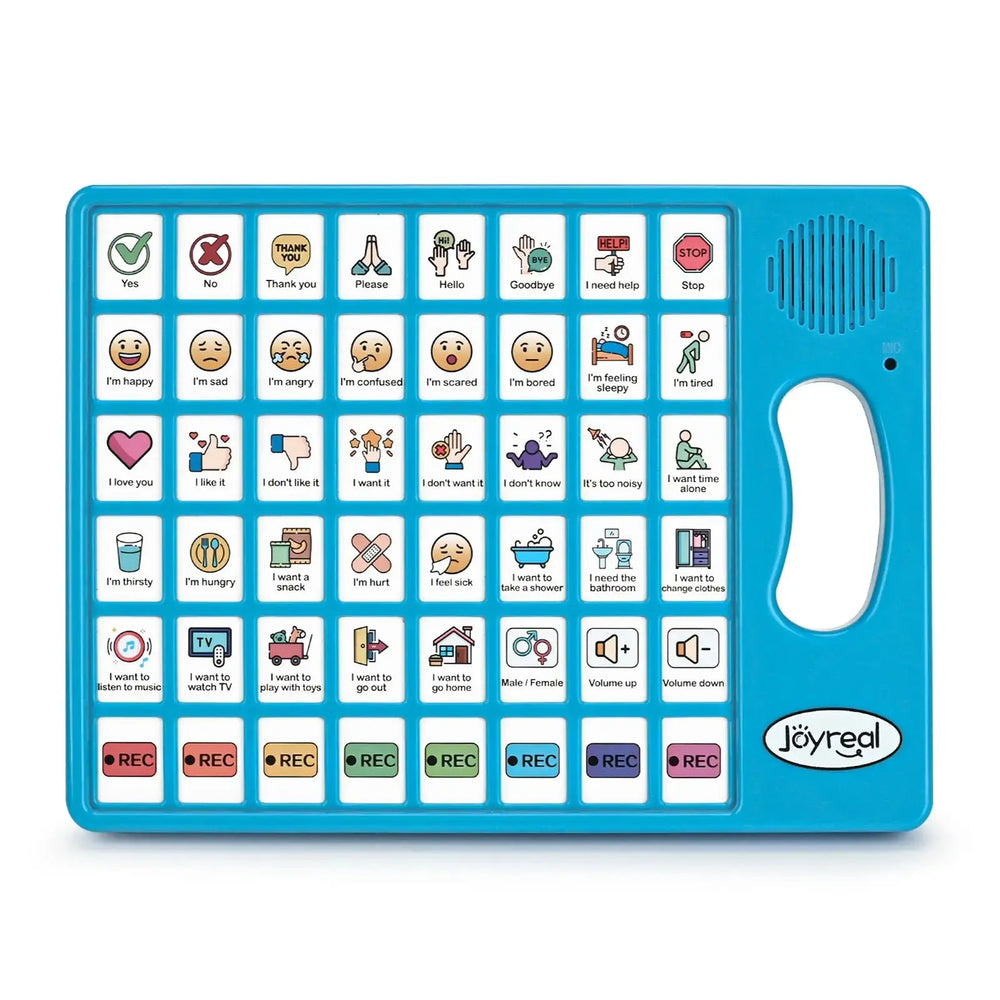
At Joyreal, we understand the importance of non-verbal communication tools for children with autism. That's why we created the Joyreal aac communication device, designed to help non-verbal children find their voice in a way that feels natural and intuitive.
Why Choose Joyreal AAC?
- User-Friendly Design: Tailored for toddlers and young children, the Joyreal AAC device is easy to use, with large, colorful buttons that allow your child to express needs and feelings.
- Customizable for Autism: Our AAC device includes pre-programmed symbols for everyday communication (e.g., food, feelings, activities), making it accessible for children with different communication needs.
- Emotional Connection: Unlike a busy board, which provides sensory feedback, the Joyreal AAC helps children communicate their emotional states, making it easier for parents to understand and respond to their child’s needs.
When busy boards have helped your child calm down and focus, the Joyreal AAC device helps them take the next step — expressing what they need.
AAC for Autistic Families: Why Early Matters
For families navigating autism or language delay, AAC is often misunderstood as a “last resort.”
But research and real-world experience show the opposite:
- AAC does not stop speech development
- AAC often reduces frustration and meltdowns
- AAC builds understanding of communication itself
Especially for non-verbal or minimally verbal children, AAC can be the first reliable way to be heard.

Emotional Regulation Starts With Being Understood
Many behavior challenges are actually communication breakdowns.
When a child can finally say:
- “Too loud”
- “I need space”
- “I don’t like that”
The world becomes less overwhelming.
AAC doesn’t rush children to talk.
It meets them where they are — and gives them a voice now.
Busy Boards + AAC: Better Together
The most supportive environments don’t choose between tools.
They layer them.
- Busy boards help children feel calm and grounded
- AAC helps children share what’s happening inside
Together, they support:
- Autistic families
- Children with language delays
- Emotional regulation
- AAC beginners just starting their journey
Final Thought
If a busy board helped your child feel safer and more regulated, that’s a success.
If your child is ready to express more — AAC isn’t a replacement.
It’s the next bridge toward connection.
FAQs
Q1: How is this different from a busy board?
- Busy boards help with calmness and focus. Joyreal AAC helps children communicate. Many families use both together — busy boards for regulation, AAC for expression.
Q2: Does using AAC delay speech?
- No. AAC does not stop speech development. In many cases, it reduces frustration and supports language growth by helping children understand how communication works.
Q3: When should I start using AAC?
- You can start as soon as communication challenges appear. Early use helps children feel understood and reduces communication-related meltdowns.
Q4: Will this help if my child is non-verbal?
- Yes. Joyreal AAC is designed as a non verbal communication tool that helps children express basic needs, feelings, and choices — even if they don’t use spoken words yet.


Popular Guides for Parents
- DIY Busy Board: A Guide to Making Your Own
- Montessori Wooden Toys: Choose Baby Walking Toys to Boost Early Skills
- Montessori Busy Boards by Age: Safe, Skill-Building Toys for 10 Months to 4 Years
- How Do Different Colors Affect Sensory Overload in Autistic Children?
- Noah’s Ark Toy: Building Skills Through Play
- Best Busy Boards for 1 Year Old: A Parent’s Guide to Sensory Play
Recent Post

Wooden Musical Toys vs Electronic Music Toys: Which Is Better for Open-Ended Play?
For parents who want a calmer play environment, the choice between...

10 Simple Parent-Child Music Games Using a Toddler Drum Set
A toddler drum set can become much more than a noisy toy. With a fe...

Noah’s Ark Activities for Sunday School and Preschool
A Noah’s Ark toy can turn a familiar Bible story into a hands-on ac...

Noah’s Ark Toy Gift Guide: What Should Parents Check Before Buying?
A noah’s ark toy can be a thoughtful birthday, baptism, Christmas, ...

Can a Noah’s Ark Toy Be Used for Science and Nature Play?
Yes. A noah’s ark toy can be used as a starting point for simple sc...

How Can AAC Help a Child Communicate Pain, Illness, or Discomfort?
A child who cannot reliably use speech may still notice pain, illne...

How to Model AAC During Play Without Pressuring Your Child
For many children, play is one of the most comfortable places to pr...

How Can Parents Help a Child Use AAC at School and Home?
How Can Parents Help a Child Use AAC at School and Home? Children w...

AAC for Siblings and Playdates: Helping Children Join Social Play
Children do not need to use speech to take part in sibling play or ...

How to Teach Independent Play With a Busy Board Without Overhelping
Independent play does not usually begin with a parent stepping away...