
Autism in Canada: Why Cases Are Rising & Family Support
Autism diagnoses among children and youth in Canada have increased sharply over the past two decades, drawing more public attention to early screening, family support, school inclusion, and access to services. For many parents, the issue is not only statistical. It is personal: they are searching for early signs, assessment pathways, wait times, communication support, and practical resources that may help their child in daily life.
In September 2024, the Government of Canada released the Framework for Autism in Canada and Canada’s Autism Strategy, setting a national direction for autism-related policy, services, public awareness, data collection, and tools for Autistic people, families, caregivers, and service providers. The framework was developed under the Federal Framework for Autism Spectrum Disorder Act, which received Royal Assent in March 2023.

Autism in Canada: What the Data Shows
Autism, also known as autism spectrum disorder or ASD, is a lifelong neurodevelopmental condition. Autistic people may communicate, connect, learn, and process sensory information differently. Support needs vary widely, which is why Canadian autism policy increasingly emphasizes individualized and needs-based support rather than a one-size-fits-all approach.
Canadian public health data shows a significant increase in identified autism cases among children and youth. According to the Canadian Chronic Disease Surveillance System, autism prevalence estimates among children and youth rose from 1 in 714 in 2000–2001 to 1 in 44 in 2023–2024. The rate of newly identified autism cases also increased from 35 per 100,000 children and youth to 365 per 100,000 over the same period.
This rise has made questions such as “Why is autism on the rise in Canada?”, “What are the signs of autism in toddlers?”, “How does autism diagnosis work in Canada?”, and “What support is available for autistic children?” increasingly common among Canadian families.
Why Is Autism on the Rise in Canada?
The rise in autism identification does not necessarily mean autism itself is increasing at the exact same pace as diagnosis numbers. The Government of Canada notes that several factors may have contributed to the increase, including greater public awareness, expanded diagnostic criteria, and guidelines that promote earlier detection. The exact contribution of each factor remains unknown.
Several trends help explain why more children are being identified today.
First, parents, teachers, childcare providers, and healthcare professionals are more aware of autism than in previous decades. Families are more likely to notice developmental differences and seek assessment.
Second, autism is now better understood as a spectrum. Children with subtler traits, different communication profiles, or stronger masking behaviours may be more likely to receive assessment today than in the past.
Third, there is greater emphasis on early identification. Canadian data shows that the rate of newly identified autism cases is now highest among younger children aged 1 to 4, which reflects increased attention to early screening and support planning.
Finally, identification patterns differ across provinces and territories. In 2023–2024, prevalence estimates ranged from 1 in 75 in Saskatchewan to 1 in 34 in Prince Edward Island. Differences in data recording, healthcare access, and autism assessment processes may affect how autism is identified across Canada.
What This Means for Canadian Families
For families, rising autism identification often leads to practical questions: How long will an autism assessment take? What services are publicly funded? Will the school provide support? What can parents do while waiting?
These questions are central to the Framework for Autism in Canada, which identifies five priority areas: screening, diagnosis and services; economic inclusion; data collection, public health surveillance and research; public awareness, understanding and acceptance; and tools and resources.
For children, the first priority — screening, diagnosis, and services — is especially important. Early concerns may include delayed speech, limited response to name, sensory sensitivities, repetitive behaviours, difficulty with transitions, or challenges in social communication. These signs do not automatically mean a child is autistic, but they may be a reason for families to speak with a healthcare provider or seek an autism assessment.
The framework also recognizes that autism services can vary across provinces and territories, since most health, education, disability, and social supports are delivered locally. This means a family’s experience in Ontario, British Columbia, Alberta, Quebec, or Atlantic Canada may differ significantly.

What Is Canada Doing About Autism?
The Government of Canada states that the national framework and Canada’s Autism Strategy were both released on September 26, 2024. The framework provides a common direction for autism work across sectors, while the strategy is intended to help implement autism priorities with partners over several years.
In March 2025, the Government of Canada also announced more than $6.3 million over five years for the Sinneave Family Foundation to establish and lead the new National Autism Network, in partnership with Autism Alliance of Canada. The network is intended to bring together autism organizations, families, caregivers, stakeholders, and people with lived experience to address priorities identified in the framework and strategy.
These actions suggest that autism is increasingly being treated as a national public health, family support, and inclusion issue — not only as an individual diagnosis.
What Is the Most Autistic Friendly Country?
Another common search question is: “What is the most autistic friendly country?”
There is no single official answer. A country may be considered more autism-friendly depending on access to diagnosis, inclusive education, therapy availability, disability benefits, caregiver support, public acceptance, sensory-aware environments, communication access, and services across the lifespan.
For families, a more useful question may be: What makes a country, province, school, or community autism-friendly? An autism-friendly environment is one where children can access timely diagnosis, inclusive education, communication support, trained professionals, practical resources, and public understanding.
Canada has taken important steps through its national autism framework, autism strategy, public health monitoring, and the National Autism Network. However, families may still face long wait times, inconsistent funding, regional service gaps, and barriers related to income, language, geography, or cultural background.
Practical Tools That May Support Autistic Children
While policy and diagnosis matter, many families also need practical tools for daily life. Support for autistic children may include visual schedules, sensory-friendly items, social stories, speech-language therapy, occupational therapy, school accommodations, communication boards, and speech output devices.
The Government of Canada notes that people on the autism spectrum may communicate verbally or non-verbally, and speech-language therapy may support skills such as asking for help, having a conversation, asking and answering questions, and using a speech output device.
For non-speaking or minimally speaking children, communication access can be especially important. A child may need a way to express basic needs such as “help,” “more,” “stop,” “break,” “yes,” “no,” “hungry,” “tired,” or “too loud.” These tools do not replace professional assessment or therapy, but they may work alongside family routines, school support, and speech-language guidance.
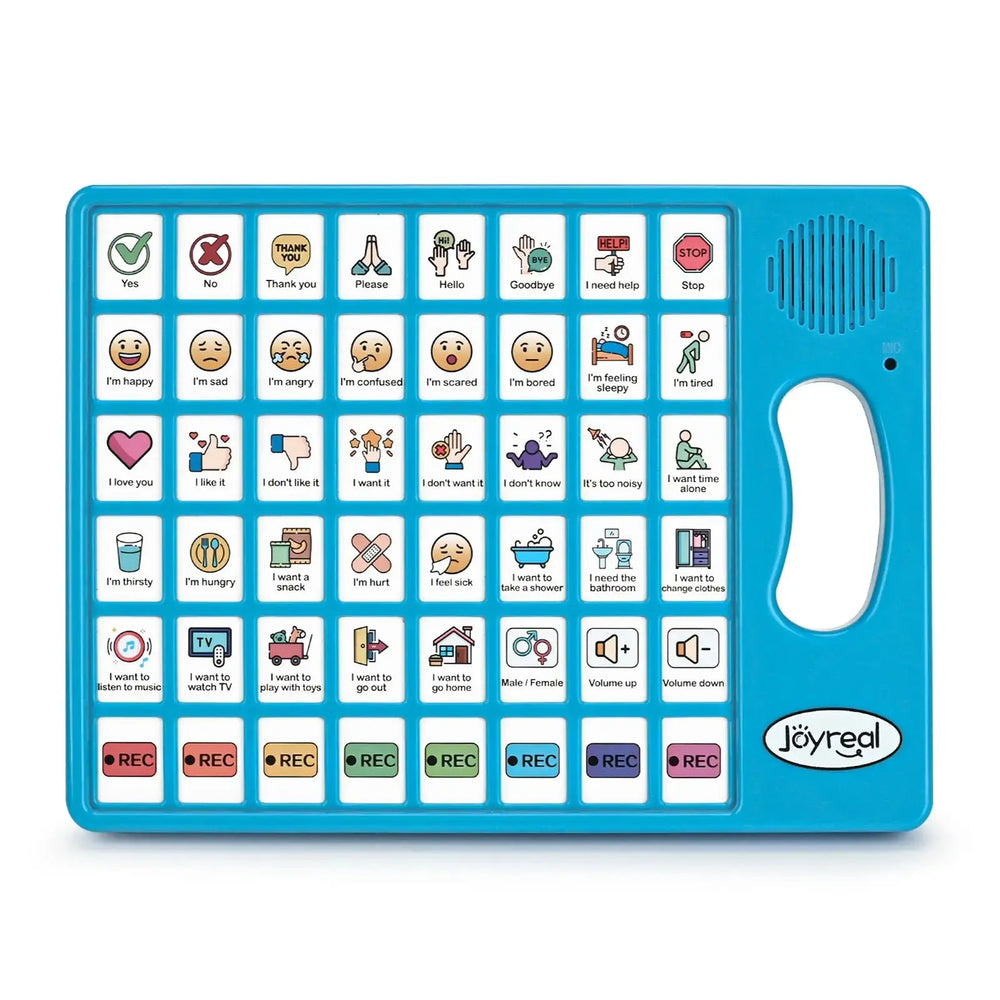
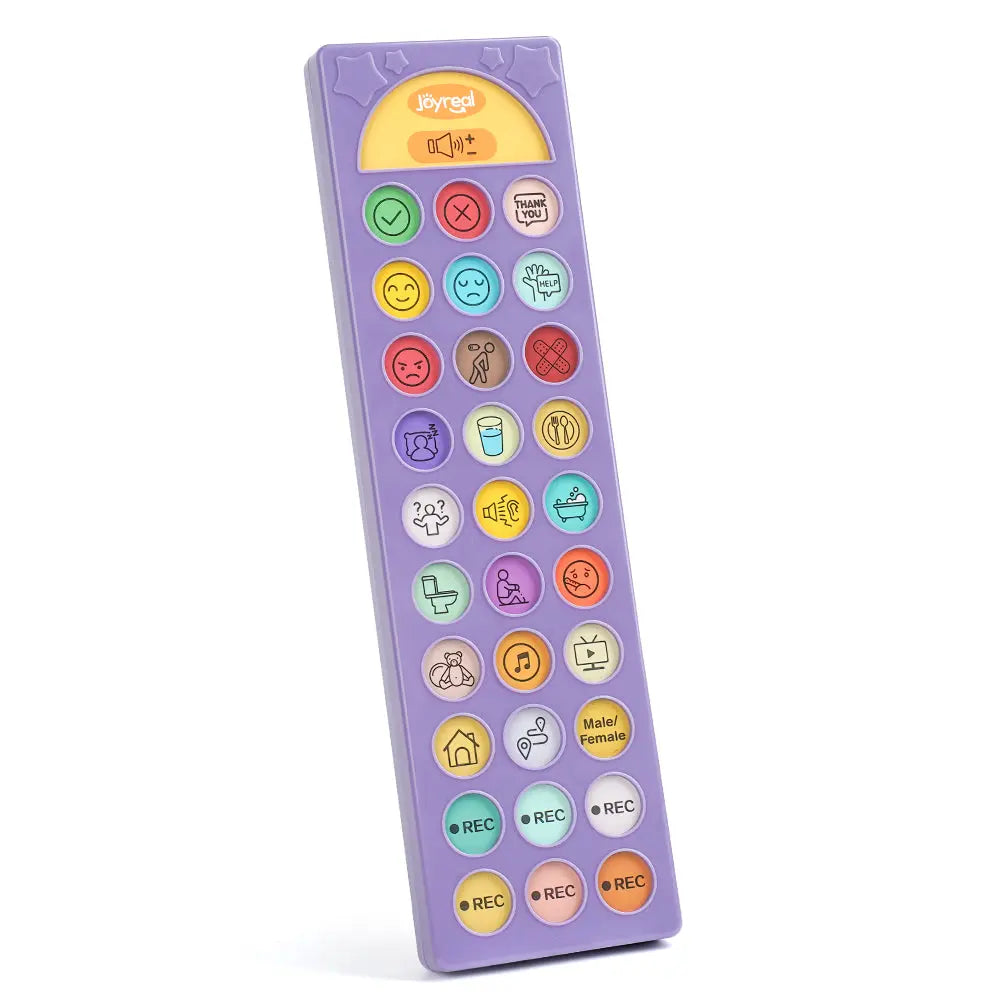
Some families may explore AAC, or augmentative and alternative communication, as part of home-based communication support. AAC can include picture cards, communication boards, symbol-based tools, speech-generating devices, and button-based talking tools.
For families searching for autism communication tools Canada, AAC device for autism Canada, speech device for autistic child, or communication device for non verbal child, screen-free AAC options such as Joyreal AAC may be one practical starting point. Joyreal describes its AAC communication board as a screen-free tool with picture-based talking buttons, programmable options, and voice output for non-speaking children, early communication, and daily routines.
The key point is not that one tool fits every child. Communication support should be chosen based on the child’s age, sensory needs, language environment, communication level, and professional recommendations.

Why Tools and Resources Matter
One of the five priority areas in Canada’s autism framework is tools and resources. This is important because families often need reliable, accessible, and up-to-date information while waiting for assessment, navigating school support, applying for funding, or learning how to support communication and sensory needs at home.
Autism support is not only about diagnosis. It is also about helping children participate more fully in daily life. Communication tools, sensory supports, caregiver education, school accommodations, and inclusive environments can all play a role in supporting autistic children and their families.
Conclusion
The question “Why is autism on the rise in Canada?” does not have a single simple answer. Canadian data shows that identified autism cases among children and youth have increased significantly over the past two decades, likely influenced by greater awareness, expanded diagnostic criteria, earlier detection, changing recognition patterns, and differences in health systems across provinces and territories.
The question “What is the most autistic friendly country?” also has no one-size-fits-all answer. The most autism-friendly environments are those that provide timely diagnosis, inclusive education, family support, communication access, practical resources, public acceptance, and lifelong services.
Canada’s national autism framework does not solve every challenge immediately. But it gives families, policymakers, educators, healthcare providers, and communities a shared direction: better data, better access, stronger inclusion, practical tools, and greater respect for autistic children and people across the country.


Popular Guides for Parents
- DIY Busy Board: A Guide to Making Your Own
- Montessori Wooden Toys: Choose Baby Walking Toys to Boost Early Skills
- Montessori Busy Boards by Age: Safe, Skill-Building Toys for 10 Months to 4 Years
- How Do Different Colors Affect Sensory Overload in Autistic Children?
- Noah’s Ark Toy: Building Skills Through Play
- Best Busy Boards for 1 Year Old: A Parent’s Guide to Sensory Play
Recent Post

Wooden Musical Toys vs Electronic Music Toys: Which Is Better for Open-Ended Play?
For parents who want a calmer play environment, the choice between...

10 Simple Parent-Child Music Games Using a Toddler Drum Set
A toddler drum set can become much more than a noisy toy. With a fe...

Noah’s Ark Activities for Sunday School and Preschool
A Noah’s Ark toy can turn a familiar Bible story into a hands-on ac...

Noah’s Ark Toy Gift Guide: What Should Parents Check Before Buying?
A noah’s ark toy can be a thoughtful birthday, baptism, Christmas, ...

Can a Noah’s Ark Toy Be Used for Science and Nature Play?
Yes. A noah’s ark toy can be used as a starting point for simple sc...

How Can AAC Help a Child Communicate Pain, Illness, or Discomfort?
A child who cannot reliably use speech may still notice pain, illne...

How to Model AAC During Play Without Pressuring Your Child
For many children, play is one of the most comfortable places to pr...

How Can Parents Help a Child Use AAC at School and Home?
How Can Parents Help a Child Use AAC at School and Home? Children w...

AAC for Siblings and Playdates: Helping Children Join Social Play
Children do not need to use speech to take part in sibling play or ...

How to Teach Independent Play With a Busy Board Without Overhelping
Independent play does not usually begin with a parent stepping away...