
How Can AAC Help a Child Communicate Pain, Illness, or Discomfort?
A child who cannot reliably use speech may still notice pain, illness, or discomfort clearly. They may show it through crying, withdrawal, changes in movement, unusual behavior, or refusing familiar activities. A reliable AAC communication device can give them another way to describe what they feel and ask for support.
AAC does not diagnose an illness or tell a parent what treatment is needed. It helps a child share information such as “hurt,” “tired,” “too hot,” “cold,” “sick,” “help,” or “I need a break.” Adults still need to observe the child and seek medical advice when symptoms are concerning.

How Can AAC Help a Child Describe Pain?
AAC can help a child identify that something feels wrong, point to a body area, describe the type of feeling, and indicate what support they want. A useful system may include words or messages such as:
- Hurt
- Head
- Stomach
- Ear
- Mouth
- Throat
- More
- Less
- Stop
- Help
- Doctor
- Medicine
- Rest
How Can a Child Communicate Different Types of Discomfort?
Use separate, familiar messages for different sensations instead of treating every change in behavior as “pain.” A child may be able to communicate more clearly when adults offer concrete choices.
Pain or injury
Useful messages may include “hurt,” “sharp,” “burn,” “ouch,” “sore,” or “show me.” The child may also need body-part words such as “knee,” “arm,” “head,” or “back.” Do not assume that the location of a gesture is the exact source of pain; use it as information to investigate carefully.
Fatigue or the need for rest
Being tired can look like avoidance, irritability, quietness, or loss of interest. Add messages such as “tired,” “sleep,” “rest,” “quiet,” or “break.” A child may need to communicate that they want to stop an activity without feeling pain.
Nausea or feeling sick
Some children may need ways to say “sick,” “stomach,” “throw up,” “dizzy,” or “no food.” These messages can be difficult to model in the moment, so introduce them during calm routines and review them periodically.
Hot, cold, wet, or uncomfortable
Temperature and clothing discomfort can affect participation. Consider messages such as “hot,” “cold,” “wet,” “itchy,” “tight,” “change,” “blanket,” or “different.” Offering two concrete options can be easier than asking a broad question.

How Should Parents Ask About Pain Without Leading the Child?
Use short, neutral questions and allow enough time for a response. Instead of asking, “Does your stomach hurt?” try, “Show me,” or offer a small set of choices: “head, stomach, or somewhere else?”
Watch how the child responds. They may use AAC, point, look toward a picture, move a body part, vocalize, or reject the choices. If the child does not answer, do not keep repeating the same question. Pause, observe, and try again later if it is safe.
How Can Families Practice These Messages Before a Child Is Ill?
Practice during calm moments, not only when the child is already distressed. During daily routines, model messages such as “hot,” “cold,” “tired,” “hurt,” “help,” and “break.” You can model without requiring the child to repeat you.
For example:
- Before putting on a coat, model “cold” and “warm.”
- After active play, model “tired,” “water,” or “rest.”
- When washing hands, model “hot,” “cold,” or “too much.”
- When a small bump happens, model “hurt” and “help.”
- During bedtime, model “quiet,” “sleep,” or “finished.”
This kind of AAC modeling at home helps communication partners become familiar with the system before a stressful situation occurs.
What Should Adults Do When a Child Communicates Discomfort?
Respond as if the message matters. Acknowledge it, reduce unnecessary demands, and check the environment. You might say, “You said cold. Let’s get a blanket,” or “You said hurt. I’m going to look with you.”
Do not require the child to repeat the message multiple times before receiving comfort or help. If the message is unclear, offer a simple clarification choice or ask the child to show you. Keep your tone calm and avoid turning the moment into a communication test.
When possible, record useful details for a healthcare visit: what the child communicated, when it started, what happened before it, and any visible changes. AAC can support the conversation, but it does not replace observation or professional assessment.

Introducing the Joyreal AAC Talking Aid
For families looking for a simple communication option for everyday needs, the Joyreal AAC Talking Aid can be introduced alongside other communication methods. Families may practice short, functional messages such as “help,” “stop,” “rest,” or “hurt” during calm routines, then keep the device available when the child needs to communicate.
Choose messages that fit your child’s current communication needs, and seek individualized guidance from a speech-language pathologist or other qualified professional when building or adjusting an AAC system.
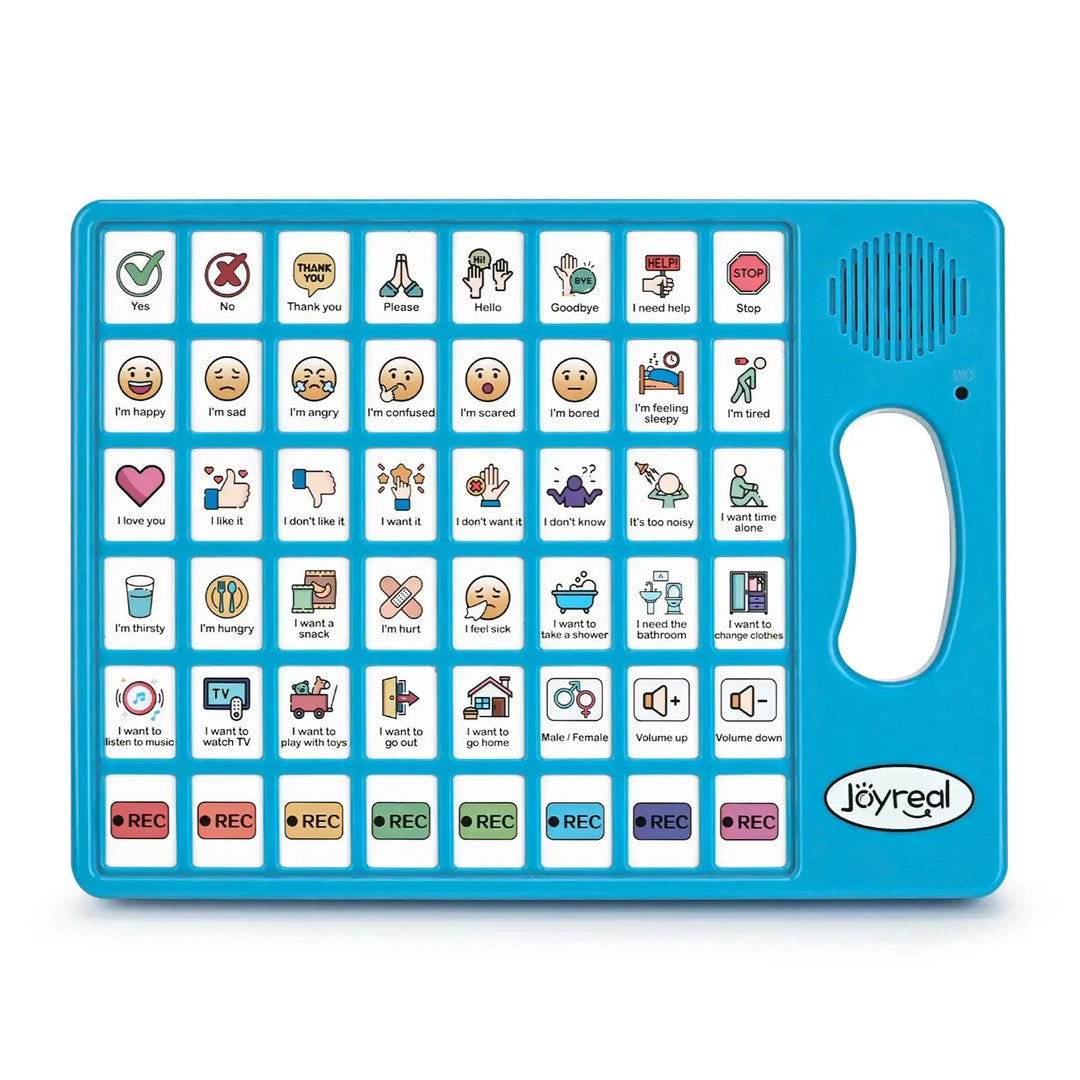
Best AAC device for kids
Plus AAC Communication
Board for Speech Support
$52.99 AT JOYREAL
54 reviews
Credit: Joyreal
When Should Parents Seek Urgent Medical Help?
AAC is a communication support, not a medical assessment tool. Seek urgent medical help when a child has severe or rapidly worsening symptoms, trouble breathing, a serious injury, unusual unresponsiveness, signs of a severe allergic reaction, or any situation that feels immediately dangerous.
If a child communicates pain or illness but the cause is unclear, contact the child’s healthcare provider for guidance. Do not delay necessary care while trying to obtain a perfect AAC message.
Frequently Asked Questions
Can AAC tell me exactly what is wrong?
No. AAC can help a child share sensations, locations, needs, and requests for support. Adults and healthcare professionals still need to assess the situation.
What if my child uses behavior instead of AAC to show pain?
Respond to the behavior as possible communication. Look for changes in movement, sleep, eating, mood, or routine, while modeling simple messages such as “hurt,” “help,” “break,” or “sick.”
Can AAC devices for autism be used during doctor visits?
They may help a child communicate during appointments, but the system should be easy to access and familiar to the child. Families can tell healthcare staff how the child communicates and allow extra response time.
What are AAC communication devices?
AAC communication devices are tools that support communication when speech is not reliable or does not meet a person’s needs. They can be used with speech, gestures, pictures, signs, or other communication methods.
Final Takeaway
AAC can help a child communicate pain, illness, fatigue, nausea, temperature discomfort, injury, or the need for rest by making useful messages available when spoken language is difficult. The best approach is to practice these messages before a crisis, listen to every communication attempt, respond without pressure, and involve healthcare professionals when symptoms are concerning.
The purpose of AAC is to give the child a clearer way to share what they are experiencing—not to make parents diagnose the problem alone.


Popular Guides for Parents
- DIY Busy Board: A Guide to Making Your Own
- Montessori Wooden Toys: Choose Baby Walking Toys to Boost Early Skills
- Montessori Busy Boards by Age: Safe, Skill-Building Toys for 10 Months to 4 Years
- How Do Different Colors Affect Sensory Overload in Autistic Children?
- Noah’s Ark Toy: Building Skills Through Play
- Best Busy Boards for 1 Year Old: A Parent’s Guide to Sensory Play
Recent Post

Wooden Musical Toys vs Electronic Music Toys: Which Is Better for Open-Ended Play?
For parents who want a calmer play environment, the choice between...

10 Simple Parent-Child Music Games Using a Toddler Drum Set
A toddler drum set can become much more than a noisy toy. With a fe...

Noah’s Ark Activities for Sunday School and Preschool
A Noah’s Ark toy can turn a familiar Bible story into a hands-on ac...

Noah’s Ark Toy Gift Guide: What Should Parents Check Before Buying?
A noah’s ark toy can be a thoughtful birthday, baptism, Christmas, ...

Can a Noah’s Ark Toy Be Used for Science and Nature Play?
Yes. A noah’s ark toy can be used as a starting point for simple sc...

How Can AAC Help a Child Communicate Pain, Illness, or Discomfort?
A child who cannot reliably use speech may still notice pain, illne...

How to Model AAC During Play Without Pressuring Your Child
For many children, play is one of the most comfortable places to pr...

How Can Parents Help a Child Use AAC at School and Home?
How Can Parents Help a Child Use AAC at School and Home? Children w...

AAC for Siblings and Playdates: Helping Children Join Social Play
Children do not need to use speech to take part in sibling play or ...

How to Teach Independent Play With a Busy Board Without Overhelping
Independent play does not usually begin with a parent stepping away...