
What Are Oral Development Tools For?
Understanding How Oral Development Supports Everyday Skills
Many parents first discover oral development tools when their child struggles with feeding, chewing, speech sounds, or sensory regulation. Others may hear therapists recommend oral motor activities and wonder what these tools actually do.
The truth is that oral development tools are not only for children with special needs. They can support a wide range of developmental skills, from learning to chew solid foods to building the muscle strength and coordination needed for speech.

What Are Oral Development Tools?
Oral development tools are specially designed products that help strengthen and stimulate the muscles of the mouth, lips, tongue, cheeks, and jaw.
Common examples include:
- Sensory chew tools
- Vibrating oral motor tools
- Teething and oral stimulation toys
- Chewy tubes
- Oral motor therapy kits
- Textured sensory teethers
These tools are often used by parents, speech therapists, occupational therapists, and special education professionals to support oral motor development.
Why Are Oral Development Tools Important?
Strong oral motor skills are essential for many everyday activities.
Children use these muscles to:
- Chew and bite food safely
- Drink from cups and straws
- Move their tongue effectively
- Produce speech sounds clearly
- Manage saliva and swallowing
- Explore sensory input in a safe way
When these skills are underdeveloped, children may experience challenges with feeding, speech, or sensory regulation.
Who Can Benefit From Oral Development Tools?
Babies and Toddlers
For young children, oral development tools can:
- Provide relief during teething
- Encourage safe chewing exploration
- Support oral sensory awareness
- Strengthen developing jaw muscles
Children With Speech Delays
Some children need extra support developing the oral motor coordination required for speech production.
Oral motor tools can be incorporated into therapy activities designed to improve:
- Lip closure
- Tongue movement
- Jaw stability
- Breath control
Children With Autism and Sensory Needs
Many autistic children seek oral sensory input through chewing on clothing, pencils, fingers, or toys.
Sensory oral development tools can provide:
- Safe chewing alternatives
- Calming sensory input
- Improved self-regulation
- Increased focus during daily activities
Children With Feeding Challenges
Children who struggle with chewing different food textures may benefit from oral motor exercises and sensory stimulation that help build confidence and oral awareness.
What Are Vibrating Oral Development Tools Used For?
Vibrating oral motor tools provide gentle sensory stimulation through vibration.
This added sensory feedback may help:
- Increase oral awareness
- Encourage mouth exploration
- Support oral motor exercises
- Provide calming sensory input
- Engage children who may be reluctant to participate in therapy activities
Many therapists use vibrating oral tools as part of oral motor and sensory development programs for children with speech delays, feeding difficulties, or sensory processing differences.
How to Choose the Right Oral Development Tool
When selecting an oral development tool, look for:
- Food-grade safe materials
- Age-appropriate design
- Easy-to-clean surfaces
- Multiple textures for sensory exploration
- Comfortable size for little hands
- Optional vibration features for additional sensory input
The best tool is one that matches your child's individual developmental and sensory needs.
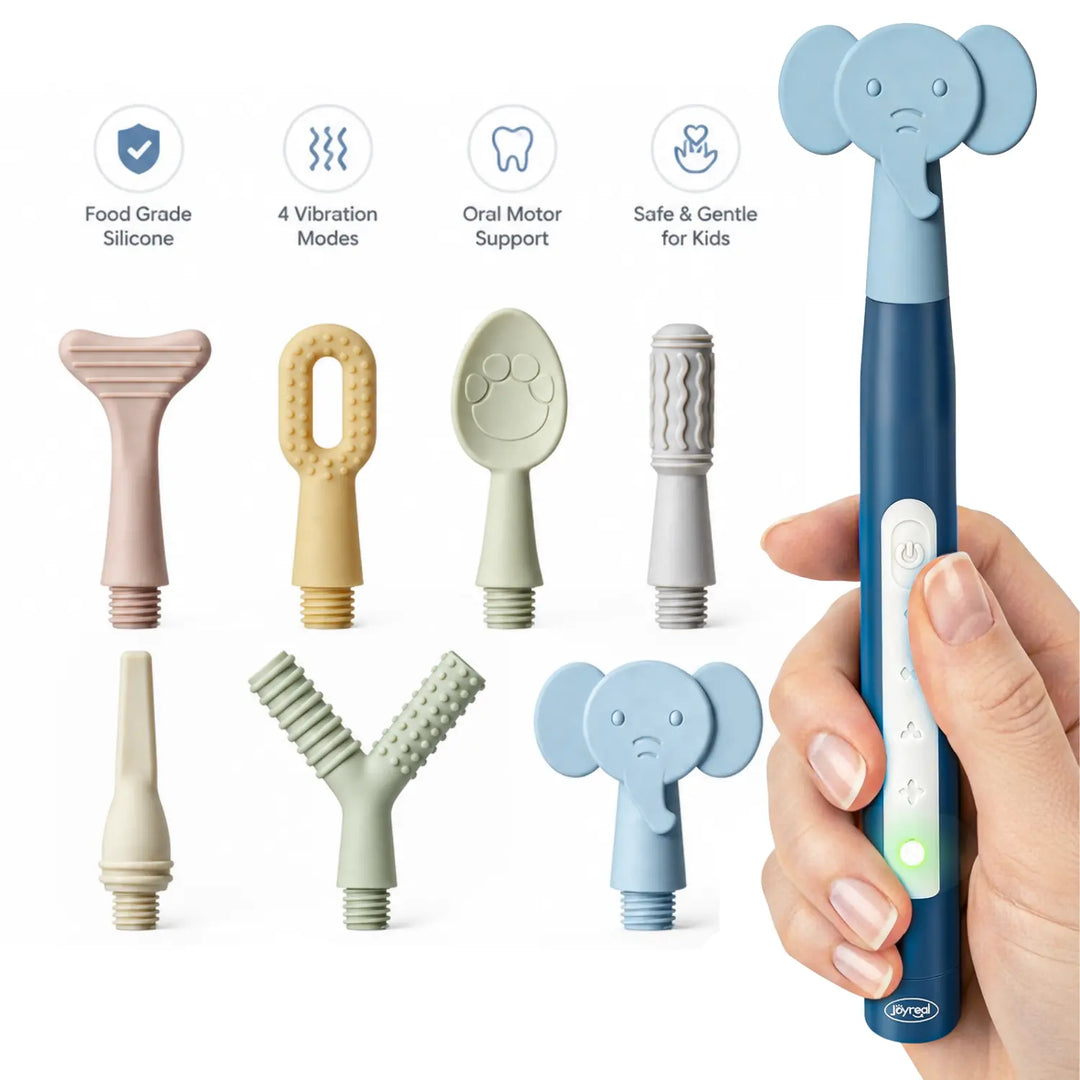
Best oral motor sensory tool
Oral Motor Sensory Tool –
4 Modes, 7 Tips
$49.99 AT JOYREAL
1 review
Credit: Joyreal
Final Thoughts
Oral development tools are designed to support much more than teething. They can help children build the oral motor skills needed for eating, speaking, and sensory regulation.
Whether your child is exploring new foods, working on speech development, seeking oral sensory input, or simply navigating the teething stage, the right oral development tool can provide safe, engaging support along the way.
Popular Guides for Parents
- DIY Busy Board: A Guide to Making Your Own
- Montessori Wooden Toys: Choose Baby Walking Toys to Boost Early Skills
- Montessori Busy Boards by Age: Safe, Skill-Building Toys for 10 Months to 4 Years
- How Do Different Colors Affect Sensory Overload in Autistic Children?
- Noah’s Ark Toy: Building Skills Through Play
- Best Busy Boards for 1 Year Old: A Parent’s Guide to Sensory Play
Recent Post

Wooden Musical Toys vs Electronic Music Toys: Which Is Better for Open-Ended Play?
For parents who want a calmer play environment, the choice between...

10 Simple Parent-Child Music Games Using a Toddler Drum Set
A toddler drum set can become much more than a noisy toy. With a fe...

Noah’s Ark Activities for Sunday School and Preschool
A Noah’s Ark toy can turn a familiar Bible story into a hands-on ac...

Noah’s Ark Toy Gift Guide: What Should Parents Check Before Buying?
A noah’s ark toy can be a thoughtful birthday, baptism, Christmas, ...

Can a Noah’s Ark Toy Be Used for Science and Nature Play?
Yes. A noah’s ark toy can be used as a starting point for simple sc...

How Can AAC Help a Child Communicate Pain, Illness, or Discomfort?
A child who cannot reliably use speech may still notice pain, illne...

How to Model AAC During Play Without Pressuring Your Child
For many children, play is one of the most comfortable places to pr...

How Can Parents Help a Child Use AAC at School and Home?
How Can Parents Help a Child Use AAC at School and Home? Children w...

AAC for Siblings and Playdates: Helping Children Join Social Play
Children do not need to use speech to take part in sibling play or ...

How to Teach Independent Play With a Busy Board Without Overhelping
Independent play does not usually begin with a parent stepping away...