
How an AAC Device for Autism Helped My Non-Speaking Son Communicate
For six years, my son had difficulty using spoken words to tell us what he wanted, how he felt, or what was happening in his mind.
He had received years of therapy and support. We tried different communication strategies and looked for tools that could make everyday life easier. Even with all that support, communication was still challenging.
Then we introduced an AAC device.
During the first day, we began noticing something different. He used the device to communicate what he wanted to do, show us when he was upset, and share what made him happy.
It was not an instant solution, and we did not expect him to use it perfectly. But those early messages showed us that he had much more to say than we had been able to understand.
That experience changed the way I understood AAC, assistive communication technology, and my son’s communication.

My Son Always Had Something to Say
Because my son did not rely on spoken words, people sometimes assumed that he had very little to communicate.
But a child who does not use spoken language still has preferences, emotions, interests, and opinions.
My son knew what he liked and what he did not like. He could feel excited, frustrated, uncomfortable, worried, or happy. He had favorite activities and strong preferences.
The challenge was not that he lacked thoughts or feelings.
The challenge was that we did not always have a reliable way to understand them.
As parents, we often had to interpret his facial expressions, movements, sounds, and behavior. Sometimes we understood what he wanted. Other times, we had to guess.
When we guessed incorrectly, his frustration could grow. A simple request for help might become crying. Wanting an activity to continue might look like refusing to move on. Feeling overwhelmed might look like pushing something away.
AAC gave him another way to make those messages clearer.
Why Was the PODD Book Too Overwhelming?
Before trying the device, we used a PODD book.
PODD can be a helpful communication system for many children, but it was too overwhelming for my son. There were many pages, symbols, and possible messages. Finding the right page took time and required support.
When he was calm, using the book was already challenging. When he was tired, upset, or overstimulated, it became even more difficult.
This experience taught us that a communication system needs to be accessible during real-life moments.
The most advanced system is not automatically the best system for every child. If a child has to search through too many pages before expressing a message, communication can become difficult when the child needs it most.
For my son, a simpler AAC device was a more approachable starting point.
What Changed When We Introduced an AAC Device for Autism?
The first day with the device was emotional for our family.
We started with messages connected to familiar situations. During play, he could communicate that he wanted to continue. During a difficult moment, he could show that he was angry or needed help. During family activities, he could express what he enjoyed.
These messages may sound simple, but they represented something important.
For the first time, he had a tool that helped him share information we had previously struggled to understand.
Assistive communication technology helped us move away from constantly guessing. We could begin to ask better questions:
- Did he want the activity to continue?
- Was something uncomfortable?
- Did he need help?
- Was the room too loud?
- Did he want a break?
- Was he finished?
The device did not remove his emotions.
It gave him another way to communicate them.
AAC is considered “augmentative” when it supplements existing speech and “alternative” when it provides a way to communicate when speech is absent or not functional. It can include low-tech tools such as picture boards as well as speech-generating devices. The American Speech-Language-Hearing Association explains the different forms and purposes of AAC here.
AAC Helped Us Understand Behavior as Communication
Before AAC, it was easy to focus only on what was happening on the outside.
If my son cried, pushed something away, moved away from an activity, or became upset, we had to work out what he was trying to tell us.
AAC helped us look at those moments differently.
Anger could be a message. Refusal could be a message. Moving away could be a message. Reaching toward something could be a message.
For example, if he pushed away a snack, we could model “no” or “finished.” If he became upset during a transition, we could offer “more time,” “help,” or “break.” If a toy stopped working, we could model “help” instead of waiting for the frustration to escalate.
A communication device does not make every difficult moment disappear. It gives the child and family more information to work with.
Research and clinical guidance do not support the idea that AAC prevents speech development. AAC is intended to support communication and can be used alongside gestures, facial expressions, signs, sounds, and spoken words. ASHA’s evidence summary reviews findings on AAC and speech production.

Making an AAC Device Part of Everyday Life
An AAC device is most useful when it is available during the moments when a child needs to communicate.
For our family, that meant keeping it within reach during:
- Morning routines
- Meals and snacks
- Playtime
- Getting dressed
- Transitions between activities
- Family outings
- Appointments
- Travel
- Difficult or overstimulating situations
We also tried to make sure that other family members understood how to respond. A communication device should not be treated as something that belongs only in therapy.
It can support communication between a child and parents, siblings, teachers, caregivers, and other people in the child’s daily life.
If your child is preparing for school, it can be helpful to share the child’s common messages and preferred prompts with teachers. A short list might include “help,” “break,” “stop,” “finished,” “my turn,” and “I need space.”
Choosing a Communication Device for a Non-Speaking Child
There is no single AAC system for autism that works for every child.
Some children may use picture boards or communication books. Others may respond better to recorded buttons, tablet-based apps, or dedicated speech-generating devices.
The right starting point depends on the child’s communication needs, motor abilities, sensory preferences, environment, and level of independence.
Choosing an AAC device depends on more than the number of buttons or features. Parents should also consider access, portability, sensory comfort, and how easily the child can use the device in daily situations. Read our complete guide on how to choose an AAC device for autism.
For our son, simplicity mattered. A device that he could understand and approach was more helpful than a system with many features that felt difficult to navigate.
A simple AAC device for children may be especially useful as an introductory tool for home routines, travel, play, and other familiar situations. It should support communication without making the child work through unnecessary steps.
Why a Portable Autism Communication Device Can Help
Communication needs do not disappear when a child leaves home.
A child may need to express “help,” “stop,” “more,” “no,” or “break” at school, in a car, at a store, on vacation, or during a family outing.
That is why portability became important for us.
A communication device for a non-speaking child should be easy for the family to bring into everyday settings and simple enough to use during ordinary activities. When a device stays at home, it cannot support communication during the moments when the child needs it most.
A portable device can also make it easier for parents and teachers to use the same familiar messages across different environments.
AAC Did Not Change Who My Son Was
The device did not create my son’s thoughts or feelings.
It did not change his personality.
It gave him another way to share what was already inside him.
AAC is not about forcing every child to communicate in one particular way. It is about giving a child access to communication.
A child may use AAC alongside gestures, facial expressions, signs, sounds, or spoken words. Some children may use different communication methods in different situations. For example, spoken words may be available at home but more difficult during stress or sensory overload.
The goal is not to replace every other form of communication.
The goal is to help the child participate, connect, make choices, and be understood.

What I Want Other Parents to Know
If your child has not found the right communication tool yet, it does not mean your child has nothing to communicate.
The current system may be too complex, too slow, difficult to carry, or not suited to your child’s needs right now.
Our experience with a PODD book did not mean that PODD was wrong for every child. It meant that we needed to find a communication method that was more accessible for our son.
The right AAC system may also change as your child grows.
What matters is giving your child opportunities to communicate now—including choices, emotions, refusal, interests, discomfort, and requests for help.
Final Thoughts: Every Child Deserves a Way to Be Heard
After years of therapy and support, an AAC device helped our six-year-old son share what he wanted to do, when he was upset, and what made him happy.
Those were not small achievements for our family. They showed us that he had more to say than we had been able to understand.
An AAC device for autism may help children communicate their needs, emotions, choices, preferences, and interests in a way that feels accessible to them. Every child’s experience will be different, and families may benefit from guidance from a qualified speech-language pathologist or AAC professional.
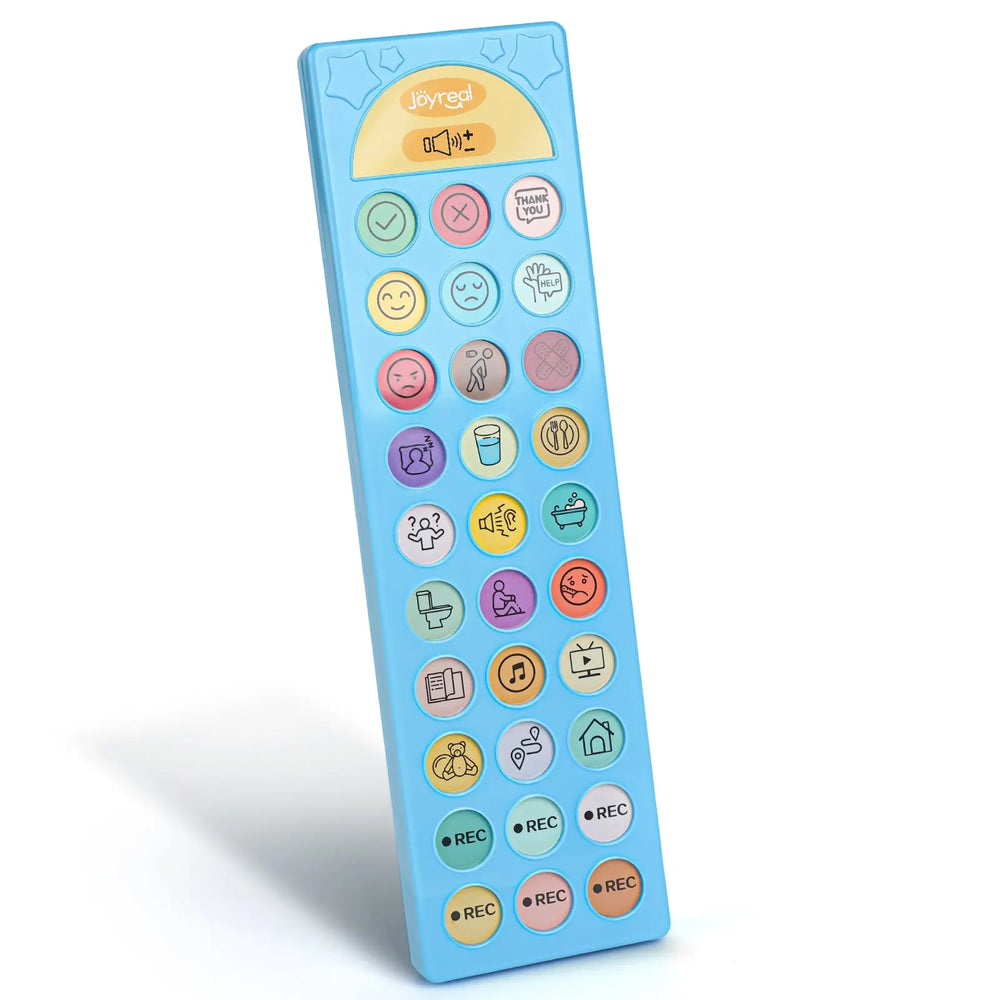
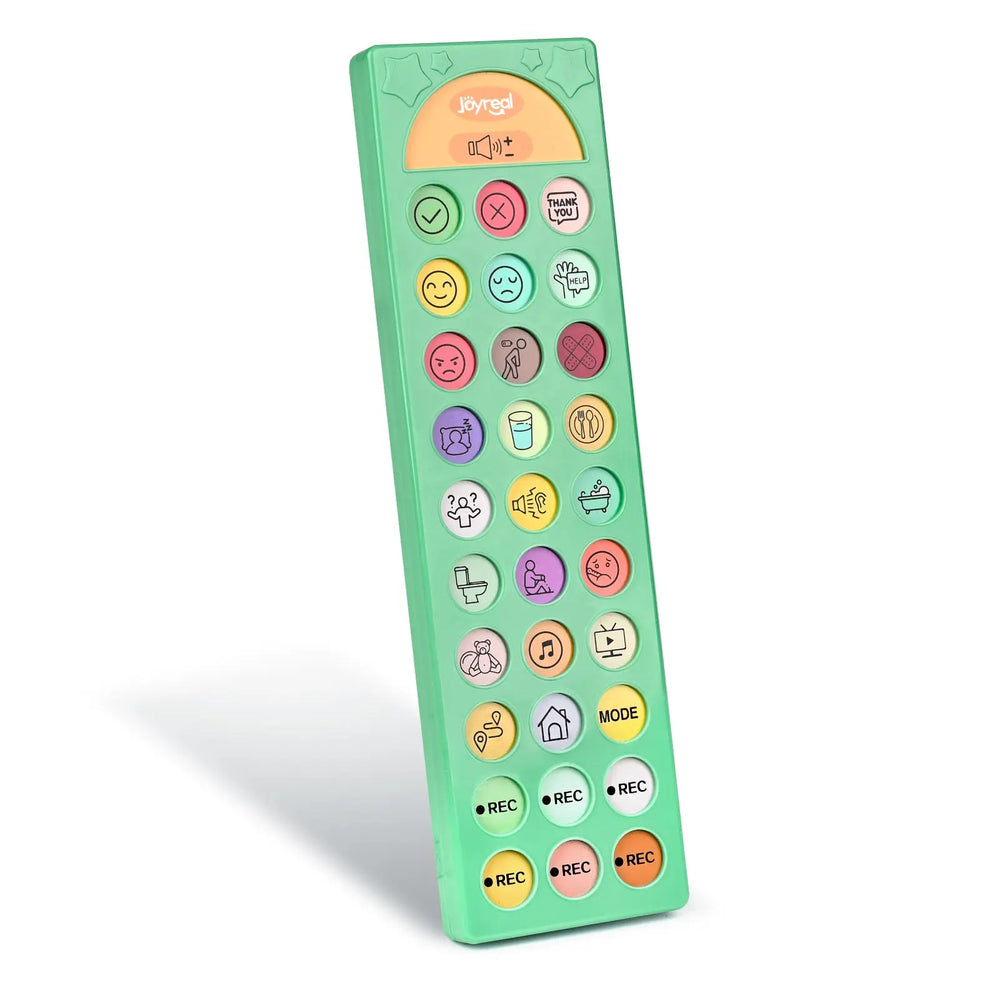
For families looking for a simple autism communication device, a portable voice-output tool may be useful during play, meals, transitions, travel, and other familiar routines. It can give a child quick access to messages such as “help,” “stop,” “more,” and “finished.”
The goal is not to make every child communicate in the same way.
The goal is to give every child a way to participate, connect, and be heard.
Explore the Joyreal Autism Communication Device
Note: This article describes one family’s experience and is not a substitute for an individualized AAC assessment from a qualified professional.
Popular Guides for Parents
- DIY Busy Board: A Guide to Making Your Own
- Montessori Wooden Toys: Choose Baby Walking Toys to Boost Early Skills
- Montessori Busy Boards by Age: Safe, Skill-Building Toys for 10 Months to 4 Years
- How Do Different Colors Affect Sensory Overload in Autistic Children?
- Noah’s Ark Toy: Building Skills Through Play
- Best Busy Boards for 1 Year Old: A Parent’s Guide to Sensory Play
Recent Post

Wooden Musical Toys vs Electronic Music Toys: Which Is Better for Open-Ended Play?
For parents who want a calmer play environment, the choice between...

10 Simple Parent-Child Music Games Using a Toddler Drum Set
A toddler drum set can become much more than a noisy toy. With a fe...

Noah’s Ark Activities for Sunday School and Preschool
A Noah’s Ark toy can turn a familiar Bible story into a hands-on ac...

Noah’s Ark Toy Gift Guide: What Should Parents Check Before Buying?
A noah’s ark toy can be a thoughtful birthday, baptism, Christmas, ...

Can a Noah’s Ark Toy Be Used for Science and Nature Play?
Yes. A noah’s ark toy can be used as a starting point for simple sc...

How Can AAC Help a Child Communicate Pain, Illness, or Discomfort?
A child who cannot reliably use speech may still notice pain, illne...

How to Model AAC During Play Without Pressuring Your Child
For many children, play is one of the most comfortable places to pr...

How Can Parents Help a Child Use AAC at School and Home?
How Can Parents Help a Child Use AAC at School and Home? Children w...

AAC for Siblings and Playdates: Helping Children Join Social Play
Children do not need to use speech to take part in sibling play or ...

How to Teach Independent Play With a Busy Board Without Overhelping
Independent play does not usually begin with a parent stepping away...