
AAC for Autism: How to Choose the Right AAC Device for Everyday Communication
When a child has difficulty using spoken language, everyday communication can become frustrating for both the child and their family.
Parents may want to know what their child needs, what they want, or how they are feeling—but the right words may not always be available.
AAC, or augmentative and alternative communication, refers to the tools and strategies people use to communicate when speech is difficult, unreliable, or unavailable. AAC can include gestures, facial expressions, signs, pictures, communication boards, visual schedules, buttons, tablets, and speech-generating devices.
For autistic children, AAC can support communication during play, meals, transitions, and everyday routines.
Current evidence does not show that AAC prevents speech development. AAC may supplement spoken communication or provide an alternative when speech is not reliable or available. It also gives children additional ways to express their needs, choices, feelings, thoughts, and ideas. Instead, it gives children additional ways to express their needs, choices, feelings, and ideas.
This guide explains what AAC is, how to choose AAC devices, and how an AAC device for autism can support communication during play and everyday routines.

What Is AAC?
AAC is a communication system, not just an electronic device.
Unaided AAC
Unaided AAC does not require an external tool. Examples include: Gestures, Facial expressions, Body language and so on.
Low-Tech AAC
Low-tech AAC uses simple physical materials, such as: picture cards, communication boards, communication books and objects.
High-Tech AAC
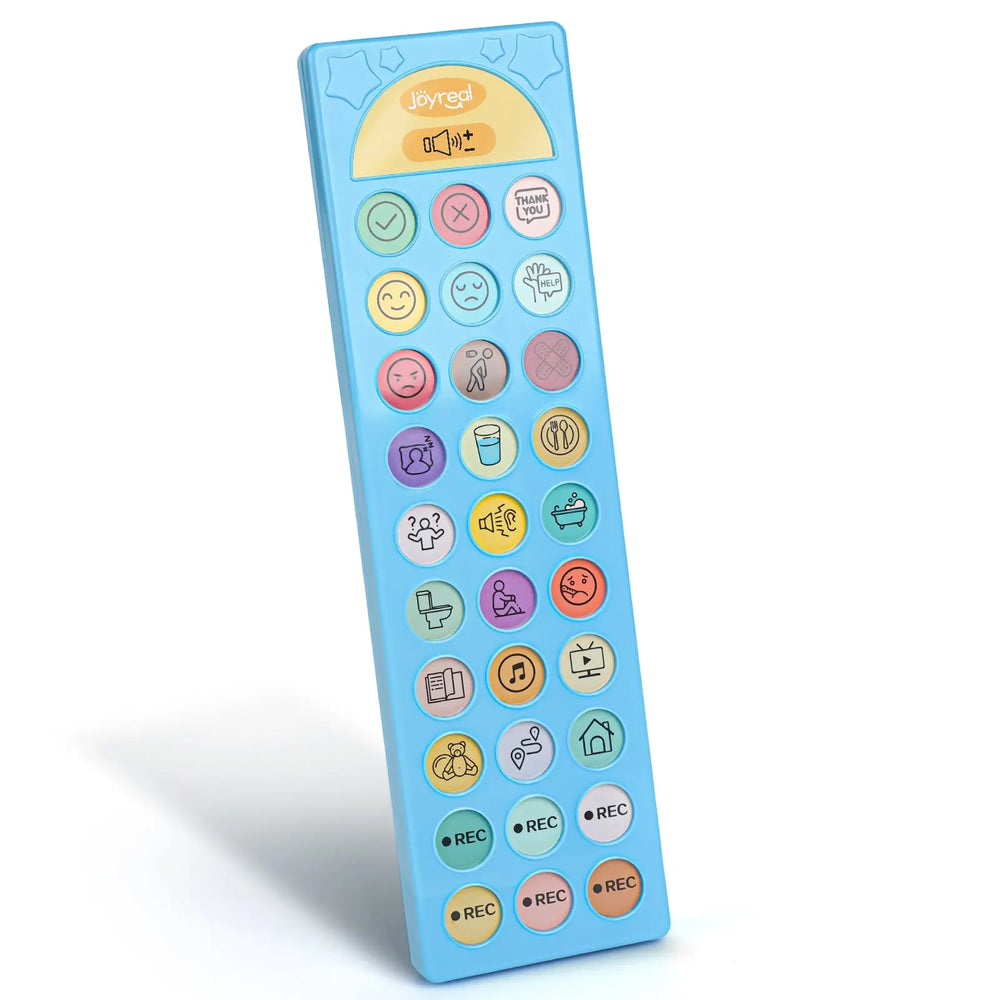
High-tech AAC may include: Single-message buttons, Recordable communication devices and Tablets with AAC apps.
A child may use one form of AAC or several forms together. The best communication system depends on the child’s abilities, preferences, environment, and communication goals.
Why Do Some Autistic Children Use AAC Devices?
Some children understand more language than they can express through speech. Others may communicate through gestures, sounds, eye gaze, body movements, facial expressions, or actions.
When a child does not yet have a reliable way to express a message, they may communicate by crying, pushing objects away, dropping items, leaving an activity, or moving toward something they want. These actions may communicate a request, protest, preference, feeling, or need for help.
Even a simple picture or button can create an important communication opportunity.
For example, during play, a parent might pause before giving a child another turn. The child could use a picture, gesture, button, eye gaze, vocalization, or spoken word to communicate “more” or “again.”
That small exchange helps the child learn that communication can influence what happens next.
How Can AAC Support Everyday Communication?
AAC does not need to be used only during speech therapy or structured learning. Everyday routines often provide meaningful opportunities for communication.
During play
Play is a natural place to introduce AAC because children are often motivated by the activity.
A cause-and-effect toy, busy board, building set, sensory activity, or pretend-play toy can create opportunities to model words such as: "Go", "More", ‘’Again“, ”Help".
A parent might pause before activating a toy and wait for the child to communicate “go” or “again.” The child can respond using any reliable communication method.
During meals
Mealtimes offer repeated opportunities to request, reject, and make choices.
Parents can model a few useful words, such as “more,” “help,” “drink,” or “finished,” while speaking naturally. The goal is not to turn every meal into a lesson. Children should have enough time to respond without pressure.
During daily routines
A visual schedule can show the steps of a routine. A child may point to “shoes,” “coat,” or “finished,” while a speech-generating device can speak the selected message aloud.
Predictable routines are helpful because children encounter the same actions and vocabulary repeatedly.
How to Choose an AAC Device for Autism
There is no single AAC device that works for every child. The most appropriate AAC system depends on the child’s communication needs, motor skills, sensory preferences, daily environments, and personal choices.
When comparing AAC devices and communication tools, consider the following factors.
Ease of Access
The child should be able to see, reach, point to, touch, or otherwise access the communication tool as independently as possible. The size, layout, button sensitivity, and access method should match the child’s motor and sensory needs.
Portability
A portable AAC device or communication board can be useful at home, during travel, at school, and in the community.
Customizable Vocabulary
Look for a tool that allows caregivers to add words, pictures, or phrases that are meaningful to the child.
Durability
Children may use AAC devices during active play and daily routines, so the tool should be suitable for regular use.
The Child’s Communication Preferences
Some children respond well to pictures. Others may prefer buttons, gestures, signs, eye gaze, or speech-generating devices. A child’s preferred communication method should be respected.
A speech-language pathologist can help families assess communication needs and choose an appropriate AAC system.
AAC needs vary from child to child. A speech-language pathologist can help families assess communication needs and choose an appropriate AAC system.

How to Introduce AAC During Play
AAC is most useful when it is connected to enjoyable activities rather than isolated drills.
Follow your child’s interests
Start with activities your child already enjoys. Motivation can make it easier for the child to participate and communicate.
Model without demanding a response
Parents and caregivers can use the AAC tool while speaking naturally.
The child does not need to copy the action immediately. Repeated exposure helps the child learn what the symbols, buttons, or words mean.
Pause and wait
After offering a choice or starting an activity, pause for a few seconds.
Communication does not always happen through speech.
Offer choices
Choices can make communication more concrete.
You might show two toys and ask:
“Blocks or animals?”
The child can point, touch, look toward one item, or use an AAC symbol. Accepting different forms of response helps the child learn that their preferences matter.
What If My Child Does Not Use AAC Right Away?
A child may initially:
- Ignore the device
- Press buttons repeatedly
- Use only one preferred message
- Need help accessing the tool
- Prefer gestures or pictures
- Use the tool differently than expected
Keep the communication tool available during meaningful activities and avoid turning every interaction into a test.
Adults can continue modeling AAC without requiring imitation. If a child has complex communication needs, a speech-language pathologist or AAC specialist can help the family choose appropriate tools and strategies.
Are Simple Button Devices Full AAC Systems?
Not always.
A single-message button or recordable communication device may be useful for simple messages such as “more,” “go,” or “help.” However, it may not provide the flexible vocabulary needed for broader communication.
A complete AAC system may include multiple communication methods, such as gestures, pictures, written words, a communication board, and a speech-generating device.
The right choice depends on the child’s communication goals and access needs.
How Joyreal Toys Can Support AAC-Friendly Play
AAC tools work best when children have engaging activities that encourage choices, actions, and interaction.
Joyreal toys can be incorporated into AAC-friendly play through:
- Cause-and-effect activities
- Fine motor play
- Matching and sorting
- Pretend play
- Sensory exploration
- Turn-taking games
- Quiet independent play
Parents can pair a toy with simple AAC words such as “more,” “help,” “open,” “go,” “stop,” and “all done.”

The Joyreal Talking Aid AAC tool is one consumer communication tool families may consider when introducing simple functional messages during everyday activities.
These tools are designed for simple communication practice and should not be considered a replacement for an individualized AAC assessment.
Final Thoughts
The right AAC system should make communication more accessible—not make a child feel pressured to perform.
Start with the child’s interests and everyday routines. Model a few useful words, offer choices, and give the child enough time to respond.
A request, gesture, button press, eye gaze, sound, or spoken word can all be meaningful communication.
AAC does not take away a child’s voice. It gives children more ways to be heard, understood, and included.
This article is for general educational purposes and is not a substitute for an individualized assessment by a qualified speech-language pathologist or AAC specialist.


Popular Guides for Parents
- DIY Busy Board: A Guide to Making Your Own
- Montessori Wooden Toys: Choose Baby Walking Toys to Boost Early Skills
- Montessori Busy Boards by Age: Safe, Skill-Building Toys for 10 Months to 4 Years
- How Do Different Colors Affect Sensory Overload in Autistic Children?
- Noah’s Ark Toy: Building Skills Through Play
- Best Busy Boards for 1 Year Old: A Parent’s Guide to Sensory Play
Recent Post

AAC for Autism: How to Choose the Right AAC Device for Everyday Communication
When a child has difficulty using spoken language, everyday communi...

Wooden Musical Toys vs Electronic Music Toys: Which Is Better for Open-Ended Play?
For parents who want a calmer play environment, the choice between...

10 Simple Parent-Child Music Games Using a Toddler Drum Set
A toddler drum set can become much more than a noisy toy. With a fe...

Noah’s Ark Activities for Sunday School and Preschool
A Noah’s Ark toy can turn a familiar Bible story into a hands-on ac...

Noah’s Ark Toy Gift Guide: What Should Parents Check Before Buying?
A noah’s ark toy can be a thoughtful birthday, baptism, Christmas, ...

Can a Noah’s Ark Toy Be Used for Science and Nature Play?
Yes. A noah’s ark toy can be used as a starting point for simple sc...

How Can AAC Help a Child Communicate Pain, Illness, or Discomfort?
A child who cannot reliably use speech may still notice pain, illne...

How to Model AAC During Play Without Pressuring Your Child
For many children, play is one of the most comfortable places to pr...

How Can Parents Help a Child Use AAC at School and Home?
How Can Parents Help a Child Use AAC at School and Home? Children w...

AAC for Siblings and Playdates: Helping Children Join Social Play
Children do not need to use speech to take part in sibling play or ...