
AAC for Siblings and Playdates: Helping Children Join Social Play
Children do not need to use speech to take part in sibling play or a playdate. They need reliable ways to make choices, take turns, ask for help, comment, say no, and show that they want to continue. An AAC communication device can make those messages available during play, especially when spoken language is difficult or inconsistent.
The goal is not to make a child use AAC for every interaction. The goal is to give them another way to join activities and help siblings or playmates learn how to respond naturally.

How Can AAC Help a Child Join Sibling Play?
AAC can help a child communicate the small messages that keep play moving. These messages may include “my turn,” “your turn,” “more,” “stop,” “help,” “look,” “I want that,” or “finished.”
Start with activities that already interest the children. A simple building activity, animal game, music activity, or turn-taking toy can create natural reasons to communicate. Adults and siblings can model one or two useful messages without requiring the child to repeat them.
For example, if two children are building a tower, a parent might model “more,” “my turn,” or “help” on the device while speaking naturally. The child may respond using AAC, a gesture, a sound, eye gaze, or an action. All of these communication attempts can be acknowledged.
What AAC Words Are Most Useful During Playdates?
The most useful words are the ones that help a child control the interaction and express preferences. A playdate vocabulary might include:
- My turn
- Your turn
- More
- Again
- Help
- Open
- Look
- I like it
- Not that
- Stop
- Break
- Finished
Do not focus only on requests for toys. A child also needs ways to refuse, pause, change the activity, and comment on what is happening. Having those messages can make social play feel more predictable and respectful.
How Should Siblings Be Taught to Respond?
Siblings usually need simple, direct guidance rather than a long explanation about AAC. Teach them to wait, watch, and respond to the message without taking the device away.
Helpful sibling habits include:
- Ask before taking a toy.
- Wait while the child is making a message.
- Offer two choices instead of asking many questions.
- Pause after saying “your turn.”
- Respect “stop,” “no,” or “finished” when it is safe to do so.
- Continue playing naturally instead of treating AAC like a test.
You can model this yourself: “You said stop. We can pause,” or “You chose cars. Let’s play cars.” This shows siblings that communication has a real effect on the activity.

How Can Parents Support AAC Without Taking Over the Playdate?
Parents can prepare the environment, model a few words, and step back when the children begin interacting. Too much adult direction can make play feel like a lesson.
Before the playdate:
- Choose one or two familiar activities.
- Make sure the AAC device is charged, available, and easy to reach if applicable.
- Check that useful words such as “help,” “more,” “stop,” and “break” are available.
- Explain one simple communication rule to the other child or parent.
During play, model short messages at the moment they are useful. If the child reaches for a car, you might model “car” or “want.” If the child looks uncomfortable, model “break” or “stop.” Avoid asking repeated questions such as “What do you want?” or “Tell them with your device.”
For more home-based strategies, see our guide to AAC modeling at home.
What If the Child Does Not Want to Use AAC During Play?
Do not force the device into the interaction. A child may prefer gestures, facial expressions, movement, signs, sounds, or spoken words at that moment. Continue responding to those forms of communication while keeping AAC available as an additional option.
Sometimes the device is difficult to access, the vocabulary does not match the activity, or the child needs more time to formulate a message. The play itself may also be too fast or demanding. Slow down the activity, reduce the number of choices, or offer a short break.
A refusal can be meaningful communication. If a child communicates “stop,” “no,” or “finished,” acknowledge the message and adjust the activity when possible.
How Can AAC Support Turn-Taking?
Turn-taking becomes easier when the routine is predictable. Use the same short phrases during repeated games: “my turn,” “your turn,” “again,” and “finished.” Adults can model the message before their own turn and pause before giving the child control.
For example, during a ball game:
- The adult models “my turn.”
- The adult rolls the ball.
- The adult models “your turn.”
- The child responds in any clear way.
- The adult waits and follows the child’s action.
The child does not have to press a button perfectly for the interaction to continue. The purpose is shared participation, not a correct performance.

Introducing the Joyreal AAC Talking Aid
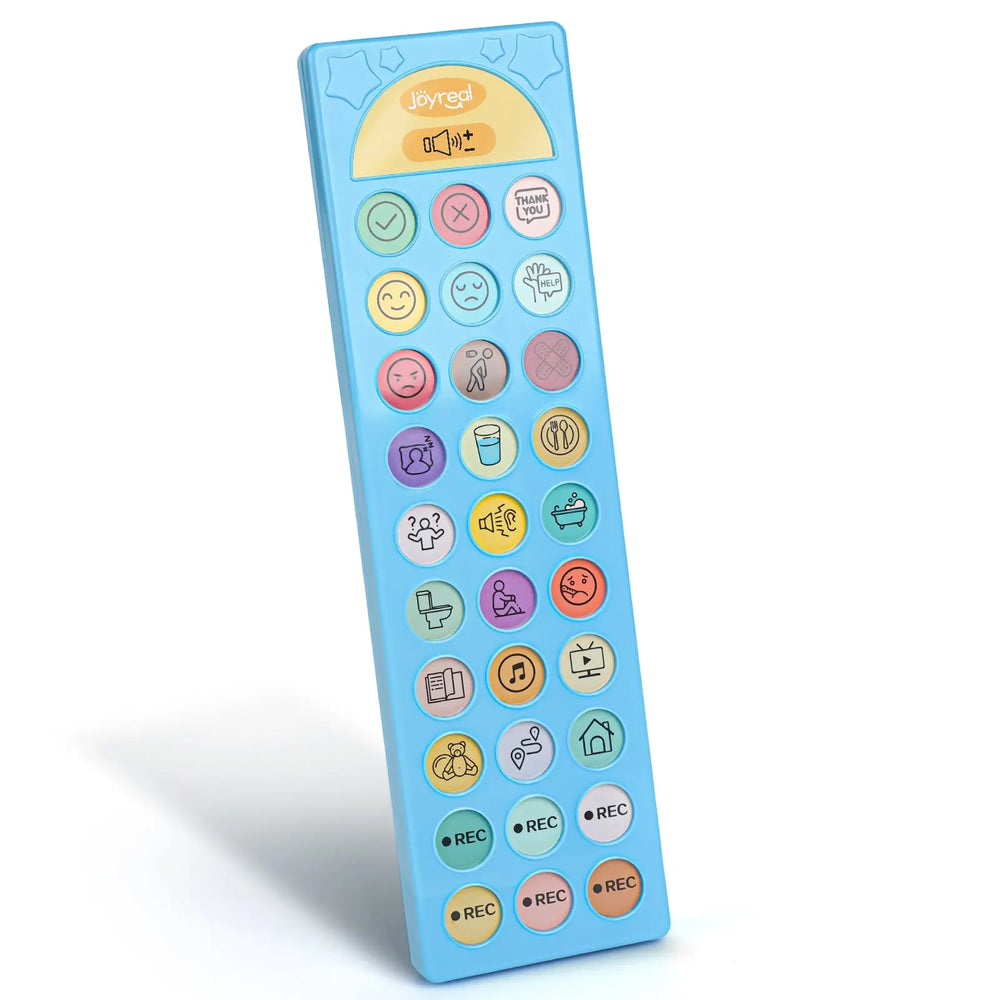
For families looking for a simple communication option during sibling play, routines, or short playdates, the Joyreal AAC Talking Aid can be introduced as one available way to express short, functional messages. Use it alongside gestures, signs, spoken language, pictures, or other communication supports rather than making it a condition for joining play.
Choose messages that are meaningful for your child and model them during real activities. The device should support participation without placing pressure on the child to perform.
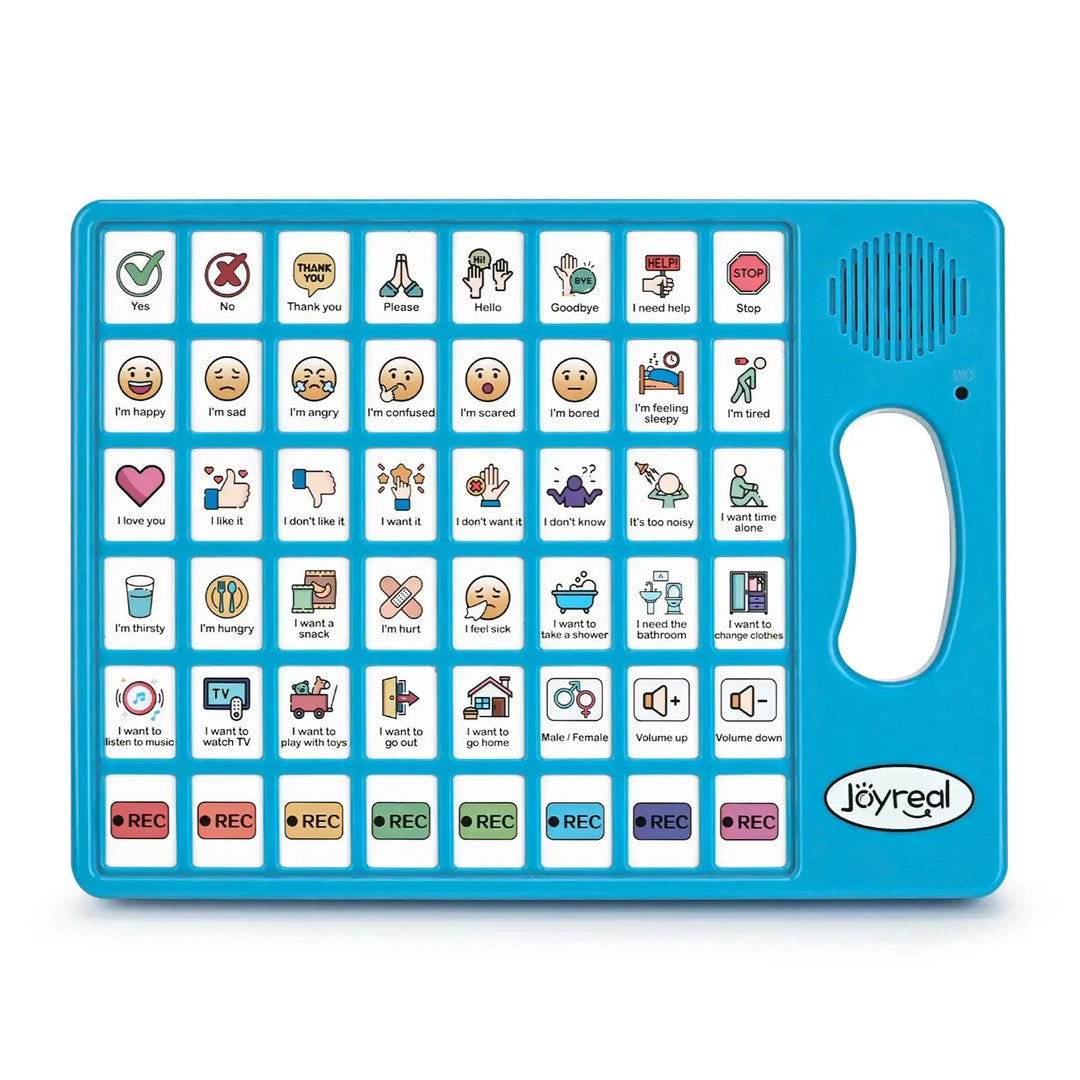
Best AAC device for kids
Plus AAC Communication
Board for Speech Support
$52.99 AT JOYREAL
54 reviews
Credit: Joyreal
Frequently Asked Questions
Can AAC help a child participate in a playdate?
Yes. AAC can provide ways to choose an activity, request a turn, ask for help, comment, refuse, or take a break. It works best when communication partners give the child time and respond consistently.
Should siblings use the AAC device themselves?
Siblings can model simple messages with adult guidance, but they should not take the device away or use it as a joke. The child should remain in control of their communication system.
What if the child communicates without AAC?
Respond to all meaningful communication methods. AAC is an additional option, not a replacement for gestures, sounds, signs, facial expressions, or speech.
What are AAC communication devices?
AAC communication devices are tools that support people who cannot rely on speech alone. They may be used alongside other forms of communication and should be selected according to the individual’s needs and environment.
Learn More: https://joyrealtoys.com/blogs/news/what-are-aac-communication-devices
Final Takeaway
AAC can help children join sibling play and playdates by giving them practical ways to choose, take turns, ask for help, set boundaries, and stay connected. The most supportive approach is low pressure: prepare the communication options, model a few useful messages, wait, and let the child participate in the way that feels most accessible.
When siblings and playmates learn to wait and respond respectfully, AAC becomes part of shared play rather than something that separates one child from the group.


Popular Guides for Parents
- DIY Busy Board: A Guide to Making Your Own
- Montessori Wooden Toys: Choose Baby Walking Toys to Boost Early Skills
- Montessori Busy Boards by Age: Safe, Skill-Building Toys for 10 Months to 4 Years
- How Do Different Colors Affect Sensory Overload in Autistic Children?
- Noah’s Ark Toy: Building Skills Through Play
- Best Busy Boards for 1 Year Old: A Parent’s Guide to Sensory Play
Recent Post

Wooden Musical Toys vs Electronic Music Toys: Which Is Better for Open-Ended Play?
For parents who want a calmer play environment, the choice between...

10 Simple Parent-Child Music Games Using a Toddler Drum Set
A toddler drum set can become much more than a noisy toy. With a fe...

Noah’s Ark Activities for Sunday School and Preschool
A Noah’s Ark toy can turn a familiar Bible story into a hands-on ac...

Noah’s Ark Toy Gift Guide: What Should Parents Check Before Buying?
A noah’s ark toy can be a thoughtful birthday, baptism, Christmas, ...

Can a Noah’s Ark Toy Be Used for Science and Nature Play?
Yes. A noah’s ark toy can be used as a starting point for simple sc...

How Can AAC Help a Child Communicate Pain, Illness, or Discomfort?
A child who cannot reliably use speech may still notice pain, illne...

How to Model AAC During Play Without Pressuring Your Child
For many children, play is one of the most comfortable places to pr...

How Can Parents Help a Child Use AAC at School and Home?
How Can Parents Help a Child Use AAC at School and Home? Children w...

AAC for Siblings and Playdates: Helping Children Join Social Play
Children do not need to use speech to take part in sibling play or ...

How to Teach Independent Play With a Busy Board Without Overhelping
Independent play does not usually begin with a parent stepping away...