
AAC for Toddlers Ages 2–3: When Should Parents Start?
When your Toddler Understands More than They Can Say
For many parents, ages 2 to 3 can feel like a waiting room.
Your toddler may understand daily routines. They may know where their favorite toy is, recognize snack time, smile when you say “go outside,” or pull you toward what they want. But when they need to ask for help, say “no,” request more, or tell you something hurts, the words may not come.
Instead, communication may look like crying, grabbing, pointing, pulling your hand, throwing, screaming, or melting down during small daily moments.
That is often when parents begin searching for an AAC communication device, AAC devices for autism, AAC devices for speech, or a communication device for non verbal toddlers.
Behind those searches is usually one emotional question:
Should I keep waiting for my child to talk, or should I give them another way to communicate now?
The simple answer is: parents do not have to choose between speech and AAC. A toddler can keep developing speech while also using an AAC communication device to express needs, feelings, and choices right now.

What is an AAC Communication Device?
An AAC communication device is a tool that helps a child communicate when spoken words are difficult, unclear, limited, or not yet reliable.
AAC stands for Augmentative and Alternative Communication. It includes communication supports beyond natural speech, such as gestures, signs, picture boards, communication cards, speech-generating buttons, apps, and electronic devices. ASHA describes AAC as communication support that can supplement or compensate for difficulties with speech-language production or understanding.
For toddlers ages 2–3, an AAC communication device is usually used for simple, everyday words such as:
- More
- Help
- Eat
- Drink
- Stop
- Go
- All done
- Yes
- No
- Hurt
- Tired
- Break
- Happy
- Sad
- Mom
- Dad
- Play
The purpose is not to replace talking. The purpose is to give your toddler access to communication while speech and language are still developing.
Is Age 2 or 3 Too Early to Start AAC?
No. Age 2 or 3 is not too early to explore an AAC communication device.
Many parents wait because they hear advice like “give it more time” or “they might talk later.” While every child develops differently, communication support does not need to wait until a child is older, more frustrated, or formally diagnosed.
ASHA states that there is no “too young” age for AAC and that AAC can be introduced when a child shows difficulty developing spoken communication.
A helpful way to think about timing is this:
- If your toddler has something to say but no reliable way to say it, AAC may be worth starting now.
Some toddlers may use AAC as a short-term bridge while speech grows. Others may use AAC as a longer-term communication support. Both are valid. What matters most is that the child has a way to be understood.
Why Ages 2–3 Are an Important Communication Window
Ages 2 and 3 are not just “wait and see” years. They are a key time when many children begin using language for everyday interaction.
By age 2, the CDC lists communication milestones such as saying at least two words together, pointing to things in a book when asked, pointing to body parts, and using gestures beyond waving or pointing.
By age 3, many children are expected to use simple back-and-forth conversation, ask basic “who,” “what,” “where,” or “why” questions, say what is happening in a picture, say their first name, and be understood by others most of the time.
These milestones are not meant to make parents panic. They are meant to help parents notice when a toddler may need more support.
If your child is 2 or 3 and cannot reliably express basic needs, it may be time to talk with a pediatrician, request a speech-language evaluation, and begin simple communication support at home.
The American Academy of Pediatrics recommends general developmental screening at 9, 18, and 30 months, and autism-specific screening at 18 and 24 months.

Why Waiting too Long can Make Daily Life Harder
Some parents hesitate because they hope speech will suddenly arrive. That hope is completely understandable.
But while families wait, toddlers still need to communicate every day.
They need to say:
- “I’m hungry.”
- “I want more.”
- “I need help.”
- “That hurts.”
- “I don’t want that.”
- “I need a break.”
- “I’m tired.”
- “I want to play.”
When a toddler does not have words for these needs, behavior often becomes the message. Crying, screaming, grabbing, dropping to the floor, or pushing things away may be the child’s way of saying something they cannot yet express.
An AAC communication device can help reduce the communication gap. It gives the child a clearer way to participate in daily routines before frustration becomes the main communication pattern.
AAC is not about rushing a child. It is about giving them access to language at the time they need it most.
Signs Your Toddler May Benefit from an AAC Communication Device
Parents may want to explore an AAC communication device if their 2- or 3-year-old:
- Has very few spoken words
- Does not use words consistently to request needs
- Pulls adults by the hand instead of asking
- Cries or screams when not understood
- Gets frustrated during meals, playtime, bedtime, or transitions
- Understands more than they can say
- Uses a few words but cannot express feelings, pain, refusal, or choices
- Repeats sounds or words but does not use them functionally
- Is autistic, nonverbal, minimally verbal, or speech delayed
- Is waiting for speech therapy or early intervention
- Relies mostly on gestures, pointing, or behavior to communicate
A toddler does not need to be completely nonverbal to benefit from AAC. A child may say “mama,” “car,” or “ball,” but still be unable to say “help,” “stop,” “hurt,” “more,” or “all done.”
That is why AAC devices for speech delay can be helpful even when a child has some spoken words.
AAC Devices for Autism: What Parents Should Know
Many parents search for AAC devices for autism or communication devices for autism after noticing that their child communicates differently.
An autistic toddler may not use spoken language in the expected way. They may repeat sounds, echo phrases, avoid verbal requests, or become overwhelmed when routines change. Some autistic toddlers are nonverbal. Others are minimally verbal or have words but do not use them consistently to express needs.
For these children, communication devices for autism can provide a more concrete and predictable way to communicate.
AAC devices for autism may help toddlers:
- Request favorite foods or toys
- Say “no,” “stop,” or “all done”
- Ask for help
- Express discomfort or pain
- Choose between activities
- Communicate during transitions
- Reduce frustration caused by being misunderstood
- Participate more actively with parents, siblings, and therapists
The best AAC device is not always the most complex one. For many young autistic children, the best starting point is a communication tool that is simple, consistent, and easy to use during real family routines.
AAC Devices for Speech Delay: Not Only for Autism
AAC is not only for autistic children.
Many parents search for AAC devices for speech when their toddler is speech delayed, hard to understand, or unable to say enough words for daily communication.
A child with a speech delay may understand what is happening but struggle to produce clear words. They may know what they want but be unable to say it. They may try to talk, but the sounds are unclear to others.
AAC devices for speech delay can help bridge the gap between what a child understands and what they can express.
For example:
- A toddler may want milk but cannot say “milk.”
- They may want help opening a toy but cannot say “help.”
- They may feel upset but cannot say “mad.”
- They may be tired but cannot say “sleep.”
- They may want an activity to stop but cannot say “stop.”
An AAC communication device gives the child another path to expression while speech skills continue to develop.

Communication Device for Nonverbal Toddlers: What Should Parents Look For?
Parents often search for a communication device for non verbal toddlers when their child has few or no spoken words.
At this stage, the best tool is usually not the most advanced system. A 2- or 3-year-old may become overwhelmed by too many buttons, too many icons, or a complicated screen. Many families do better by starting with a small set of meaningful words that can be used many times a day.
A beginner communication device for non verbal toddlers should be:
- Easy for small hands to use
- Simple enough for daily routines
- Clear for parents and caregivers to model
- Focused on useful words, not too many options
- Durable for home use
- Helpful during meals, play, bedtime, and transitions
- Easy to repeat throughout the day
The first goal is not to give the child every possible word. The first goal is to help the child learn that communication works.
When a toddler discovers, “I can press help, and someone understands me,” communication becomes meaningful.
Will an AAC Device Stop My Toddler From Talking?
This is one of the most common fears parents have.
Many parents worry that if their child uses an AAC communication device, they will stop trying to speak. But AAC is not about choosing a device instead of speech. It is about supporting communication while speech develops.
ASHA’s evidence summaries report that AAC intervention does not appear to hinder speech production, and some evidence suggests AAC may support speech production for children on the autism spectrum. Another ASHA evidence summary found no decrease in speech production across reviewed AAC intervention cases.
In daily life, AAC can actually create more language moments.
- When a child presses “more,” a parent can say, “More crackers. You want more.”
- When a child presses “help,” a parent can say, “Help. I can help you open it.”
- When a child presses “stop,” a parent can say, “Stop. You want it to stop.”
The child hears the word, sees the action, and experiences the meaning at the same time.
AAC does not take speech away. It gives communication a starting point.
How to Start Using an AAC Communication Device at Home
The easiest way to start is with one routine your child already enjoys or needs every day.
Good starting routines include:
- Snack time
- Bubble play
- Music time
- Favorite toys
- Bath time
- Bedtime
- Outdoor play
- Getting dressed
- Leaving the house
Start with a few words your child can use often. During snack time, model “more,” “eat,” “drink,” and “all done.” During play, model “go,” “stop,” “again,” and “help.” During difficult moments, model “break,” “hurt,” “sad,” or “mad.”
The most important strategy is modeling.
Modeling means the adult uses the AAC device while speaking naturally. You are not testing your child. You are showing your child how communication works.
Instead of saying, “Press the button,” try:
- “You want more. More.”
- “You need help. Help.”
- “All done snack.”
- “Stop. You want it to stop.”
- “You feel sad. Sad.”
- “That hurt. Hurt.”
This keeps AAC supportive instead of stressful.

When Should Parents Talk to a Professional?
Parents should speak with a pediatrician, speech-language pathologist, or early intervention provider if their toddler has limited speech, loses communication skills, does not meet expected milestones, or struggles to express basic needs.
A professional can help evaluate your child’s speech, language, play, social communication, and overall development. They can also help choose the right AAC system and teach families how to use it effectively.
However, many families wait weeks or months for appointments. During that time, your child still needs a way to communicate.
Parents can begin simple AAC support at home while waiting for professional guidance. Using pictures, gestures, choices, and an AAC communication device during daily routines can help your child experience communication success now.
This article is for educational purposes and does not replace medical, developmental, or speech-language advice.
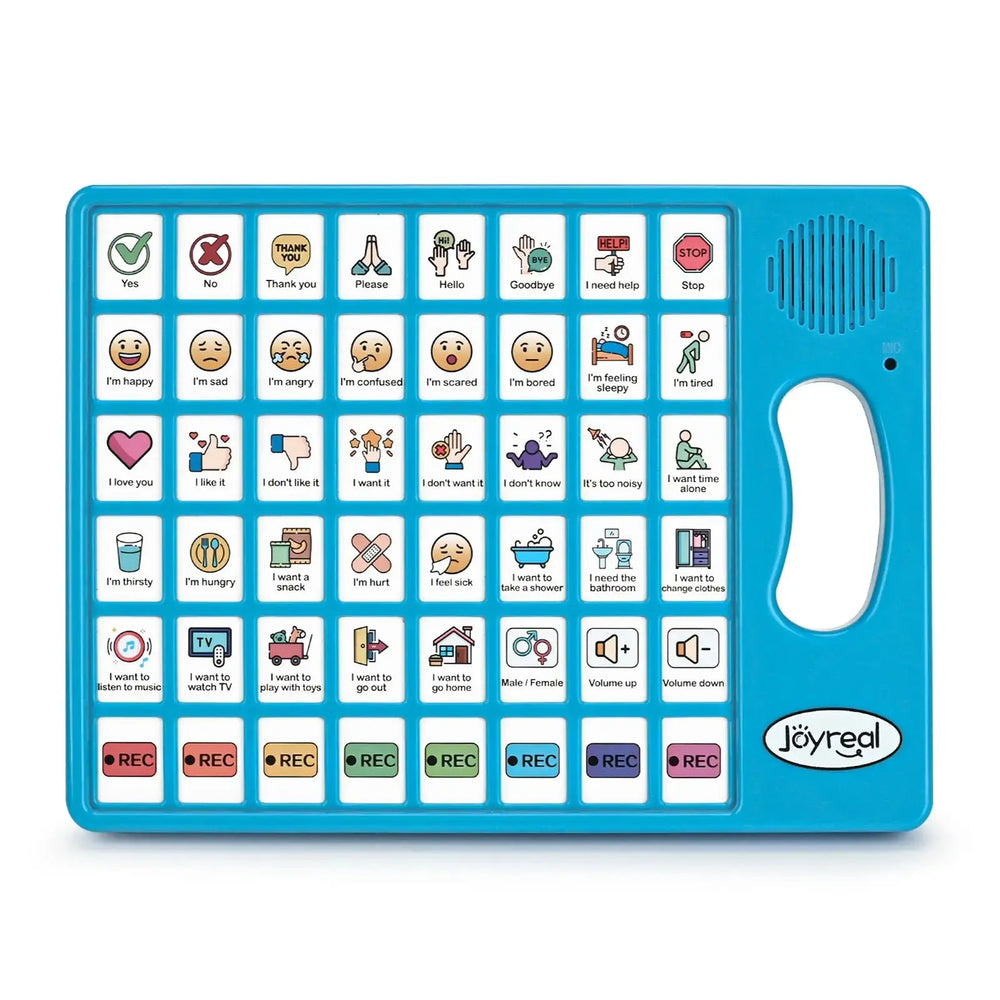
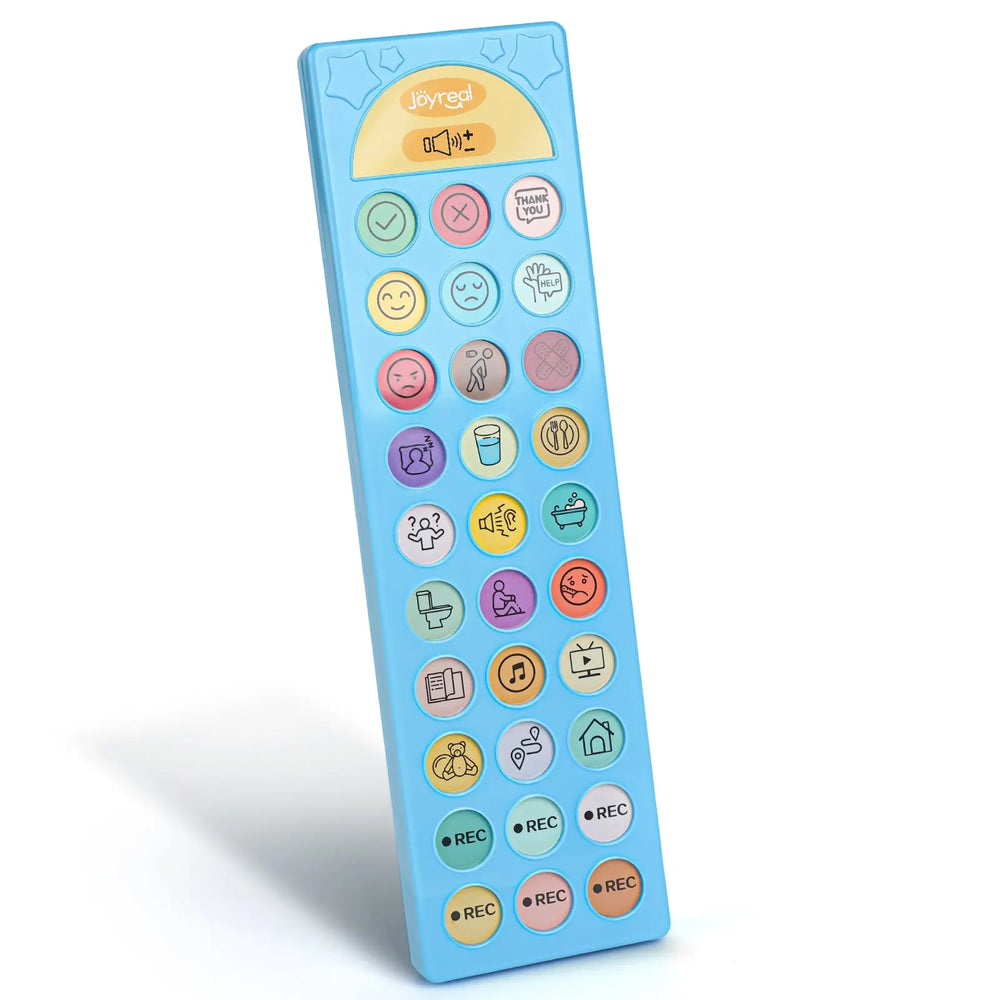
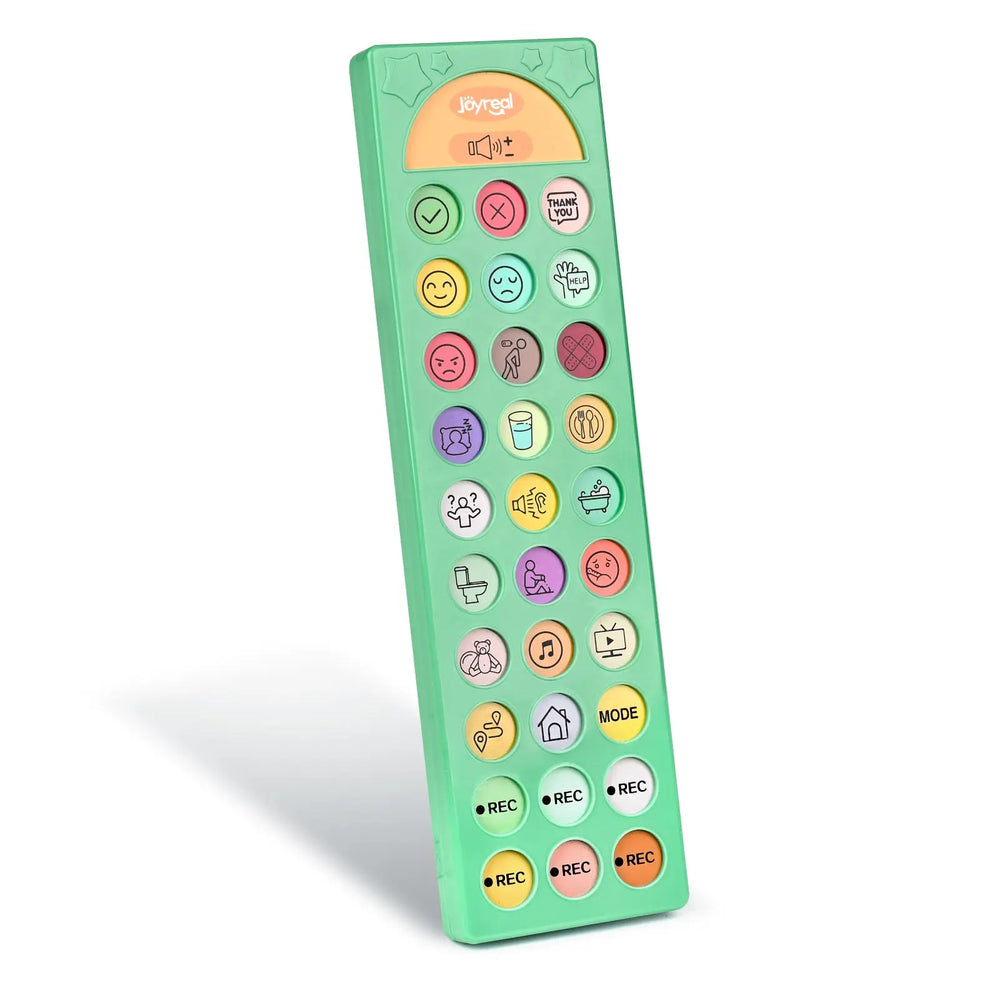
A Simple Beginner Option: Where Joyreal AAC fits
For many families, the first step is not a complex tablet-based AAC system. It is a simple, repeatable home communication tool that helps a toddler express everyday words like “more,” “help,” “stop,” “eat,” “drink,” “all done,” and “break.”
Joyreal AAC was designed for this kind of early home support.
It can be used as an entry-level AAC communication device for toddlers who are autistic, nonverbal, minimally verbal, or speech delayed. Parents can introduce it during meals, playtime, transitions, bedtime, or moments when a child needs a quick and clear way to communicate.
Joyreal AAC may be especially helpful for families exploring AAC devices for autism, AAC devices for speech delay, or a communication device for non verbal toddlers who are not yet ready for a more complex tablet system.
It is not a replacement for speech therapy or professional evaluation. Instead, it can be part of a communication-friendly home environment where the child has more than one way to be understood.
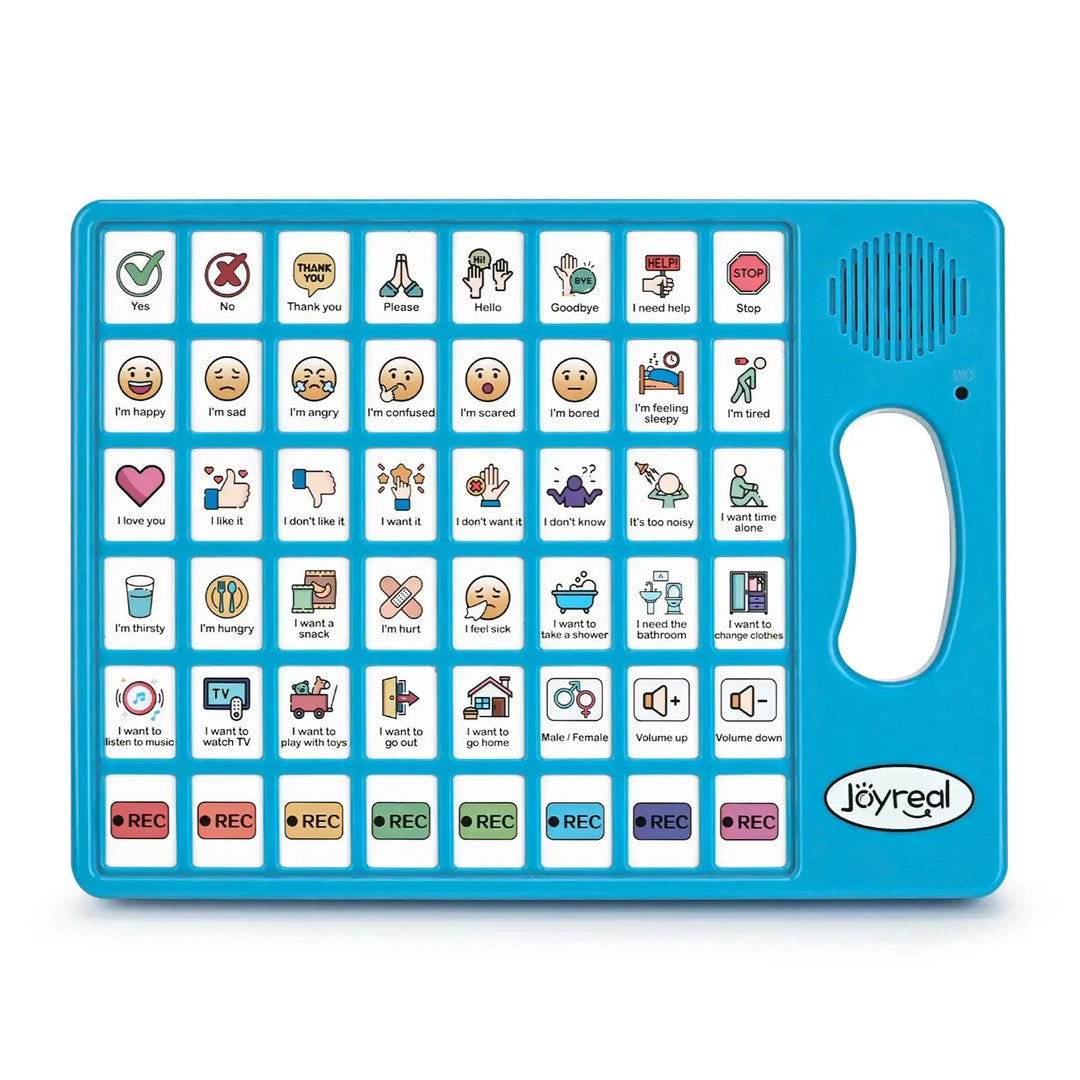
Best AAC device for kids
Plus AAC Communication
Board for Speech Support
$52.99 AT JOYREAL
54 reviews
Credit: Joyreal
What Parents Should Remember
Parents do not need to wait until age 4 or 5 to consider AAC.
They do not need to wait until their child is completely nonverbal.
They do not need to wait until every speech therapy option has been tried.
They do not need to wait until frustration becomes the main form of communication.
If your 2- or 3-year-old has something to say but cannot reliably say it yet, an AAC communication device may help.
AAC is not giving up on speech.
AAC is giving your child access to communication now.
For a toddler, being able to say “help,” “more,” “stop,” or “hurt” can change the whole day.
FAQ
What is the best AAC communication device for toddlers?
The best AAC communication device for toddlers is one that is simple, easy to use, and helpful in daily routines. For ages 2–3, many families begin with basic words such as more, help, eat, drink, stop, go, yes, no, all done, and break.
Are AAC devices for autism only for nonverbal children?
No. AAC devices for autism can support nonverbal, minimally verbal, and speech-delayed autistic children. Some autistic children can speak a few words but still need AAC to express needs, feelings, choices, or frustration.
Can AAC devices for speech delay help if my child already says some words?
Yes. AAC devices for speech delay can help children communicate beyond their current spoken vocabulary. A toddler may say a few words but still need support with daily requests, emotions, refusal, transitions, or pain.
When should I start using a communication device for non verbal toddlers?
Parents can consider a communication device for non verbal toddlers when a child cannot reliably express basic needs, feelings, or choices through speech. Age 2 or 3 is not too early to begin simple AAC support.
Will an AAC communication device stop my child from talking?
Current evidence does not show that AAC stops speech development. AAC can support communication while spoken language continues to develop. Parents should also work with a speech-language pathologist or early intervention provider when possible.
Do I need a diagnosis before using AAC?
No. A child does not need a formal autism diagnosis or speech diagnosis before parents begin using simple AAC strategies. If your child is struggling to communicate, you can introduce support while also speaking with a pediatrician or speech-language professional.

Popular Guides for Parents
- DIY Busy Board: A Guide to Making Your Own
- Montessori Wooden Toys: Choose Baby Walking Toys to Boost Early Skills
- Montessori Busy Boards by Age: Safe, Skill-Building Toys for 10 Months to 4 Years
- How Do Different Colors Affect Sensory Overload in Autistic Children?
- Noah’s Ark Toy: Building Skills Through Play
- Best Busy Boards for 1 Year Old: A Parent’s Guide to Sensory Play
Recent Post

Wooden Musical Toys vs Electronic Music Toys: Which Is Better for Open-Ended Play?
For parents who want a calmer play environment, the choice between...

10 Simple Parent-Child Music Games Using a Toddler Drum Set
A toddler drum set can become much more than a noisy toy. With a fe...

Noah’s Ark Activities for Sunday School and Preschool
A Noah’s Ark toy can turn a familiar Bible story into a hands-on ac...

Noah’s Ark Toy Gift Guide: What Should Parents Check Before Buying?
A noah’s ark toy can be a thoughtful birthday, baptism, Christmas, ...

Can a Noah’s Ark Toy Be Used for Science and Nature Play?
Yes. A noah’s ark toy can be used as a starting point for simple sc...

How Can AAC Help a Child Communicate Pain, Illness, or Discomfort?
A child who cannot reliably use speech may still notice pain, illne...

How to Model AAC During Play Without Pressuring Your Child
For many children, play is one of the most comfortable places to pr...

How Can Parents Help a Child Use AAC at School and Home?
How Can Parents Help a Child Use AAC at School and Home? Children w...

AAC for Siblings and Playdates: Helping Children Join Social Play
Children do not need to use speech to take part in sibling play or ...

How to Teach Independent Play With a Busy Board Without Overhelping
Independent play does not usually begin with a parent stepping away...