
Can a Noah’s Ark Toy Be Used for Science and Nature Play?
Yes. A noah’s ark toy can be used as a starting point for simple science and nature play, especially when children are learning through hands-on exploration. The ark and animal figures can support conversations about floating, sinking, habitats, weather, land, and water.
These activities do not need to be presented as a formal science lesson. For homeschool families and preschool teachers, a few minutes of observing, sorting, testing, and talking can turn familiar pretend play into an early cross-curricular learning experience.

How can a Noah’s Ark toy support science play?
A noah’s ark toy supports science play by giving children familiar objects to observe, compare, classify, and discuss. The toy does not need to contain special science features. Parents and teachers can add everyday materials such as a bowl of water, paper, blocks, leaves, or simple picture cards.
Children can explore questions such as:
- What floats and what sinks?
- Where might different animals live?
- What changes when the weather changes?
- Which animals belong on land, in water, or in more than one environment?
The adult’s role is to ask a question, give the child time to explore, and describe what happens without rushing to provide every answer.
Can children learn about floating and sinking?
Yes, children can explore floating and sinking with a supervised water activity using safe, water-appropriate objects. A toy ark can introduce the idea of floating, while other household objects can be compared in a separate container.
Fill a shallow basin with water and invite children to predict what might happen to a plastic lid, wooden block, stone, leaf, or empty cup. Ask, “What do you think will happen?” Then test one item at a time.
For safety, do not place a toy in water unless its care instructions allow it. Instead, use the ark as part of the conversation and conduct the experiment with materials chosen specifically for water play. Keep the activity closely supervised, especially around young children and open water.
After each test, use simple language:
- “It stayed on top.”
- “It went to the bottom.”
- “It is heavier.”
- “What could we test next?”
The purpose is observation and prediction, not proving a complicated scientific rule.
How can children explore animal habitats?
Children can learn about habitats by sorting animals according to where they might live and what they may need. Place a blue cloth or sheet of paper on one side of the play area for water and a green or brown surface on the other side for land.
Invite children to place each animal in a group. Some choices may be obvious, while others can lead to useful discussion. You might ask:
- “Which animals might live on land?”
- “Which animals spend time in water?”
- “What would this animal need in its home?”
- “Can an animal belong in more than one group?”

Keep the activity open-ended. The goal is to encourage children to notice differences between animals and environments, not to require perfect classification from memory.
Can a Noah’s Ark toy be used for weather learning?
Yes, the noah’s ark story can provide a familiar context for talking about rain, clouds, wind, sunshine, and changing weather. Before play, look outside together and describe what you see. Is the sky bright, cloudy, windy, or wet?
Create simple weather cards or use drawings made by the children. During pretend play, children can choose a weather card and change the story setting:
- Clouds gather above the ark.
- Rain begins to fall.
- The wind moves the paper leaves.
- The sun appears after the rain.

This activity can lead to a simple daily weather routine. Children may draw the sky, choose a matching card, or place the card beside the ark. It connects pretend play with real-world observation.
How can children sort land and water animals?
Sorting land and water animals helps children practice noticing where animals move, eat, and spend time. Use two labeled areas or natural materials, such as a tray of pebbles for land and a blue towel for water.
Let children decide where each figure belongs before discussing their choices. For older preschoolers, introduce a third group: animals that may use both land and water.
Parents can extend the activity by asking children to compare movement:
- “How does this animal move on land?”
- “How might it move through water?”
- “What body parts help it move?”
These questions encourage children to connect an animal’s body and behavior with its environment in a simple, age-appropriate way.
How can homeschool families connect science with storytelling?
Homeschool families can use the story as a starting point, then follow the child’s questions into science, nature, art, and language. After reading or retelling the story, choose one investigation rather than trying to cover every topic in one sitting.
For example, a short learning sequence might be:
- Read or tell a few parts of the Noah’s Ark story.
- Choose one animal and talk about where it lives.
- Sort several animals into land and water groups.
- Make a weather drawing.
- Finish with open-ended pretend play.
For more ideas about using an ark in hands-on learning, explore Noah’s Ark play and learning activities.
Is the Joyreal Noah’s Ark toy useful for nature play?
The Joyreal Noah’s Ark toy can be used as a familiar play setting for animal sorting, storytelling, counting, and simple nature conversations. Parents and teachers can review the product details and use the toy according to its care and supervision guidance.
Because children learn in different ways, the toy can be introduced during a short homeschool activity, placed in a preschool discovery area, or used as part of a guided group lesson. A Joyreal noah’s ark toy does not need to replace real outdoor observation or hands-on experiments. It can simply help children move from a familiar story into questions about the natural world.
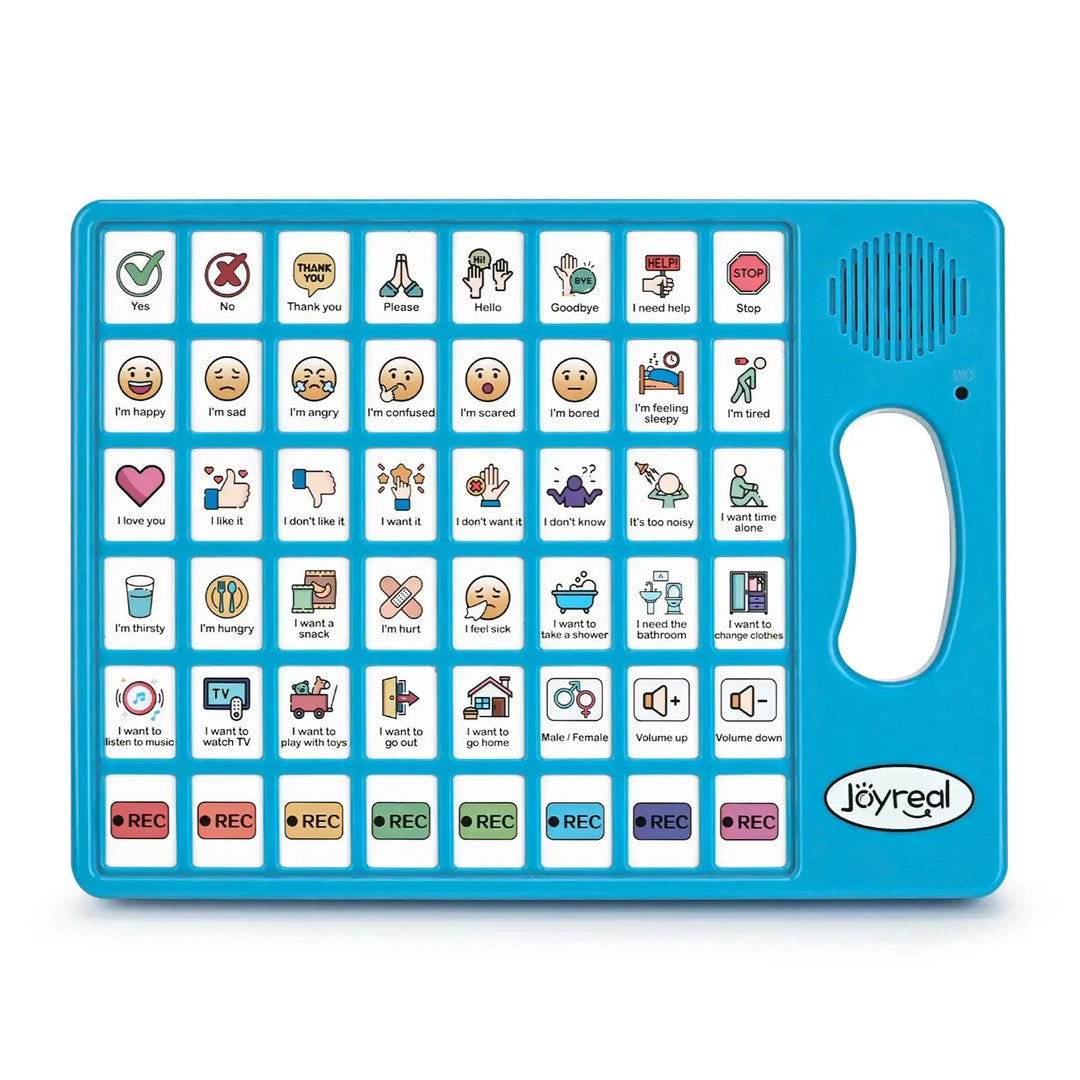
Best AAC device for kids
Plus AAC Communication
Board for Speech Support
$52.99 AT JOYREAL
54 reviews
Credit: Joyreal
What should adults remember during these activities?
Adults should keep the activities simple, supervised, and connected to real observation. Avoid presenting a pretend-play idea as a complete scientific explanation. Let children make predictions, notice results, and revise their ideas.
Use close supervision around water, small figures, and loose materials. Follow the toy’s care instructions, and do not submerge it unless the manufacturer specifically says that it is suitable for water use.
Final thoughts
A Noah’s Ark toy can be more than a religious story prop. With thoughtful questions, it can become part of science and nature play about floating, sinking, habitats, weather, and animal environments.
The strongest activities are short and flexible. Start with the child’s curiosity, add simple materials, and allow the play to move naturally between storytelling, observation, classification, and conversation.


Popular Guides for Parents
- DIY Busy Board: A Guide to Making Your Own
- Montessori Wooden Toys: Choose Baby Walking Toys to Boost Early Skills
- Montessori Busy Boards by Age: Safe, Skill-Building Toys for 10 Months to 4 Years
- How Do Different Colors Affect Sensory Overload in Autistic Children?
- Noah’s Ark Toy: Building Skills Through Play
- Best Busy Boards for 1 Year Old: A Parent’s Guide to Sensory Play
Recent Post

Wooden Musical Toys vs Electronic Music Toys: Which Is Better for Open-Ended Play?
For parents who want a calmer play environment, the choice between...

10 Simple Parent-Child Music Games Using a Toddler Drum Set
A toddler drum set can become much more than a noisy toy. With a fe...

Noah’s Ark Activities for Sunday School and Preschool
A Noah’s Ark toy can turn a familiar Bible story into a hands-on ac...

Noah’s Ark Toy Gift Guide: What Should Parents Check Before Buying?
A noah’s ark toy can be a thoughtful birthday, baptism, Christmas, ...

Can a Noah’s Ark Toy Be Used for Science and Nature Play?
Yes. A noah’s ark toy can be used as a starting point for simple sc...

How Can AAC Help a Child Communicate Pain, Illness, or Discomfort?
A child who cannot reliably use speech may still notice pain, illne...

How to Model AAC During Play Without Pressuring Your Child
For many children, play is one of the most comfortable places to pr...

How Can Parents Help a Child Use AAC at School and Home?
How Can Parents Help a Child Use AAC at School and Home? Children w...

AAC for Siblings and Playdates: Helping Children Join Social Play
Children do not need to use speech to take part in sibling play or ...

How to Teach Independent Play With a Busy Board Without Overhelping
Independent play does not usually begin with a parent stepping away...