
From Letters to Language: Helping Nonverbal Kids Communicate with Joyreal AAC
Many parents notice something fascinating: “My child doesn’t talk but knows letters.”
At first, it feels confusing — how can a child recognize letters or sounds but not use words? Yet, this unique behavior often reveals not a limitation, but a hidden strength.
Let’s explore what this means, why it happens, and most importantly — how you can help your child find their voice through their love for letters.

Understanding the Situation: Why Some Children Don’t Speak Yet Recognize Letters
What It Means When Your Child Knows Letters but Doesn’t Talk
A child who’s nonverbal yet identifies letters, sounds, or even entire words, might be showing signs of advanced pattern recognition. This is common in children with speech delays, autism spectrum disorder (ASD), or hyperlexia — a condition where children read words far earlier than expected, often without conversational language.
Parents often ask, “Does this mean my child will talk one day?”
The answer: Yes, many do. Recognizing letters is a form of symbolic understanding — a cognitive skill related to communication. It’s an encouraging sign that your child’s brain is actively learning patterns and meaning, even if speech hasn’t yet developed.
The Link Between Letter Recognition and Brain Development
Letter awareness activates the left hemisphere — the same area responsible for language comprehension. When children show early fascination with letters or sounds, they’re actually strengthening neural pathways that support speech later on.
In short, their interest in letters is not random — it’s a window into how their brain processes information.
Possible Explanations: From Speech Delay to Hyperlexia and Autism
Speech Delay vs Autism: Key Differences
A simple speech delay may involve slow verbal development but normal social interaction and play skills.
In contrast, autism may involve broader challenges such as difficulty making eye contact, sensory sensitivities, or repetitive behaviors.
| Feature | Speech Delay | Autism Spectrum |
| Eye Contact | Usually normal | Often reduced |
| Social Interest | Active | Limited or repetitive |
| Focus on Letters | Moderate | Intense and repetitive |
| Response to Name | Consistent | May vary |
Understanding these differences helps parents know whether to seek developmental evaluation.
What Is Hyperlexia?
Hyperlexia refers to children who can read or identify letters at an unusually early age, often before age 3, but struggle with speech or comprehension. It’s common among autistic children but can also appear independently.
These kids may memorize alphabets, brand names, or phonics songs — showing an impressive visual memory.
Why Autistic Children May Be Drawn to Letters and Sounds
Autistic children often find comfort in predictable patterns and repetition. Letters and phonics provide exactly that — structured, rhythmic, and visually stable stimuli. This fascination can be leveraged to build language through structured play and AAC tools.
Early Communication Tools That Can Help Your Child
Phonics-Based Learning: Turning Interest into Speech
Phonics teaches the sound behind each letter. For nonverbal children, this approach connects visual symbols (letters) with auditory cues (sounds), bridging the gap between recognition and expression.
Start with songs like “A says /æ/” and interactive letter blocks. Gradually encourage your child to match letters to pictures or AAC icons.
AAC Devices: Giving a Voice Before Words Come
AAC (Augmentative and Alternative Communication) devices — such as tablets or communication boards — allow children to express wants, feelings, and ideas without speech.
Modern AAC systems (like TouchChat, Proloquo2Go, or CoughDrop) include letter-based keyboards for early readers, enabling kids who love letters to type before they talk.
Letter-Based Communication Systems
Tools like Letterboards and Phonics AAC devices can empower your child to spell, express, and eventually verbalize. This approach uses their existing letter knowledge to build communication naturally.

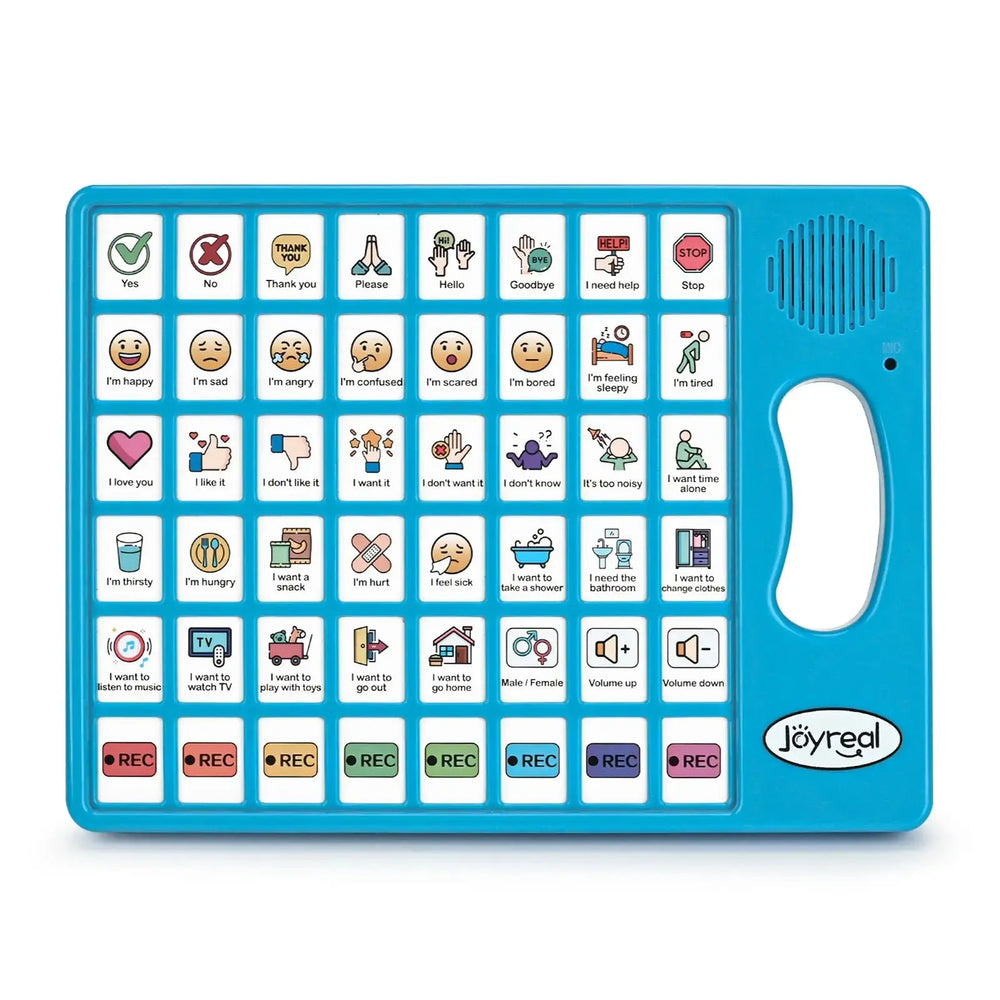
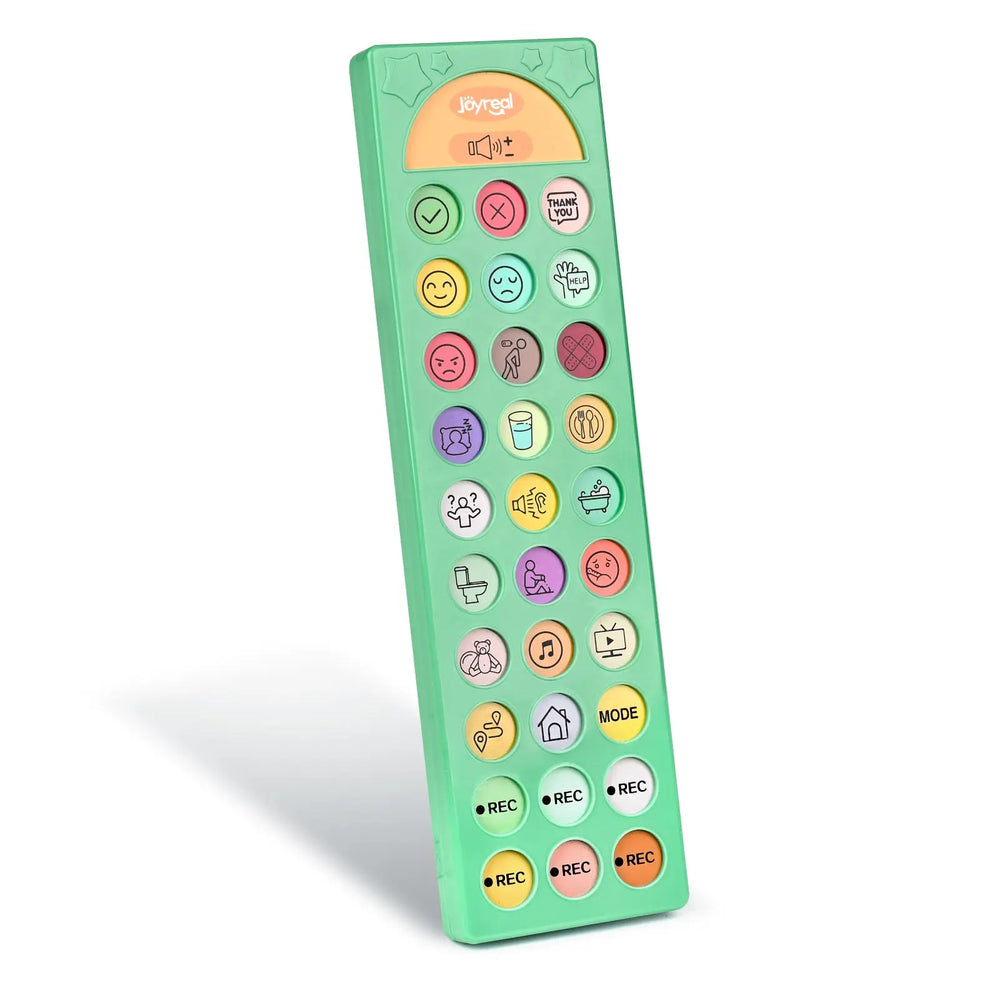
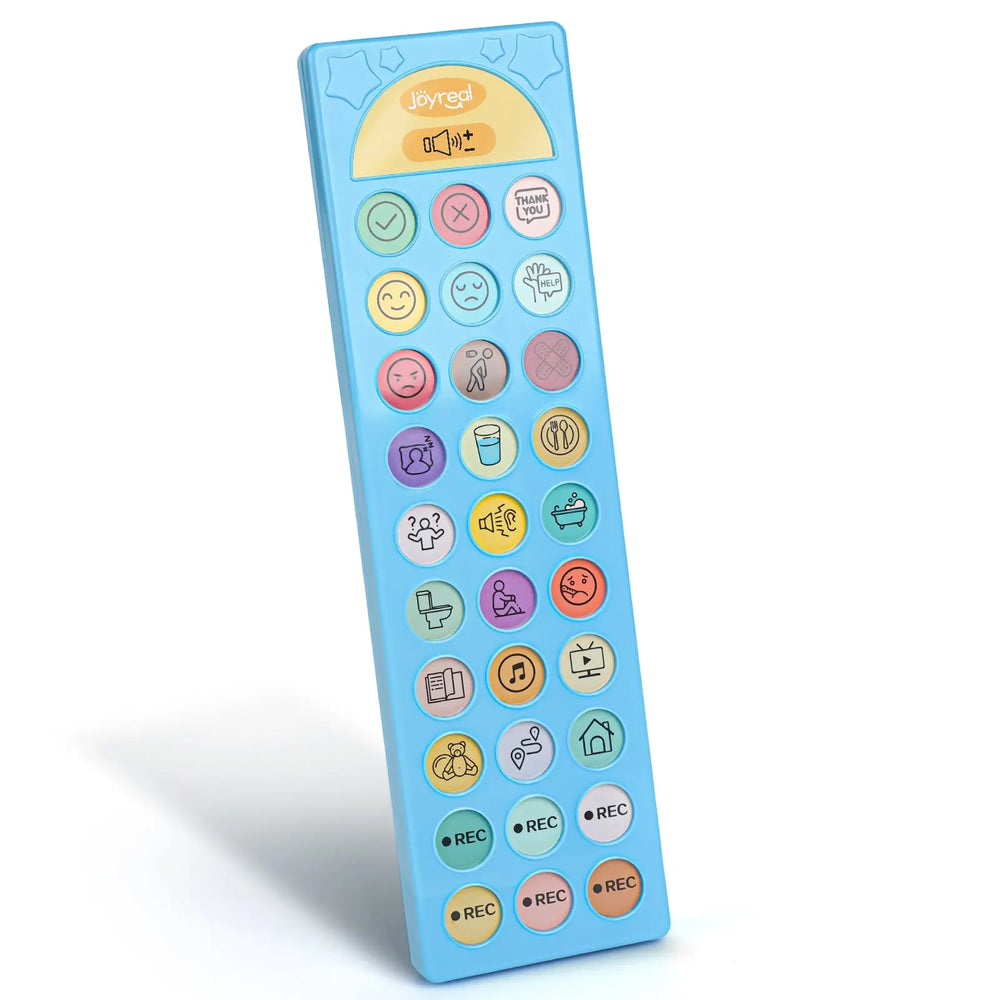
Recommended Solution: Joyreal AAC — Giving Every Child a Voice Before Words
If your child doesn’t talk but recognizes letters, Joyreal AAC can be a life-changing communication tool.
Designed specifically for nonverbal or minimally verbal children, Joyreal AAC combines phonics, letters, and visual icons to turn a child’s fascination with alphabets into meaningful communication.
Instead of waiting for speech to appear, Joyreal talking aid helps children express their needs, emotions, and thoughts through letter-based interaction.
Whether your child is on the autism spectrum, experiencing speech delay, or showing signs of hyperlexia, Joyreal AAC bridges the gap between understanding and expression.
Many parents have reported that with consistent use, their children began typing simple words, showing improved comprehension, and even starting to speak aloud.
It’s not just an app — it’s a bridge to connection and a source of hope for families waiting to hear their child’s first words.

Practical Steps for Parents: How to Support Nonverbal Learning
- Follow their lead – Engage in letter play; don’t interrupt their focus.
- Use visuals – Flashcards, magnetic alphabets, and phonics apps.
- Encourage imitation – Model letter sounds during play.
- Create daily routines – Morning letter songs, bedtime alphabet reading.
- Celebrate every sound – Every vocal attempt matters.
When to Seek Professional Help
If your child:
- Doesn’t use any words by age 2
- Rarely responds to name
- Shows intense fixation on letters but limited social play
It’s time to consult a speech-language pathologist or developmental pediatrician.
Early intervention makes a huge difference.
Real Stories: Parents Who Turned Letter Obsession into Progress
One parent shared,
“My son didn’t say a word until age 4. But he knew every letter and sound. We started using a letterboard and AAC app, and now he types full sentences!”
These stories remind us: letter fascination is not a red flag — it’s a doorway to connection.
Conclusion: From Letters to Language—Your Child’s Journey Has Begun
If your child doesn’t talk but knows letters, take heart — this is a sign of potential, not limitation.
With the right tools — phonics, AAC, and letter-based communication — you can turn fascination into fluent expression.
Every “A” and “B” is a step toward a voice waiting to emerge. ❤️
FAQs
Q1: Does recognizing letters mean my child is intelligent?
- Yes! Letter recognition reflects strong pattern and memory skills.
Q2: Is this always autism?
- Not necessarily. Some children simply experience delayed speech or hyperlexia.
Q3: Can AAC delay speech?
- No. Research shows AAC supports speech by reducing frustration and encouraging communication.
Q4: What’s the best phonics program for nonverbal kids?
- Try multisensory tools like Jolly Phonics or Touch and Learn Alphabet Phonics.
Q5: When should I start therapy?
- As early as possible — even before age 3.
Q6: How can I motivate my child to use words?
- Connect speech with interests. If they love “B,” make it fun — “B-ball,” “B-bounce,” “B-baby!”

Popular Guides for Parents
- DIY Busy Board: A Guide to Making Your Own
- Montessori Wooden Toys: Choose Baby Walking Toys to Boost Early Skills
- Montessori Busy Boards by Age: Safe, Skill-Building Toys for 10 Months to 4 Years
- How Do Different Colors Affect Sensory Overload in Autistic Children?
- Noah’s Ark Toy: Building Skills Through Play
- Best Busy Boards for 1 Year Old: A Parent’s Guide to Sensory Play
Recent Post

Wooden Musical Toys vs Electronic Music Toys: Which Is Better for Open-Ended Play?
For parents who want a calmer play environment, the choice between...

10 Simple Parent-Child Music Games Using a Toddler Drum Set
A toddler drum set can become much more than a noisy toy. With a fe...

Noah’s Ark Activities for Sunday School and Preschool
A Noah’s Ark toy can turn a familiar Bible story into a hands-on ac...

Noah’s Ark Toy Gift Guide: What Should Parents Check Before Buying?
A noah’s ark toy can be a thoughtful birthday, baptism, Christmas, ...

Can a Noah’s Ark Toy Be Used for Science and Nature Play?
Yes. A noah’s ark toy can be used as a starting point for simple sc...

How Can AAC Help a Child Communicate Pain, Illness, or Discomfort?
A child who cannot reliably use speech may still notice pain, illne...

How to Model AAC During Play Without Pressuring Your Child
For many children, play is one of the most comfortable places to pr...

How Can Parents Help a Child Use AAC at School and Home?
How Can Parents Help a Child Use AAC at School and Home? Children w...

AAC for Siblings and Playdates: Helping Children Join Social Play
Children do not need to use speech to take part in sibling play or ...

How to Teach Independent Play With a Busy Board Without Overhelping
Independent play does not usually begin with a parent stepping away...