
How Do I Make AAC Part Of Daily Routines?
Quick Answer: Use AAC In Real Moments
AAC does not need to become another task on your schedule.
It works best when it fits into moments your child already knows: breakfast, playtime, getting dressed, leaving the house, bath time, bedtime, or those hard moments when your child wants help but cannot easily explain what is wrong.
Many parents feel unsure at first. The tool may sit on the table. Everyone may want to use it, but no one knows exactly when to start.
A helpful rule is simple:
Use AAC when there is already a reason to communicate.
Your child wants more cereal.
They need help opening a toy.
They want music to stop.
They are upset during a transition.
They need a break before bedtime.
These are not separate practice sessions. They are real communication moments.
ASHA describes AAC as a broad communication support that may include gestures, signs, picture boards, speech-generating devices, and apps. ASHA also notes that AAC can be introduced early and does not require a child to meet specific prerequisites first.

Why Daily Routines Make AAC Easier
It is common for families to use AAC during therapy but forget it during busy home routines.
Mornings are rushed.
Meals are messy.
Transitions are stressful.
Bedtime is tiring.
Parents may also worry about using the tool “wrong,” so they wait for a perfect time. But daily communication rarely happens in perfect conditions.
Your child does not only need a way to communicate during therapy. They need a way to say “help,” “more,” “stop,” “all done,” or “break” during real life.
The goal is not perfect use.
The goal is familiar use.
When a child sees the same few words used during the same daily moments, the communication system starts to feel more predictable and useful.
The Simple Rule: Model, Pause, Respond
When you are not sure what to do, remember three steps:
Model. Pause. Respond.
Model the word during a real moment.
Pause long enough for your child to process.
Respond to any communication attempt.
For example, during breakfast, you might press or point to “drink” and say:
“Drink water.”
Then pause.
Your child may look at the cup, reach for it, make a sound, touch the device, point, or simply watch you. That still matters. They are learning that the tool has a purpose.
You do not need to ask, “What does this say?”
You do not need to say, “Press it first.”
You do not need to turn every moment into a quiz.
Show the message. Give time. Respond warmly.
ASHA’s early intervention guidance also highlights the value of caregiver involvement and using AAC in natural routines such as mealtime, play, and bath time.
Start With One Easy Routine
Trying to use an AAC communication device, app, or picture board everywhere at once can feel overwhelming.
Start smaller.
Choose one routine your child already understands. Snack time is often a good place to begin because it is predictable and motivating.
Try a few useful words:
“Eat.”
“Drink.”
“More.”
“All done.”
“Help.”
Use the words while the moment is happening:
“More apple.”
“Drink water.”
“All done.”
Your child does not need to copy immediately. Just like children hear spoken words many times before they say them, they may need to see this communication support used many times before using it independently.
Small, repeated moments are more helpful than one long practice session.
Daily Moments Where AAC Can Fit
| Daily Moment | What Your Child May Want To Say | Words To Try |
| Meals | I want more. I am finished. | More, Eat, Drink, All Done |
| Playtime | Do it again. I need help. | Go, Again, Help, Stop |
| Getting Dressed | Help me. I do not like this. | Help, On, Off, Stop |
| Transitions | I am not ready. I need time. | Wait, Break, All Done |
| Bath Time | Stop. That feels uncomfortable. | Stop, Wash, Hurt, All Done |
| Bedtime | I need comfort. I want a drink. | Hug, Drink, Sleep, Break |
| Frustration | Help me. I need space. | Help, Stop, No, Break |
This table is not a strict schedule. It is a reminder that communication opportunities already exist throughout the day.
The best words are the ones your child actually needs.
A child who can say “stop” has a clearer way to refuse.
A child who can say “help” has a safer way to ask.
A child who can say “break” has another option before frustration becomes too big.
Try This Today: A 3-Day Starter Plan
Day 1: Choose One Routine
Pick one daily moment, such as snack time or playtime.
Choose three words.
For snack time, you might choose:
“More.”
“Drink.”
“All done.”
Use them naturally while speaking. Do not expect your child to copy right away.
Day 2: Repeat The Same Routine
Use the same words again.
Watch for small responses: looking, reaching, smiling, vocalizing, pointing, or moving closer.
Those responses count. Communication does not have to look perfect to be meaningful.
Day 3: Add One More Moment
Keep the first routine and add one more.
For example, use “help” during play or “break” during transitions.
Do not add too many words at once. Small steps are easier for both you and your child.
Where Joyreal AAC Can Fit
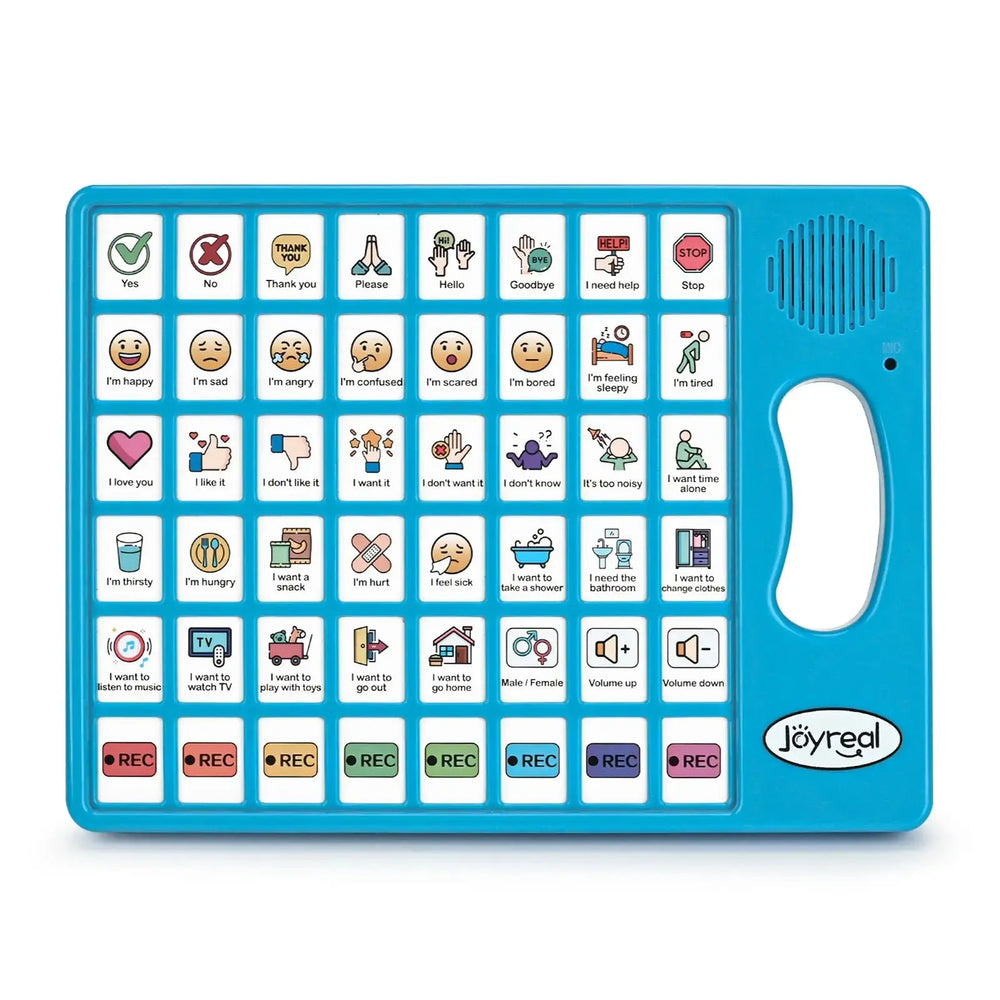
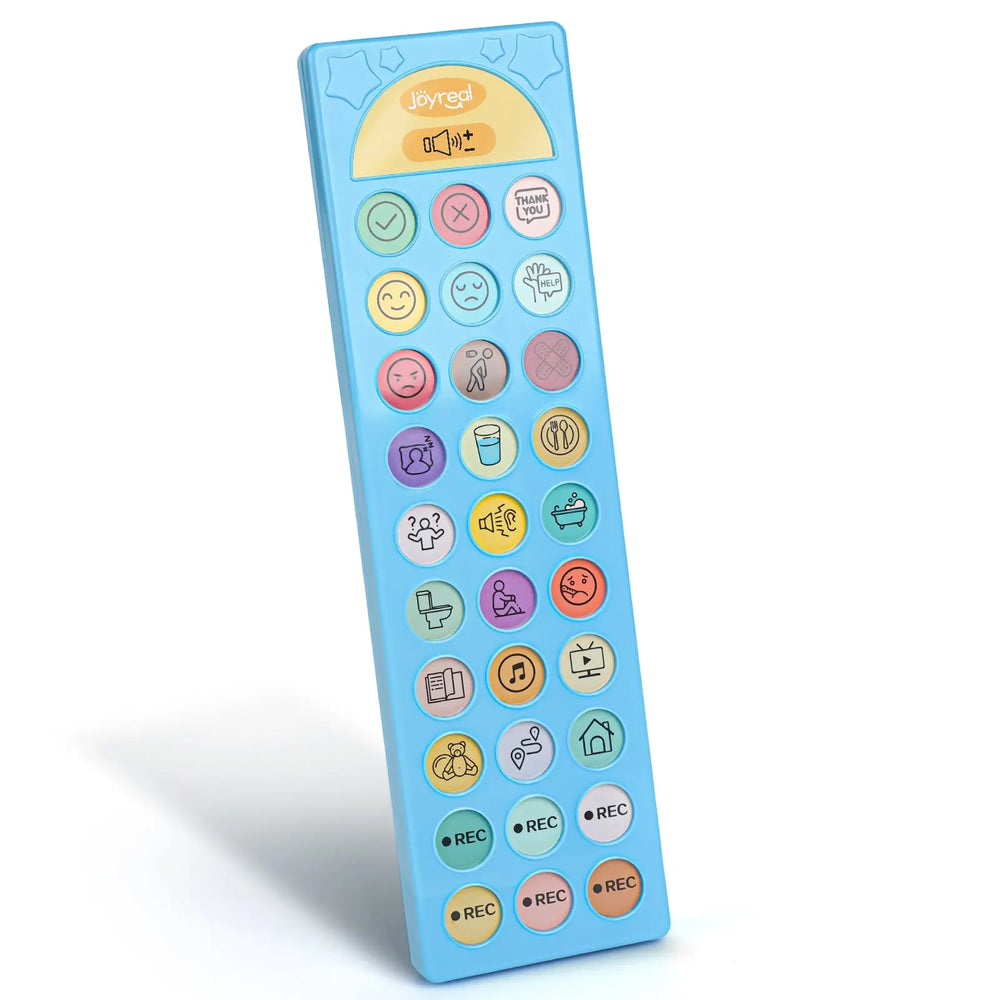
Joyreal Talking Aid can be used as a simple home communication support tool for children with limited speech, speech delay, or unreliable spoken communication.
For families beginning at home, it can help make daily routines feel more communication-friendly. Parents can use Joyreal AAC during:
Breakfast for “more,” “eat,” “drink,” and “all done”
Playtime for “go,” “stop,” “help,” and “again”
Transitions for “wait,” “break,” and “all done”
Emotional moments for “happy,” “sad,” “help,” or “stop”
Bedtime for “drink,” “break,” or “all done”
Joyreal AAC is not a replacement for speech therapy, autism assessment, school support, or professional guidance. Instead, it can serve as a simple starting point for families who want to bring communication support into real home routines.
Start with one part of the day first.
You do not need to use every word immediately. Let your child see that a message can lead to a response:
“I asked for help, and someone helped me.”
“I asked for more, and someone understood.”
“I asked for a break, and my need was respected.”
That is how daily communication becomes meaningful.
 What If Your Child Does Not Use It Yet?
A child may ignore the tool at first.
That does not mean it is not working.
They may need more time. They may need to watch you use it. The words may not feel useful yet. The tool may be too far away, too complicated, or introduced during a stressful moment.
Try adjusting the environment before assuming your child is refusing.
Keep it nearby.
Use fewer words.
Choose a motivating routine.
Model without pressure.
Pause after modeling.
Respond to gestures, sounds, pointing, or eye gaze too.
Communication grows when a child feels understood, not tested.
What Parents Should Remember
AAC does not have to take over your day.
It can fit into moments that are already happening.
Breakfast.
Shoes.
Toys.
Bath.
Bedtime.
Frustration.
Comfort.
Start small. Use one routine. Model a few useful words. Give your child time. Respond to every communication attempt.
The goal is not perfect use.
The goal is a child learning:
“My message matters.”
FAQ
How Do I Make AAC Part Of Daily Routines?
Start by using AAC during one predictable routine, such as meals, playtime, or bedtime. Model a few useful words, pause, and respond to any communication attempt.
How Often Should I Use AAC At Home?
You do not need to use it all day. Start with one or two short routines each day. Consistent daily use is more helpful than long practice sessions.
What Routine Should I Start With?
Snack time or playtime is often easiest because children usually have clear reasons to communicate, such as asking for more, needing help, or wanting something to happen again.
What Words Should I Use First?
Start with useful words such as more, help, stop, go, eat, drink, all done, break, yes, and no. These words help children request, refuse, choose, and express discomfort.
Should I Make My Child Use AAC Before Giving Them Something?
Avoid making communication feel like a test. Model the word, pause, and respond to the message your child is trying to share, whether it comes through the tool, gesture, sound, or body movement.
What If My Child Ignores Their AAC Device?
Keep modeling without pressure. Your child may need time to understand how the tool works. Try fewer words, a more motivating routine, easier access, and support from a speech-language professional when possible.


Popular Guides for Parents
- DIY Busy Board: A Guide to Making Your Own
- Montessori Wooden Toys: Choose Baby Walking Toys to Boost Early Skills
- Montessori Busy Boards by Age: Safe, Skill-Building Toys for 10 Months to 4 Years
- How Do Different Colors Affect Sensory Overload in Autistic Children?
- Noah’s Ark Toy: Building Skills Through Play
- Best Busy Boards for 1 Year Old: A Parent’s Guide to Sensory Play
Recent Post

Wooden Musical Toys vs Electronic Music Toys: Which Is Better for Open-Ended Play?
For parents who want a calmer play environment, the choice between...

10 Simple Parent-Child Music Games Using a Toddler Drum Set
A toddler drum set can become much more than a noisy toy. With a fe...

Noah’s Ark Activities for Sunday School and Preschool
A Noah’s Ark toy can turn a familiar Bible story into a hands-on ac...

Noah’s Ark Toy Gift Guide: What Should Parents Check Before Buying?
A noah’s ark toy can be a thoughtful birthday, baptism, Christmas, ...

Can a Noah’s Ark Toy Be Used for Science and Nature Play?
Yes. A noah’s ark toy can be used as a starting point for simple sc...

How Can AAC Help a Child Communicate Pain, Illness, or Discomfort?
A child who cannot reliably use speech may still notice pain, illne...

How to Model AAC During Play Without Pressuring Your Child
For many children, play is one of the most comfortable places to pr...

How Can Parents Help a Child Use AAC at School and Home?
How Can Parents Help a Child Use AAC at School and Home? Children w...

AAC for Siblings and Playdates: Helping Children Join Social Play
Children do not need to use speech to take part in sibling play or ...

How to Teach Independent Play With a Busy Board Without Overhelping
Independent play does not usually begin with a parent stepping away...