
How to Model AAC During Play Without Pressuring Your Child
For many children, play is one of the most comfortable places to practice communication. There is usually a shared activity, a clear reason to interact, and less pressure than during a formal lesson. Parents can support this process by modeling language on an AAC communication device while continuing to play naturally.
Modeling means showing your child how a message can be communicated. It does not mean asking your child to repeat the word, press the same button, or prove that they understood. The adult demonstrates, waits, and accepts any meaningful response.

What Does AAC Modeling During Play Look Like?
AAC modeling is simple: talk, point to or select a useful message, and continue the activity. The child does not need to copy you for the modeling to be valuable.
During a car game, you might model “go,” “stop,” “again,” or “fast.” During blocks, you might model “more,” “fall,” “help,” or “open.” During a favorite song, you might model “music,” “more,” “stop,” or “again.” Choose words that match what is happening in the moment.
Keep the model short. One or two words are often enough. You can speak naturally while briefly showing the message on the device, communication board, or other AAC system.
Why Should Parents Model Without Asking for Repetition?
Repeatedly asking a child to “say it,” “press the button,” or “show me” can make AAC feel like a test. Some children may stop engaging with the activity because they are focused on meeting the adult’s expectation instead of enjoying the play.
Instead of testing, treat AAC as a communication option that is available throughout the interaction. If you model “more” while adding another block, your child may respond with a button, a gesture, a look, a sound, or by reaching for another block. Acknowledge the response and keep playing.
The purpose is to demonstrate how communication works, not to demand immediate imitation.
How Do You Choose Which AAC Words to Model?
Start with words that give your child control over the activity. Useful play messages often include:
- More
- Again
- Go
- Stop
- Help
- Open
- My turn
- Your turn
- Look
- Different
- Finished
- Break
Do not focus only on requesting favorite objects. Children also need ways to refuse, comment, direct another person, ask for help, and end an activity. A balanced set of messages makes play more flexible.
How Long Should You Wait for a Response?
After modeling, pause for a few seconds and give your child time to process the message. A response may not happen immediately, and it may not look like pressing a button.
Your child may:
- Look toward the device.
- Reach for the toy.
- Use a gesture or sign.
- Make a sound or say a word.
- Move closer or move away.
- Smile, laugh, or change their action.
Accept these responses as information. If your child continues playing, follow their lead. If they walk away, let the activity end. Waiting should create space, not increase pressure.

What Should Parents Do If the Child Ignores the AAC Device?
Continue the play without insisting. A child may be paying attention to the toy, listening to the interaction, or communicating in another way. The device may also be too far away, difficult to access, or missing the words the child needs.
Check the practical details:
- Is the device within easy reach?
- Are the words relevant to this activity?
- Is the layout familiar?
- Is the activity moving too quickly?
- Are you asking too many questions?
If your child regularly avoids the system or cannot access it comfortably, ask a speech-language pathologist or AAC professional to review the setup. The right communication support depends on the individual child and environment.
How Can Grandparents and Caregivers Model AAC?
Give other communication partners a short, practical routine:
- Join the child’s activity.
- Model one useful message.
- Wait without repeating the request.
- Accept any clear response.
- Continue or pause the activity based on the child’s signal.
Caregivers do not need to model every word. A few consistent messages used naturally are more helpful than constant pointing or questioning. Share examples such as “go,” “more,” “help,” “stop,” and “finished” so everyone responds in a similar way.
Families can find more practical guidance in our article about AAC modeling at home.

How Can Joyreal AAC Fit Into Play?
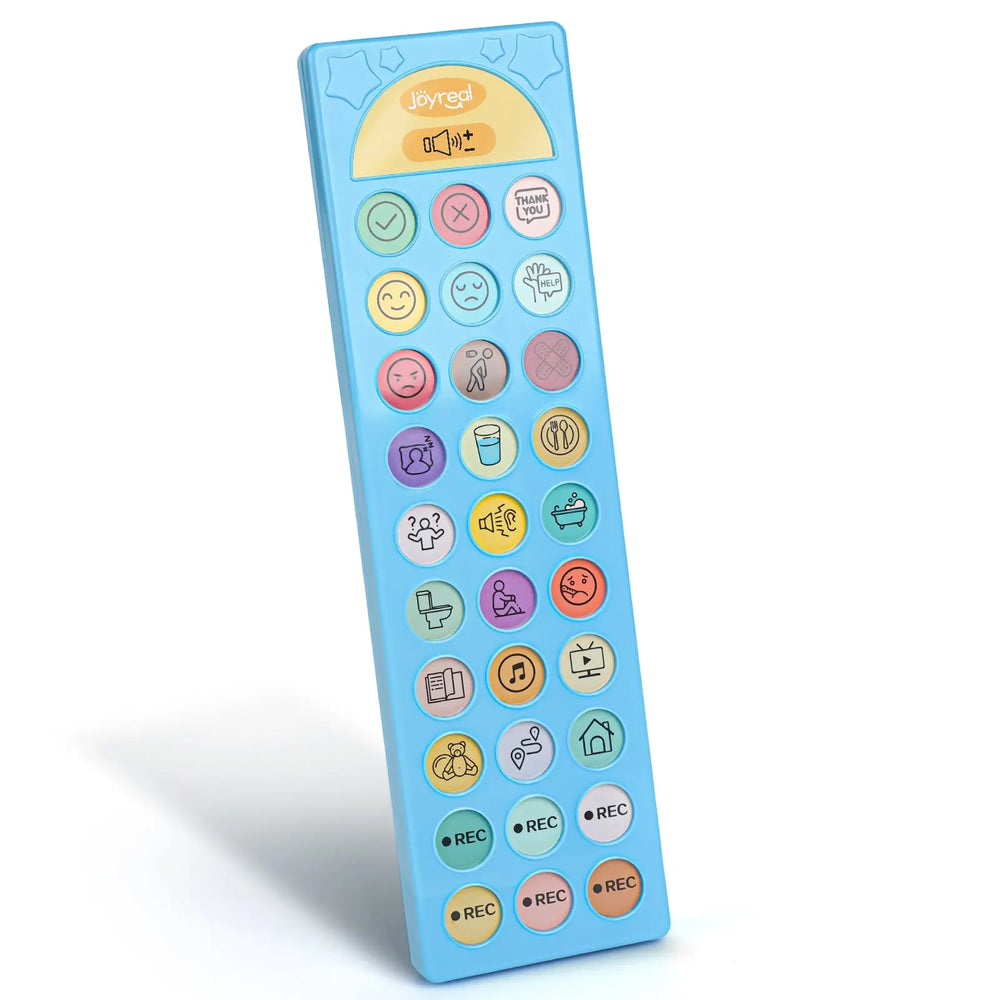
For families looking for a simple communication option during familiar games and daily routines, the Joyreal AAC Talking Aid can be introduced as one available way to model short, functional messages. Use it alongside gestures, signs, spoken language, pictures, or other AAC supports.
Choose messages that are relevant to the child’s preferred activities. The goal is to make communication available, not to require the child to use one specific tool before receiving attention, help, comfort, or access to play.

Frequently Asked Questions
Should I make my child repeat every AAC message?
No. Model the message, wait, and accept any meaningful response. Requiring repetition can make play feel like a test.
What if my child uses gestures instead of AAC?
Respond to the gesture while continuing to model AAC as an additional option. Communication can include movement, facial expression, sounds, signs, speech, pictures, and devices.
Can AAC modeling be used with AAC devices for autism?
Yes. AAC devices for autism may be used during play, routines, and social interaction when they fit the child’s communication needs. A qualified professional can help families choose and adjust an appropriate system.
How many words should I model during one play activity?
Start with one or two useful words. Add more gradually when the child and communication partners are comfortable.
Final Takeaway
To model AAC without pressure, join your child’s play, demonstrate a short message, wait, and accept the response that comes naturally. Do not require repetition or treat the device like a test.
When parents, grandparents, and caregivers model communication in ordinary moments, AAC can become part of enjoyable play rather than a separate task.


Popular Guides for Parents
- DIY Busy Board: A Guide to Making Your Own
- Montessori Wooden Toys: Choose Baby Walking Toys to Boost Early Skills
- Montessori Busy Boards by Age: Safe, Skill-Building Toys for 10 Months to 4 Years
- How Do Different Colors Affect Sensory Overload in Autistic Children?
- Noah’s Ark Toy: Building Skills Through Play
- Best Busy Boards for 1 Year Old: A Parent’s Guide to Sensory Play
Recent Post

Wooden Musical Toys vs Electronic Music Toys: Which Is Better for Open-Ended Play?
For parents who want a calmer play environment, the choice between...

10 Simple Parent-Child Music Games Using a Toddler Drum Set
A toddler drum set can become much more than a noisy toy. With a fe...

Noah’s Ark Activities for Sunday School and Preschool
A Noah’s Ark toy can turn a familiar Bible story into a hands-on ac...

Noah’s Ark Toy Gift Guide: What Should Parents Check Before Buying?
A noah’s ark toy can be a thoughtful birthday, baptism, Christmas, ...

Can a Noah’s Ark Toy Be Used for Science and Nature Play?
Yes. A noah’s ark toy can be used as a starting point for simple sc...

How Can AAC Help a Child Communicate Pain, Illness, or Discomfort?
A child who cannot reliably use speech may still notice pain, illne...

How to Model AAC During Play Without Pressuring Your Child
For many children, play is one of the most comfortable places to pr...

How Can Parents Help a Child Use AAC at School and Home?
How Can Parents Help a Child Use AAC at School and Home? Children w...

AAC for Siblings and Playdates: Helping Children Join Social Play
Children do not need to use speech to take part in sibling play or ...

How to Teach Independent Play With a Busy Board Without Overhelping
Independent play does not usually begin with a parent stepping away...