
Is Phonics-Based AAC Right for Your Nonverbal Child?
Why Nonverbal Children Need AAC Devices
For many parents, finding a communication device for nonverbal kids can be life-changing. Without the ability to communicate, children often experience behavioral struggles, isolation, and delayed social skills. AAC devices give them a “voice” — whether through pictures, text, or synthesized speech.
Research consistently shows that AAC does not delay natural speech; instead, it encourages it. When kids see their thoughts transformed into words and sounds, they gain the motivation to speak or imitate.
AAC Device for 3 Year Old – What to Consider
At age three, attention span is limited. Choose an aac device for 3 year old with:
- Bright visuals and sound feedback
- Limited, easy-to-access buttons
- Durable design for daily use
Look for apps or devices that allow symbol-to-sound connections before introducing full phonics.
Common Types of AAC Tools
AAC systems generally fall into two categories:
- Low-tech AAC: Picture boards, symbol charts, or communication books.
- High-tech AAC: Apps or devices that generate speech when words or letters are selected.
Choosing the right tool depends on your child’s age, motor ability, attention span, and cognitive readiness.
For example, AAC devices for toddlers often emphasize visual clarity and simplicity, while AAC devices for kids in later stages focus on literacy, sentence formation, and phonics.
Affordable AAC Options That Still Make a Big Impact
While many AAC systems can be expensive, Joyreal has made their devices accessible and affordable without compromising educational quality.
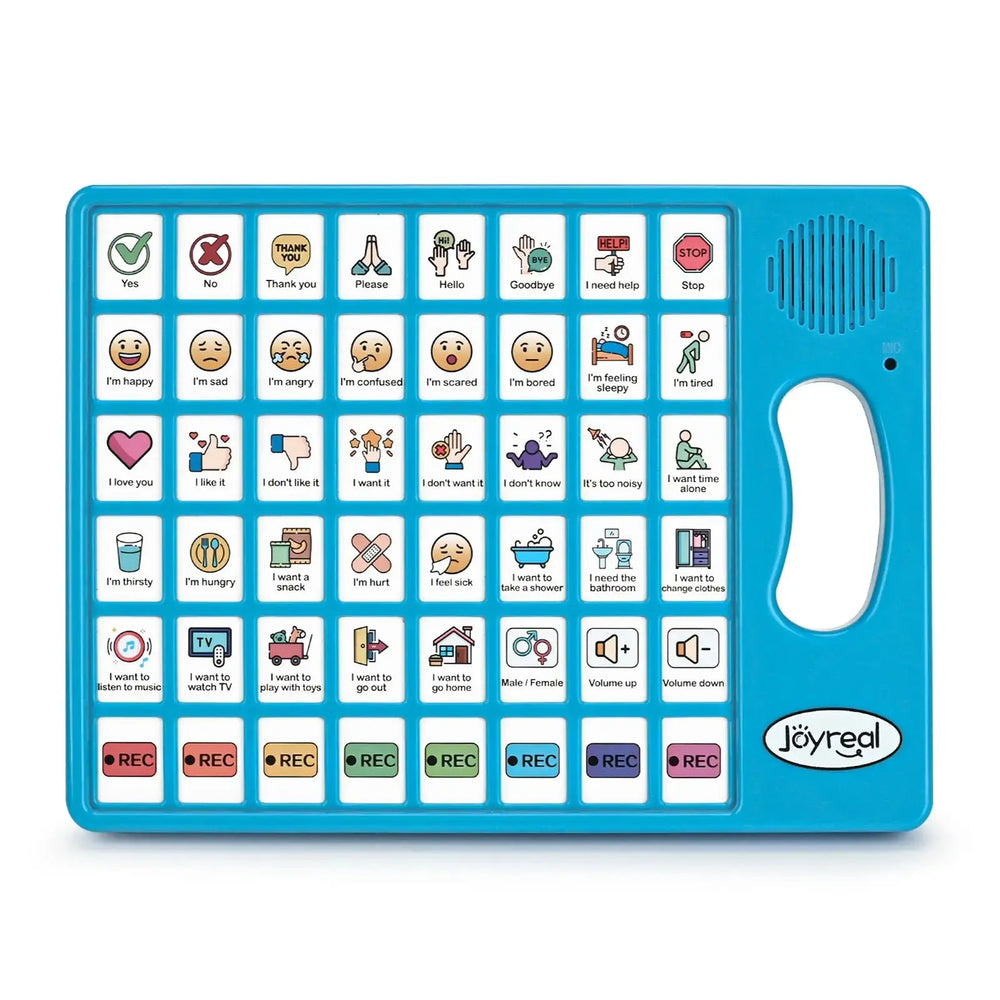
The Joyreal AAC Communication Board serves as a cheap AAC device that still delivers clear voice output and durable design — ideal for everyday family use.
Meanwhile, the Sentence-Building AAC Plus provides a long-term investment in a child’s language future, designed to grow with their literacy skills.
Joyreal AAC Communication Board for Speech Support Language Learning
This Joyreal AAC Communication Board is a low-tech but powerful communication tool ideal for toddlers and preschoolers just starting their AAC journey.
It focuses on basic vocabulary, sound recognition, and symbol-to-speech connections — helping children express simple ideas like “I want cookie” or “Go outside.”
Perfect for:
- Toddlers (2–4 years old) just beginning communication
- Families seeking an affordable, portable AAC option
- Children who benefit from visual and tactile cues
This board’s intuitive layout and responsive buttons make it one of the most effective yet cheap AAC device options for early learners. It lays a solid foundation for phonics-based learning by connecting pictures, symbols, and sounds — crucial for speech readiness.

Joyreal Sentence-Building AAC Plus | Phonics Language Learning Device for Nonspeaking Kids
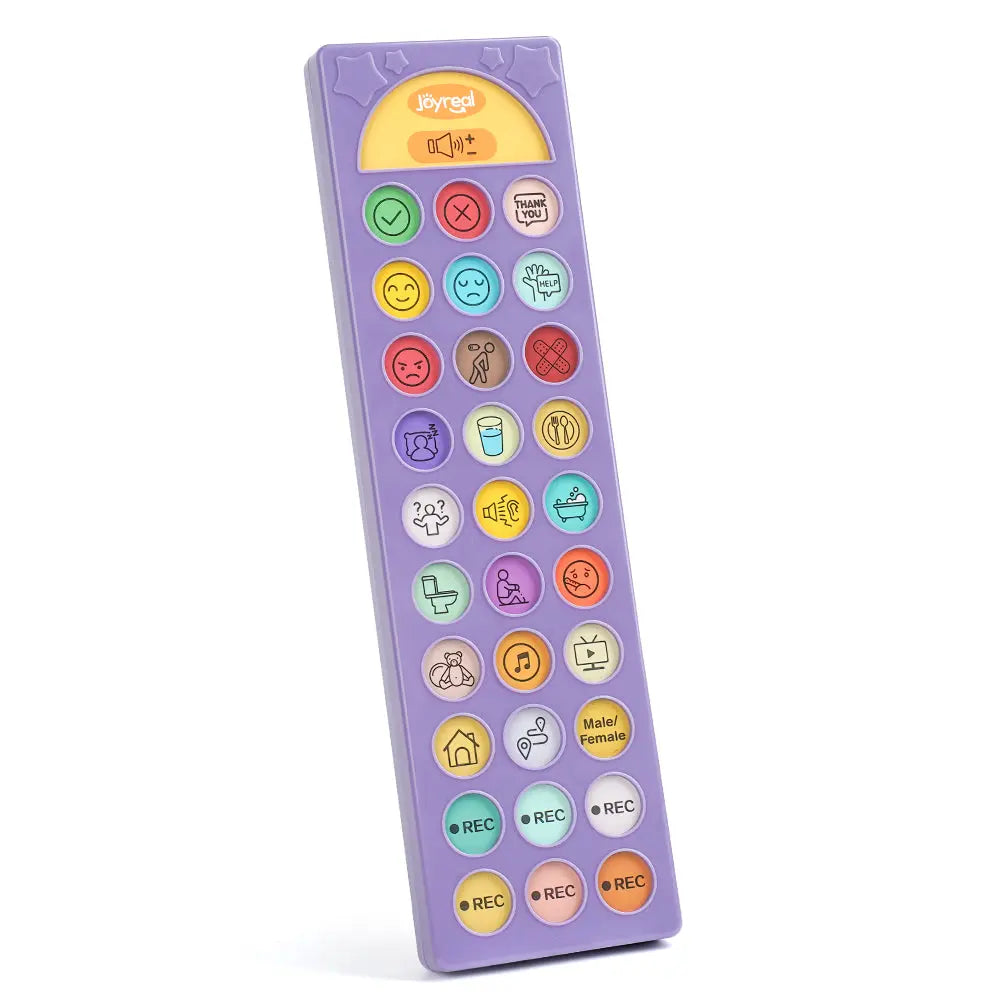
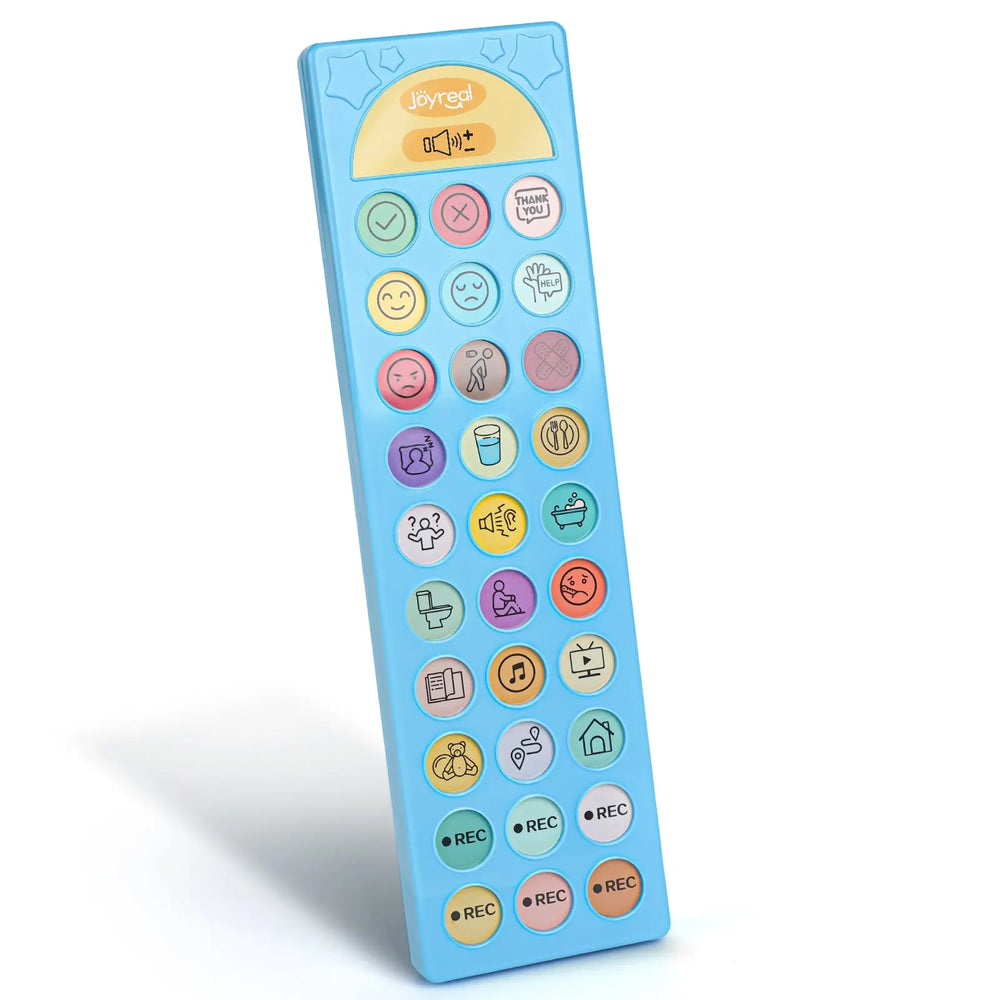
As children grow in awareness and skill, the next step is the Joyreal Sentence-Building AAC Plus, a high-tech device designed specifically for phonics and sentence-building learning.
It empowers nonverbal children to not only recognize words but to construct complete phrases and sentences using phonics cues. For instance, selecting “I” + “want” + “apple” produces a natural-sounding voice output, reinforcing grammar and syntax.
Best for:
- Kids aged 4–8 years ready for structured language learning
- Speech and language therapy settings
- Children developing literacy or early reading skills
Unlike basic AAC boards, this device integrates phonics-based AAC principles, helping children decode letter sounds (“buh,” “muh,” “tuh”) and assemble them into meaningful words. It bridges the gap between communication and literacy, supporting long-term academic growth.

Key Differences Between Joyreal AAC Devices
| Feature | Joyreal AAC Communication Board | Joyreal Sentence-Building AAC Plus |
| Technology Type | Low-tech visual + sound board | High-tech phonics & sentence device |
| Target Age | 2–4 years | 4–8 years |
| Focus | Early sound awareness & simple words | Phonics decoding & sentence formation |
| Learning Goal | Symbol-to-speech connection |
Speech + literacy development |
| Price Range | Budget-friendly (cheap AAC device) | Premium learning features |
| Best Used For | Home communication routines | Classroom or speech therapy sessions |
Together, these devices create a complete AAC growth pathway — starting from basic communication and evolving into structured language and reading readiness.
What Is Phonics-Based AAC and How Does It Work?
Phonics-Based AAC focuses on building language through sound-linked phrases and structured word patterns, rather than blending individual letter sounds.
In this system, children tap core phrases and phonetic cues that naturally connect to spoken language — allowing them to communicate in short, expressive sentences.
For example, a child using Joyreal Sentence-Building AAC Plus | Phonics Language Learning Device for Nonspeaking Kids might press:
- “I want” → “to play” → “outside”
- “I feel” → “happy”
Each button press triggers realistic speech output while highlighting the phonetic pattern of each phrase.
This not only builds communication confidence but also introduces the sound-letter awareness that supports early literacy.
The system works by organizing vocabulary into logical sound-based categories, so children can intuitively link phonics, rhythm, and sentence meaning. Over time, they begin recognizing how sounds and phrases connect to real communication — a crucial step toward natural speech development.
In essence:
Phonics-Based AAC teaches communication first, literacy second — blending the best of both worlds for nonverbal learners.

Benefits of Phonics-Based AAC for Nonverbal Kids
- Enhances Literacy Skills: Builds foundational reading and spelling abilities.
- Encourages Speech Attempts: Reinforces sound production and articulation.
- Promotes Cognitive Growth: Strengthens memory, sequencing, and auditory skills.
- Boosts Confidence: Kids feel proud of expressing words independently.
Parents often notice that children using phonics-based AAC become more eager to communicate and participate in group activities.
Potential Limitations and Challenges
While powerful, phonics-based AAC isn’t a universal solution. Some children may find it too complex or frustrating, especially if they’re very young or have cognitive delays.
In these cases, visual-based AAC systems — using icons or pictures — might be more effective initially.
Choosing the Right Communication Device for Nonverbal Kids
When selecting an AAC system, consider:
- Your child’s developmental age
- Attention span and motor skills
- Interest in sounds or symbols
- Setting (home vs school)
For families of young children, an AAC device for 3 year old like Joyreal’s Communication Board is the perfect starting point. Later, moving to the Sentence-Building AAC Plus expands their capabilities into phonics-based speech and reading.
Implementing AAC at Home and School
No matter which device you choose, the key to success lies in consistency and modeling.
Tips for parents and teachers:
- Use the AAC device during daily routines — meals, playtime, or storytime
- Model phrases aloud (“I want cookie” → press icons → speak it out)
- Celebrate every communication success
- Collaborate with your speech therapist to track progress and adjust goals
Combining Joyreal’s Communication Board and Sentence-Building AAC Plus creates a progressive communication journey — from symbols to speech, and from sounds to sentences.

Conclusion
Every child deserves a voice — and the right AAC device can make that possible.
The Joyreal AAC Communication Board helps toddlers and beginners take their first steps toward communication, while the Joyreal Sentence-Building AAC Plus empowers nonverbal children to explore phonics, build sentences, and find their voice with confidence.
Choosing the right AAC system is not just a purchase — it’s an investment in your child’s ability to connect, learn, and thrive.

Popular Guides for Parents
- DIY Busy Board: A Guide to Making Your Own
- Montessori Wooden Toys: Choose Baby Walking Toys to Boost Early Skills
- Montessori Busy Boards by Age: Safe, Skill-Building Toys for 10 Months to 4 Years
- How Do Different Colors Affect Sensory Overload in Autistic Children?
- Noah’s Ark Toy: Building Skills Through Play
- Best Busy Boards for 1 Year Old: A Parent’s Guide to Sensory Play
Recent Post

Wooden Musical Toys vs Electronic Music Toys: Which Is Better for Open-Ended Play?
For parents who want a calmer play environment, the choice between...

10 Simple Parent-Child Music Games Using a Toddler Drum Set
A toddler drum set can become much more than a noisy toy. With a fe...

Noah’s Ark Activities for Sunday School and Preschool
A Noah’s Ark toy can turn a familiar Bible story into a hands-on ac...

Noah’s Ark Toy Gift Guide: What Should Parents Check Before Buying?
A noah’s ark toy can be a thoughtful birthday, baptism, Christmas, ...

Can a Noah’s Ark Toy Be Used for Science and Nature Play?
Yes. A noah’s ark toy can be used as a starting point for simple sc...

How Can AAC Help a Child Communicate Pain, Illness, or Discomfort?
A child who cannot reliably use speech may still notice pain, illne...

How to Model AAC During Play Without Pressuring Your Child
For many children, play is one of the most comfortable places to pr...

How Can Parents Help a Child Use AAC at School and Home?
How Can Parents Help a Child Use AAC at School and Home? Children w...

AAC for Siblings and Playdates: Helping Children Join Social Play
Children do not need to use speech to take part in sibling play or ...

How to Teach Independent Play With a Busy Board Without Overhelping
Independent play does not usually begin with a parent stepping away...