
What Finally Helped My Toddler Speak Up?
If you’re a toddler mom, you already know how much emotional weight sits in that moment when your little one wants something—but can’t quite say it yet.
The reaching… the grunting… the “mmh! mmh!”… and sometimes the tears.
For a while, I thought these were just “normal toddler moments.”
But looking back, there are so many things I wish I had known earlier—things that would have saved both of us so much frustration and helped us connect sooner.
Here are the 5 simple, practical things that finally helped my toddler express what they wanted—clearly, confidently, and even joyfully.
1. Toddlers communicate LONG before they have words
I used to think “communication” meant speaking actual words.
Turns out toddlers are communicating constantly—just not verbally.
They:
- point
- grab your hand
- look at something
- make little sounds
- pull away when they don’t want something
Once I learned to treat these as “real communication attempts,” everything changed.
Instead of waiting for words, I started responding to their gestures, showing them pictures, naming items… and communication took off.

2. Giving choices reduced 80% of meltdowns
Instead of asking open-ended questions like:
“What do you want for snack?”
(which toddlers can’t answer verbally),
I began offering simple choices:
- “Banana or yogurt?”
- “Blocks or music?”
- “Book or ball?”
When my toddler could physically point or hand me a picture, they felt heard.
And when children feel understood, everything—truly everything—gets easier.
3. Pictures helped my toddler speak FAR earlier than I expected
This was my biggest surprise.
One day, on a whim, I drew three tiny pictures: snack, book, and outside.
I taped them to the fridge.
My toddler started tapping the “outside” picture over and over.
They were telling me they wanted to go out—long before they had the word “outside.”
It hit me: pictures aren’t “cheating”—they’re communication courage boosters.
Once they learned they could express things, the verbal words slowly followed.
4. A simple AAC board made communication 10x easier
I didn’t start with anything fancy—just a few icons.
But as my toddler used them more, I needed something durable that wouldn’t bend, rip, or get lost.
That’s when I tried a simple AAC communication board.
And honestly?
“This simple AAC board helped us so much.”
It wasn’t overwhelming, it wasn’t full of complicated buttons—just essential picture choices toddlers understand right away.
We used it during:
- snack time
- playtime
- bedtime routines
- on-the-go moments
- meltdowns (lifesaver!)
The board became something my toddler trusted.
They knew exactly where to find the pictures they needed.
And yes—it made them feel confident.
Which I didn’t expect, but now I absolutely see it.
(If you’ve never used one before, even something like the Joyreal Simple AAC Board is perfect because it’s lightweight, toddler-proof, and beginner-friendly.)

5. Modeling communication was the biggest unlock
This was the hardest for me and the most important.
Toddlers don’t magically know how to use pictures—they learn by watching us.
Once I started pointing to pictures as I spoke, something just clicked.
I’d tap the “snack” icon and say:
“Snack time! Do you want apple or cracker?”
I’d tap “help” and say:
“You need help? Let me help you!”
And slowly, beautifully…
my toddler started doing it too.
Modeling turned the AAC board into a shared conversation instead of a tool sitting on the table.
If you’re in the middle of toddler communication struggles, here’s what I want you to know:
-
Your toddler is trying.
You’re not behind.
You’re not doing anything wrong.
Sometimes all they need is:
- simple choices
- visual options
- patient modeling
- and a communication tool that fits their little hands and big feelings
You might be shocked—just like I was—how quickly things start to shift.
A Quick Note About the AAC Device We Use at Home (and Why It Helped Us So Much)
When we first moved from a DIY picture board to a simple AAC device, I wanted something that felt just as easy and toddler-friendly—not overwhelming, not filled with too many buttons, and definitely not something my child would get frustrated with.
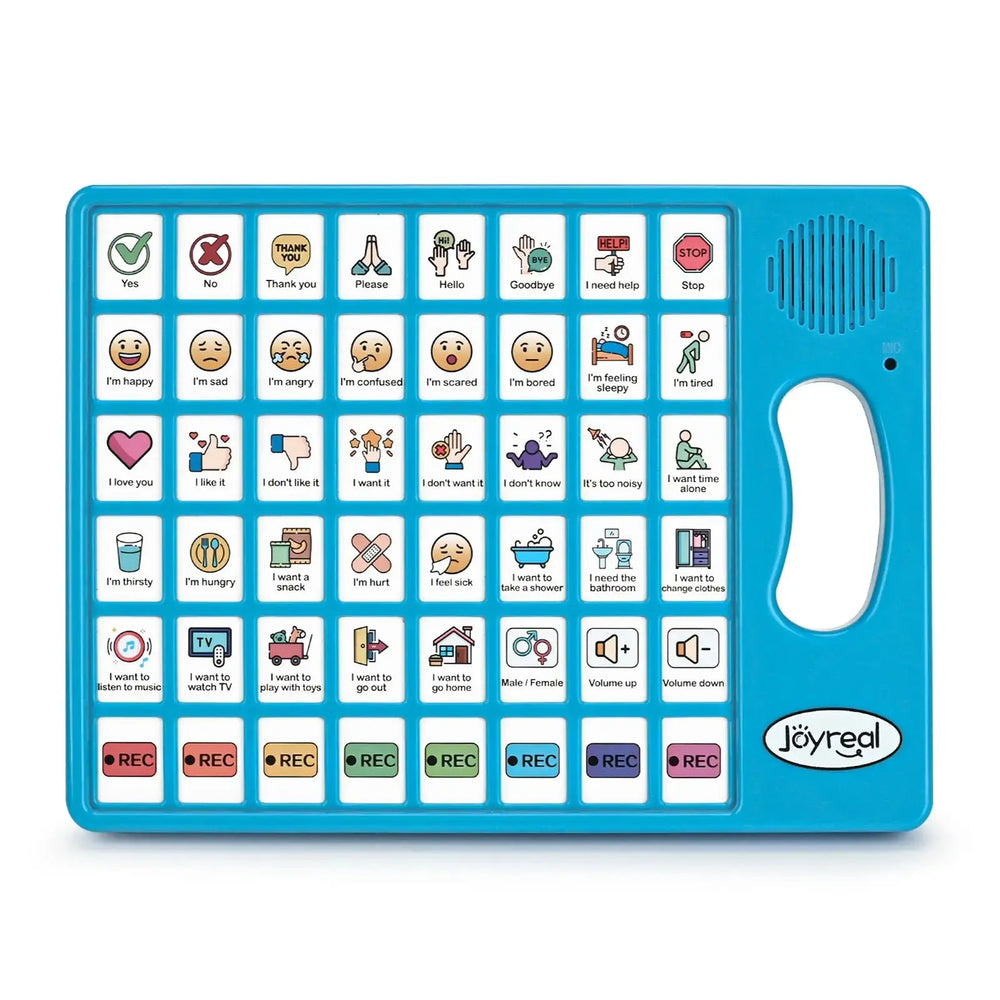
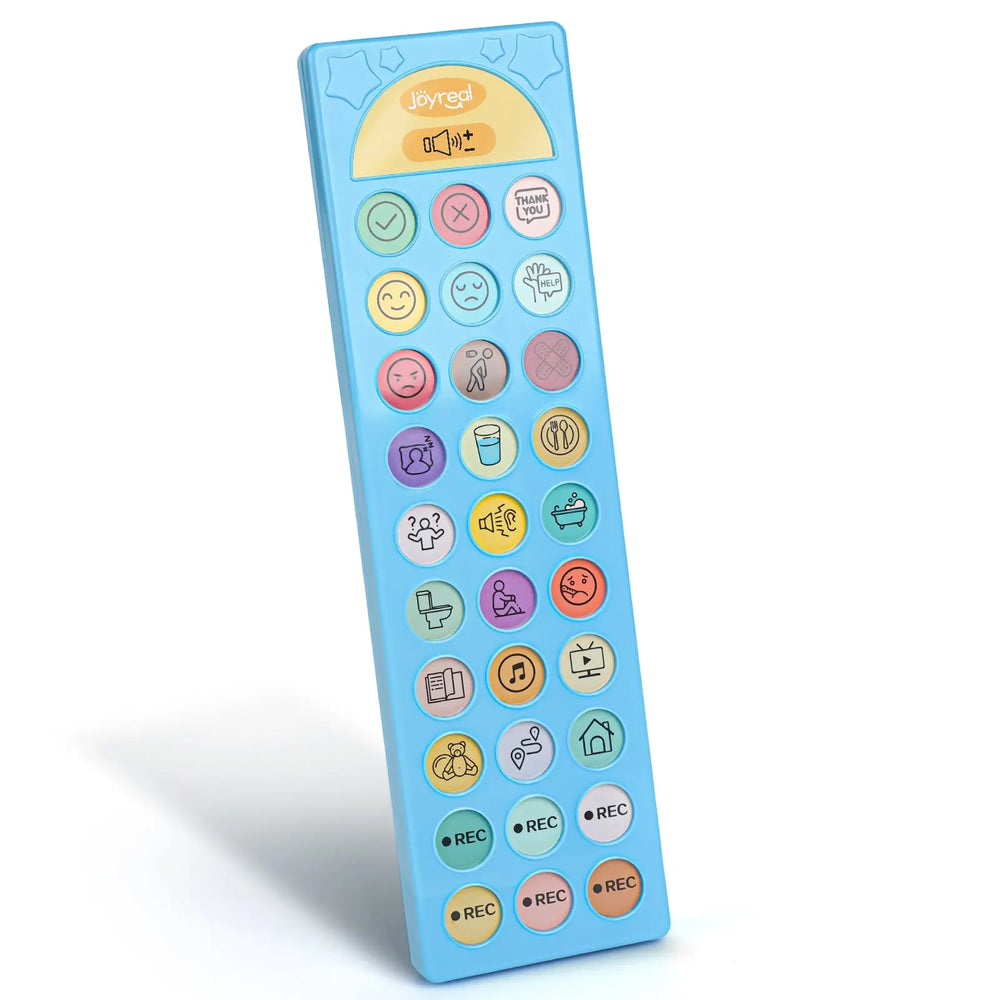
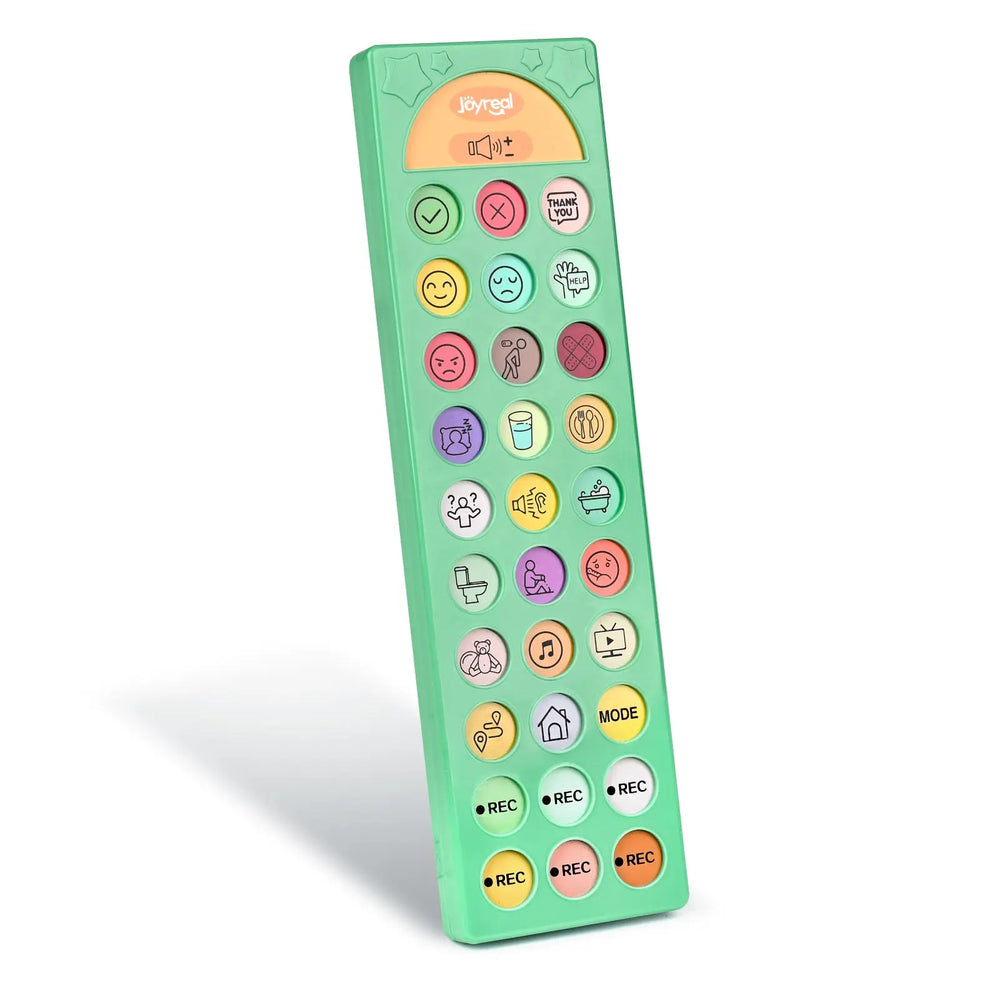
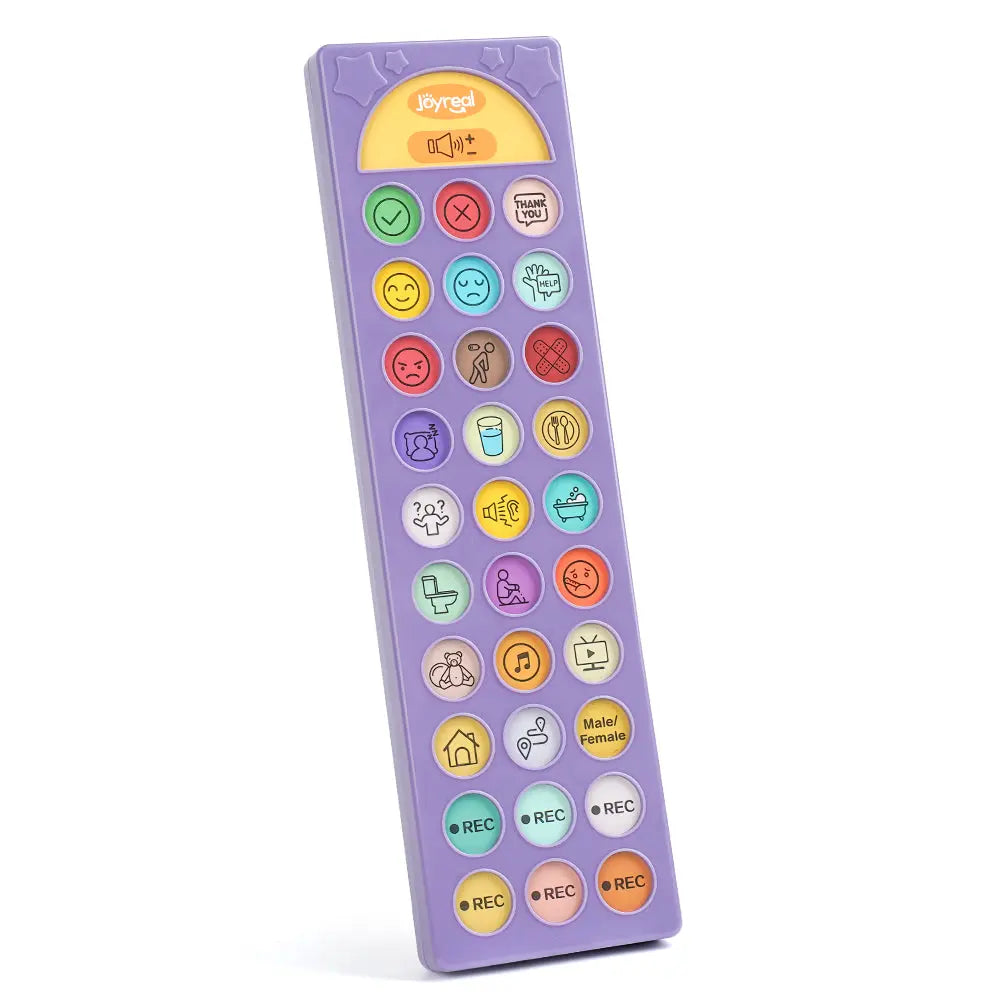
That’s why the Joyreal AAC Communication Device ended up being such a good fit for us. It has the features toddlers actually use, without the complexity that can scare them away:
-
37 pre-installed picture buttons covering the daily needs toddlers ask for the most
(snacks, play, help, emotions, routines… all the essentials already there) -
Both male & female voice options + 8 custom recordings
(I recorded “Mama help?” and “Snack please!” in my own voice—my toddler loved it) -
Lightweight, portable design with adjustable volume
(they carry it around the house like a favorite toy—it’s that easy to hold) -
Picture-based cues that genuinely reduce anxiety & frustration
(especially during transitions, meltdowns, or moments when they’re too upset to talk)

What surprised me most wasn’t just how quickly my toddler learned to use it—it was how relieved they seemed once they finally had a reliable way to express themselves.
It didn’t replace speech.
It just gave them a voice while their words were still catching up.
And honestly?
That alone made our whole home calmer, kinder, and so much more connected.
Popular Guides for Parents
- DIY Busy Board: A Guide to Making Your Own
- Montessori Wooden Toys: Choose Baby Walking Toys to Boost Early Skills
- Montessori Busy Boards by Age: Safe, Skill-Building Toys for 10 Months to 4 Years
- How Do Different Colors Affect Sensory Overload in Autistic Children?
- Noah’s Ark Toy: Building Skills Through Play
- Best Busy Boards for 1 Year Old: A Parent’s Guide to Sensory Play
Recent Post

Wooden Musical Toys vs Electronic Music Toys: Which Is Better for Open-Ended Play?
For parents who want a calmer play environment, the choice between...

10 Simple Parent-Child Music Games Using a Toddler Drum Set
A toddler drum set can become much more than a noisy toy. With a fe...

Noah’s Ark Activities for Sunday School and Preschool
A Noah’s Ark toy can turn a familiar Bible story into a hands-on ac...

Noah’s Ark Toy Gift Guide: What Should Parents Check Before Buying?
A noah’s ark toy can be a thoughtful birthday, baptism, Christmas, ...

Can a Noah’s Ark Toy Be Used for Science and Nature Play?
Yes. A noah’s ark toy can be used as a starting point for simple sc...

How Can AAC Help a Child Communicate Pain, Illness, or Discomfort?
A child who cannot reliably use speech may still notice pain, illne...

How to Model AAC During Play Without Pressuring Your Child
For many children, play is one of the most comfortable places to pr...

How Can Parents Help a Child Use AAC at School and Home?
How Can Parents Help a Child Use AAC at School and Home? Children w...

AAC for Siblings and Playdates: Helping Children Join Social Play
Children do not need to use speech to take part in sibling play or ...

How to Teach Independent Play With a Busy Board Without Overhelping
Independent play does not usually begin with a parent stepping away...