
Why Do Some Children Cry Instead Of Asking For Help?
Quick Answer: Crying May Be A Message
When a child cries instead of asking for help, it does not always mean they are refusing to communicate.
Sometimes, crying is the communication.
A child may cry because they are overwhelmed, frustrated, tired, scared, in pain, confused, or unable to find a clearer way to say what they need.
For children with limited speech, speech delay, autism, sensory differences, or unreliable communication, asking for help can be much harder than adults realize. The words may not come quickly enough. The child may know what they need, but not know how to express it in that moment.
The goal is not to stop crying as fast as possible.
The goal is to understand what the crying may be trying to tell you, then give your child an easier way to communicate next time.

Crying Is Not Always “Bad Behavior”
It is easy to feel stressed when your child cries, especially in public or during daily routines.
You may wonder:
“Why won’t they just ask me?”
“Do they understand I’m trying to help?”
“Are they crying because they don’t want to listen?”
“Am I doing something wrong?”
But for many children, crying is not a choice in the way adults imagine. It may be the fastest way their body can express distress.
The CDC notes that autistic children may have social communication differences, delayed language skills, sensory sensitivities, and difficulty with changes in routine. These factors can all make everyday situations harder to manage.
Before correcting the behavior, it helps to ask:
What might my child be trying to say?

Why Asking For Help Can Be Hard
Asking for help sounds simple, but it actually requires many skills at once.
A child needs to notice there is a problem.
They need to understand that another person can help.
They need to find the right word, gesture, picture, or button.
They need to use it before frustration becomes too big.
That is a lot to do during a stressful moment.
For example, a child may cry because:
- A toy is stuck.
- A snack package will not open.
- A sound feels too loud.
- A routine changed suddenly.
- Clothing feels uncomfortable.
- They are hungry or thirsty.
- They do not know what comes next.
- They want something but cannot explain it.
- They need a break but do not know how to ask.
In these moments, crying may appear before words, pointing, or AAC because the child’s stress rises faster than their communication skills.
Look For The Message Behind The Crying
Crying can have different meanings in different situations.
A helpful first step is to look for patterns.
| When Your Child Cries | What It May Mean |
| During transitions | I need warning.” / “I’m not ready. |
| When a toy does not work | I need help. |
| When a sound is loud | That hurts.” / “I need quiet. |
| When food is removed | I want more.” / “I’m not finished. |
| During dressing | This feels uncomfortable. |
| In busy places | This is too much.” / “I need a break. |
| When asked many questions | I need more time. |
| Before bedtime | I’m tired.” / “I need comfort. |
This table is not a diagnosis or a fixed rule. It is a way to slow down and notice what your child may already be communicating.
Once you understand the likely message, you can teach a simpler way to express it.
Teach “Help” Before The Meltdown
The best time to teach “help” is not when your child is already crying hard.
It is easier to practice when the problem is small.
During play, you can create gentle opportunities:
Put a favorite toy in a clear container.
Pause before opening a snack.
Hold a puzzle piece your child needs.
Wait before pushing the swing again.
Then model the message:
“Help.”
“Need help.”
“Open.”
“More.”
“Again.”
You can say the word, show a picture, point to a symbol, or model it on an AAC tool.
Do not make your child struggle too long. The goal is not to frustrate them. The goal is to show:
When I ask for help, someone helps me.
That connection matters more than perfect speech.

Use Fewer Words When Your Child Is Upset
When a child is crying, long explanations can add pressure.
Instead of saying:
“You need to calm down and tell me what you want because I can’t help you if you keep crying.”
Try shorter phrases:
“You need help.”
“Too loud.”
“Want more?”
“Take a break.”
“All done.”
“I’m here.”
Short language is easier to process when emotions are high.
After you speak, pause.
Your child may respond by looking, pointing, reaching, calming, moving closer, using a sound, touching a picture, or pressing a button. These are all communication attempts.
Give A Way To Say “Help” Without Speech
Some children cannot rely on spoken words when they are upset. That does not mean they should be left without a way to communicate.
AAC devices can help give your child another path.
AAC stands for Augmentative And Alternative Communication. ASHA describes AAC as tools and strategies that can include gestures, signs, picture boards, speech-generating devices, and other supports for people who need help communicating.
A child can ask for help through:
- A gesture
- A sign
- A picture card
- A communication board
- A button
- An AAC communication device
- A simple word approximation
- A hand-over-hand-free pointing option
- A yes/no choice
ASHA also notes that there are no prerequisites for introducing AAC, including with young children.
This matters because families sometimes wait, thinking their child must first be “ready.” But when a child is crying because they cannot express help, giving another communication option may reduce pressure.
Try The “Name It And Offer It” Method
When your child cries, try to gently name what you think they may need, then offer a communication option.
For example:
“You need help.”
Then show or model “help.”
“That was too loud.”
Then show or model “break.”
“You want more.”
Then show or model “more.”
“You are all done.”
Then show or model “all done.”
This does not mean you are rewarding crying. It means you are translating the message and showing a clearer path.
Over time, your child may learn:
“I can ask for help before I cry.”
“I can say stop.”
“I can ask for a break.”
“I can show what I need.”
Support Sensory Needs Too
Not all crying is about wanting an item.
Sometimes the problem is sensory overload.
A child may cry because a room is too loud, lights are too bright, clothing feels scratchy, a smell is strong, or too many people are too close.
In these moments, asking for help may not be enough. Your child may need the environment to change.
You can support them by offering:
- A quieter space
- A break
- Headphones
- Softer clothing
- Fewer instructions
- A visual schedule
- A predictable transition
- A calm adult nearby
CDC guidance describes structured teaching approaches for autism that use consistency and visual learning, including written or drawn daily routines placed in clear sight.
Visuals can help because they make the world more predictable.
Where Joyreal AAC Can Fit
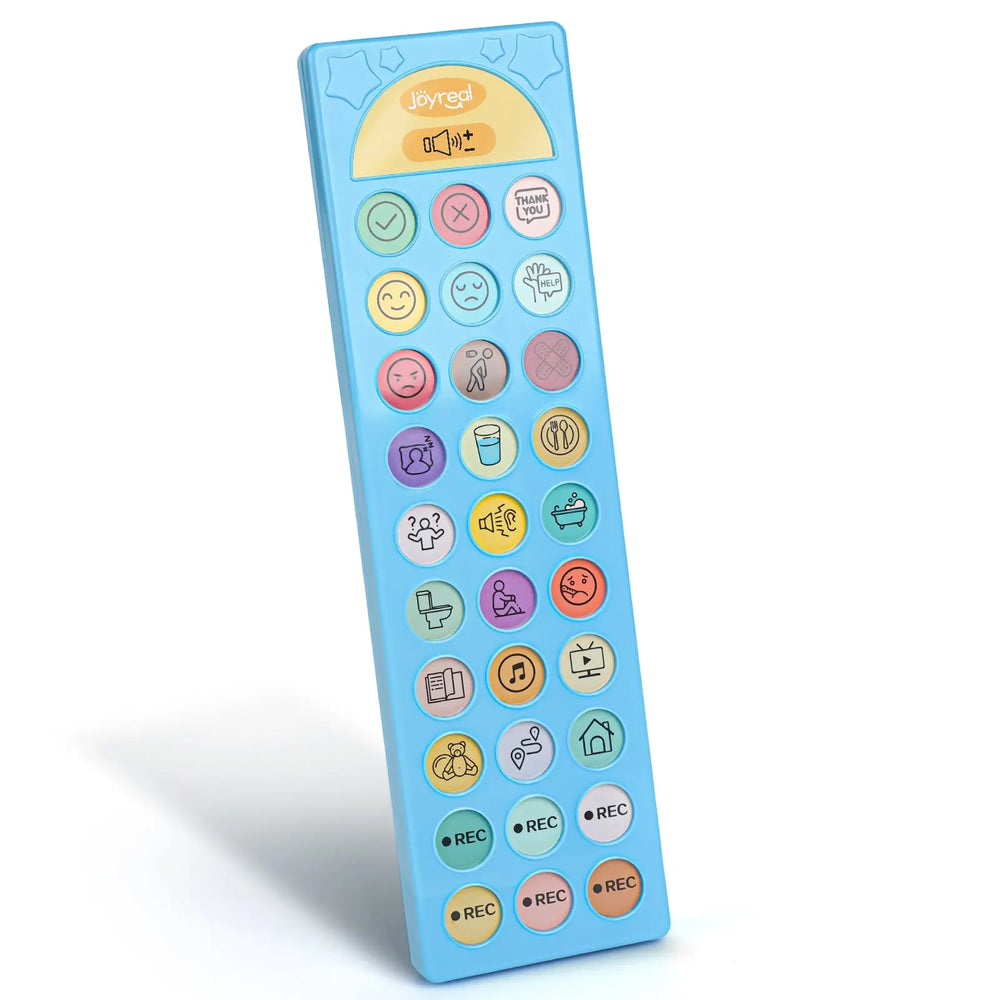
Joyreal AAC can be introduced as a simple home communication support tool for children with limited speech, speech delay, or unreliable spoken communication.
For families working on “help” communication at home, Joyreal AAC can support everyday messages during real moments:
- Help
- More
- Stop
- Eat
- Drink
- All Done
- Break
- Happy
- Sad
Start with one message first.
For example, if your child often cries when something is stuck, difficult, or out of reach, begin by modeling “help” during play.
You can say:
“You need help.”
Then model “help” on the tool and respond right away.
Joyreal AAC is not a replacement for speech therapy, autism assessment, school support, or professional guidance. It can be a simple starting point for families who want to make communication more accessible during daily routines.
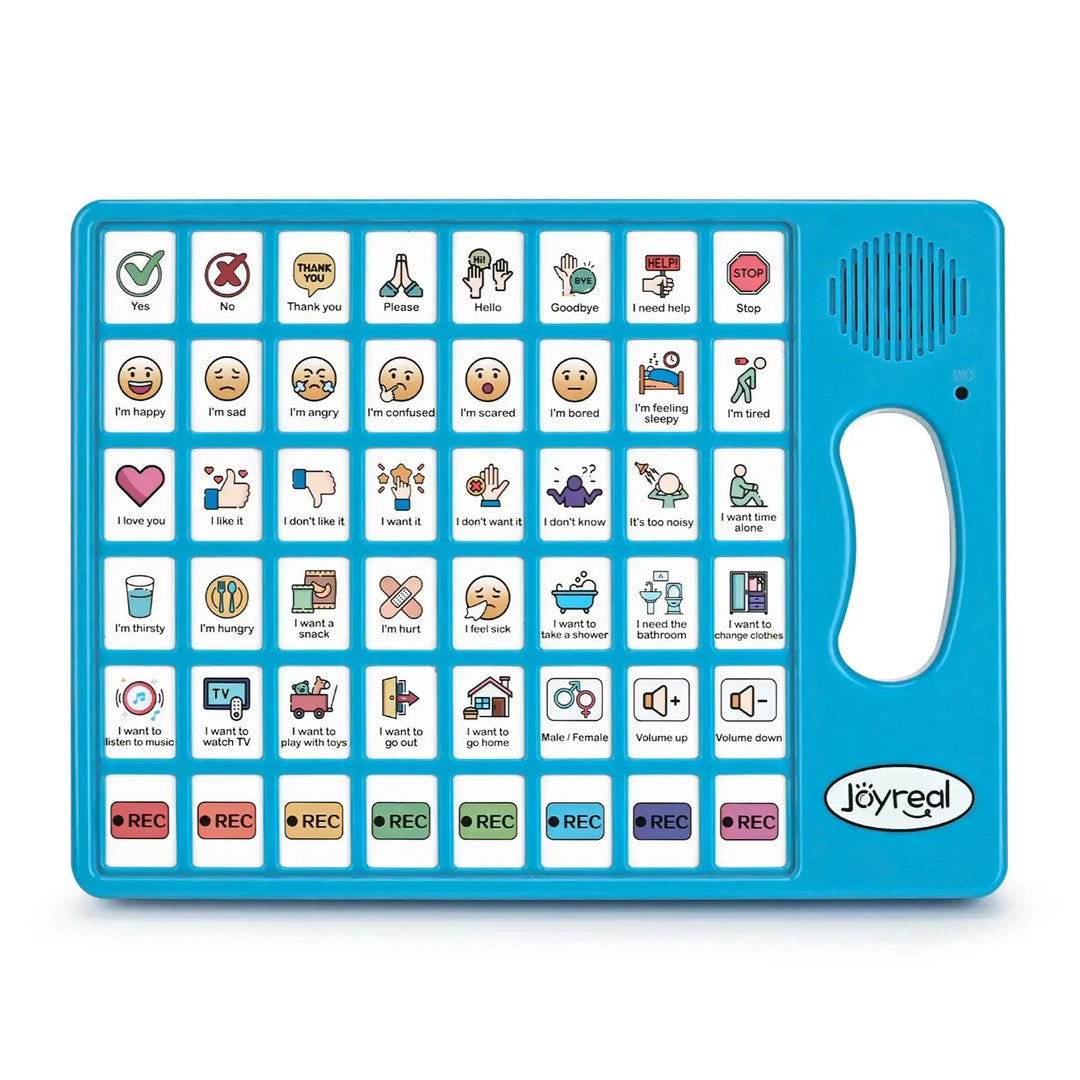
Best AAC device for kids
Plus AAC Communication
Board for Speech Support
$52.99 AT JOYREAL
54 reviews
Credit: Joyreal
What Parents Should Avoid
When crying feels intense, it is natural to want a quick fix.
But some responses can make communication harder.
Try to avoid:
- Repeating “use your words” again and again
- Ignoring all crying without understanding the cause
- Asking too many questions during distress
- Forcing eye contact before helping
- Making the child cry longer to “earn” help
- Assuming crying means manipulation
- Treating AAC as a last resort
Instead, focus on connection first.
A calm, supported child has a better chance of learning a new way to communicate.
When To Seek Extra Support
Crying is common in childhood, but some situations need more help.
Consider speaking with a pediatrician, speech-language pathologist, occupational therapist, behavioral specialist, or your child’s care team if crying is sudden, frequent, intense, linked to pain, connected to self-injury, or interfering with eating, sleeping, school, or family life.
Professional support can help you understand whether the crying is related to communication, sensory needs, anxiety, pain, transitions, or another concern.
Functional Communication Training is one evidence-based approach that teaches a more appropriate communication response to replace challenging behavior. Recent research continues to support FCT for young children with autism and challenging behavior, while noting that study quality still matters.
What Parents Should Remember
Your child is not trying to make life harder.
They may simply not have an easier way to ask yet.
Crying can mean:
“I need help.”
“This is too hard.”
“I’m overwhelmed.”
“That hurts.”
“I don’t know what comes next.”
“I can’t say it another way.”
Start small.
Notice patterns.
Use fewer words.
Teach “help” during calm moments.
Offer visuals.
Model AAC without pressure.
Respond to the message you understand.
The goal is not to remove every tear.
The goal is to give your child more ways to be heard.
Summary Of The Post
Some children cry instead of asking for help because crying may be the only communication path available in that moment. Stress, sensory overload, speech delay, autism communication differences, pain, fatigue, or confusion can make asking for help difficult. Parents can support communication by noticing patterns, using fewer words, teaching “help” during calm moments, offering visual support, and modeling AAC without pressure. Joyreal talking aid can be introduced at home as a simple tool for everyday messages while families continue seeking professional guidance.
FAQ
Why Does My Child Cry Instead Of Asking For Help?
Your child may cry because they are overwhelmed, frustrated, in pain, tired, confused, or unable to access the words or tools needed to ask for help. Crying may be the fastest way they can communicate distress.
Is Crying A Form Of Communication?
Yes. Crying can be a communication signal, especially for children who have limited speech or difficulty expressing needs. The goal is to understand the message behind the crying and teach a clearer way to express it.
How Can I Teach My Child To Ask For Help?
Practice during calm, low-stress moments. Model “help” when a toy is stuck, a container needs opening, or your child needs assistance. Use speech, gestures, picture cards, or AAC, then respond right away.
Should I Wait Until My Child Stops Crying Before Helping?
Not always. If your child is distressed, scared, overwhelmed, or unsafe, support them first. You can model the communication after or during the moment with simple words like “help,” “break,” or “all done.”
Can AAC Help My Child Ask For Help?
Yes. AAC can give a child another way to ask for help when speech is hard to use. This may include gestures, pictures, communication boards, buttons, or an AAC communication device.
Where Does Joyreal AAC Fit In?
Joyreal aac talking aid can help families model everyday messages such as help, more, stop, all done, and break during daily routines. It does not replace professional support, but it can make communication more accessible at home.


Popular Guides for Parents
- DIY Busy Board: A Guide to Making Your Own
- Montessori Wooden Toys: Choose Baby Walking Toys to Boost Early Skills
- Montessori Busy Boards by Age: Safe, Skill-Building Toys for 10 Months to 4 Years
- How Do Different Colors Affect Sensory Overload in Autistic Children?
- Noah’s Ark Toy: Building Skills Through Play
- Best Busy Boards for 1 Year Old: A Parent’s Guide to Sensory Play
Recent Post

Wooden Musical Toys vs Electronic Music Toys: Which Is Better for Open-Ended Play?
For parents who want a calmer play environment, the choice between...

10 Simple Parent-Child Music Games Using a Toddler Drum Set
A toddler drum set can become much more than a noisy toy. With a fe...

Noah’s Ark Activities for Sunday School and Preschool
A Noah’s Ark toy can turn a familiar Bible story into a hands-on ac...

Noah’s Ark Toy Gift Guide: What Should Parents Check Before Buying?
A noah’s ark toy can be a thoughtful birthday, baptism, Christmas, ...

Can a Noah’s Ark Toy Be Used for Science and Nature Play?
Yes. A noah’s ark toy can be used as a starting point for simple sc...

How Can AAC Help a Child Communicate Pain, Illness, or Discomfort?
A child who cannot reliably use speech may still notice pain, illne...

How to Model AAC During Play Without Pressuring Your Child
For many children, play is one of the most comfortable places to pr...

How Can Parents Help a Child Use AAC at School and Home?
How Can Parents Help a Child Use AAC at School and Home? Children w...

AAC for Siblings and Playdates: Helping Children Join Social Play
Children do not need to use speech to take part in sibling play or ...

How to Teach Independent Play With a Busy Board Without Overhelping
Independent play does not usually begin with a parent stepping away...