


Are Autism Meltdowns Caused by Behavior — or Communication Gaps?

Parents of children with autism often ask: “Why does my child melt down so easily?”
The truth is, what looks like “bad behavior” is often a cry for connection.
When a child with autism cannot communicate needs effectively, their emotions overflow. It’s not rebellion — it’s a communication issue.
The Silent Cry Behind the Outburst
Imagine being overwhelmed by sound, light, or touch — and having no words to express that.
Children on the autism spectrum experience this daily. Meltdowns are their unspoken language, a plea for understanding.
Emotional Overload: When Words Aren’t Enough
Autistic children may struggle with verbal expression. But behavior is their first form of communication. Recognizing that helps us respond with empathy instead of punishment.
That’s where autism communication tools — from low-tech cards to advanced aac devices for autism — become life-changing bridges.
The Hidden Link Between Autism and Communication Challenges
Why Communication Barriers Trigger Behavioral Reactions
When words don’t work, children express through actions. Throwing, crying, or avoiding eye contact are forms of communication — not defiance.
A device for autism like the Joyreal AAC helps translate these silent messages into spoken words, easing frustration for both child and parent.
The Difference Between a Meltdown and a Tantrum
| Type | Trigger | Intent | Solution |
| Tantrum | Wanting something | Has control | Consistent boundaries |
| Meltdown | Overwhelmed or misunderstood | No control | Understanding & communication support |
Once parents recognize this difference, everything changes.
The focus shifts from punishing behavior to supporting communication.
A Parent’s Turning Point: “Once We Improved Communication, the Meltdowns Decreased.”
Real-Life Story: From Daily Chaos to Calm Connection
Emily, a mother of a 6-year-old boy with autism, recalls the early days:
“He screamed for hours. I tried timeouts, I tried rewards, but nothing worked.”
Then a therapist introduced her to a visual communication system — simple picture cards that represented basic needs like “eat,” “rest,” or “help.”
Within weeks, her son’s meltdowns dropped by half.
“Once we improved communication, the meltdowns decreased,” Emily says. “For the first time, I understood him.”
What This Transformation Teaches Us About Understanding Autism
When communication improves, frustration drops — for both the child and the parent.
The real magic isn’t in the tool itself but in being heard. That’s what changes everything.
The Power of Autism Communication Tools
What Are Autism Communication Tools?
Autism communication tools are designed to help children express their thoughts, needs, and emotions — visually, verbally, or digitally.
They bridge the gap between “I can’t say it” and “You can understand me.”
Types of Devices for Autism and How They Work
|
Tool Type |
Example | Benefit |
| Picture Exchange Communication System (PECS) | Picture cards for words and emotions | Simple and portable |
| Speech-Generating Devices (SGD) | Electronic device with icons that “speak” words | Promotes independence |
| Tablet-Based Apps (AAC Apps) |
Digital tools like Proloquo2Go,Joyreal aac devices | Customizable and engaging |
These devices for autism empower children to express themselves confidently — and often reduce meltdowns by up to 60%, according to multiple studies.

Why Visual Communication Works Better Than Words
Most autistic children process visual information faster than auditory language.
A picture, icon, or symbol gives clarity where words can confuse.
It turns chaos into comprehension — and frustration into peace.
Choosing the Right Device for Autism
Step-by-Step Guide for Parents
- Start Simple – Begin with picture cards or visual boards.
- Observe Your Child’s Response – Notice what type of communication feels natural to them.
- Gradually Upgrade – Move to AAC apps or voice-output devices as they grow comfortable.
- Work with a Speech Therapist – Personalized guidance ensures long-term success.
How to Integrate Devices into Daily Routines
- Use the tool during meals (“I want more” or “All done”)
- Offer it during transitions (“Go outside,” “Quiet time”)
- Celebrate every time your child uses it — even imperfectly.
When communication becomes part of everyday life, understanding becomes second nature.
Joyreal AAC: Empowering Every Voice
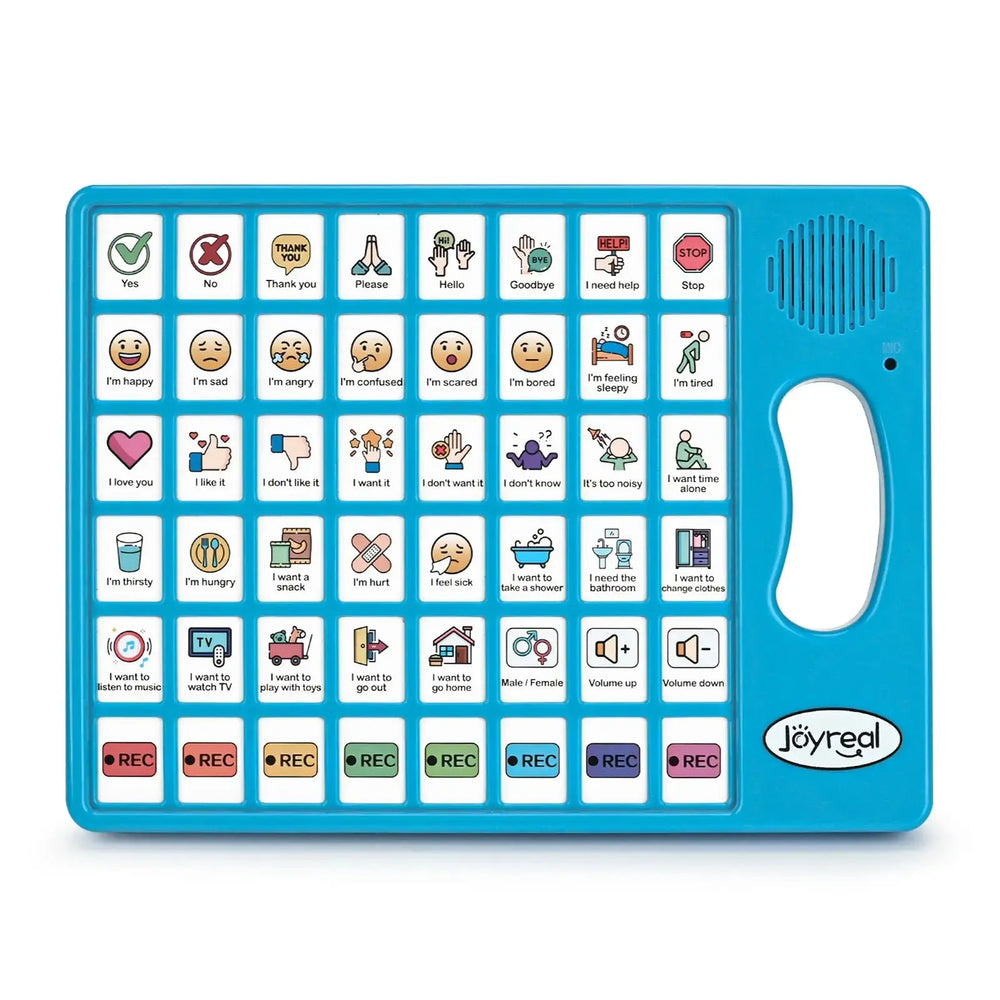
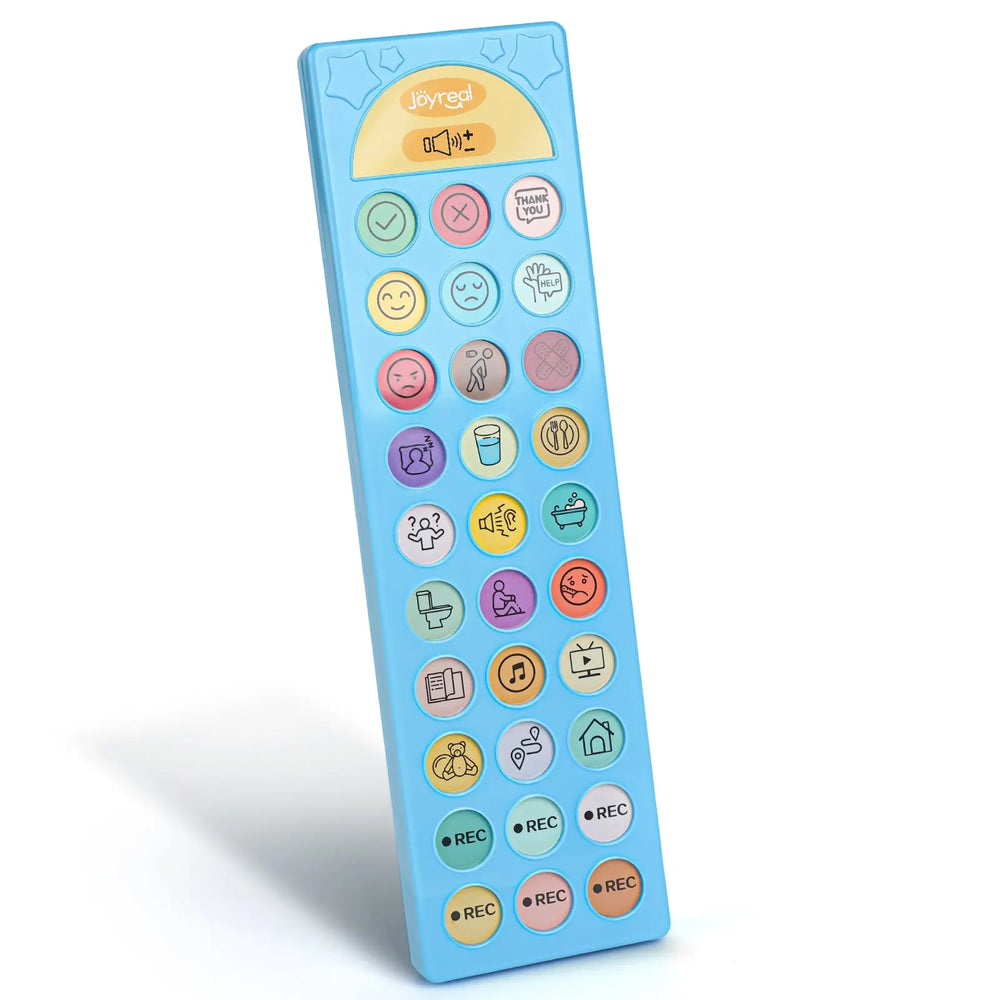
Joyreal AAC talking aid is one of the most trusted devices for autism, designed specifically to help nonverbal and minimally verbal children express themselves with confidence.
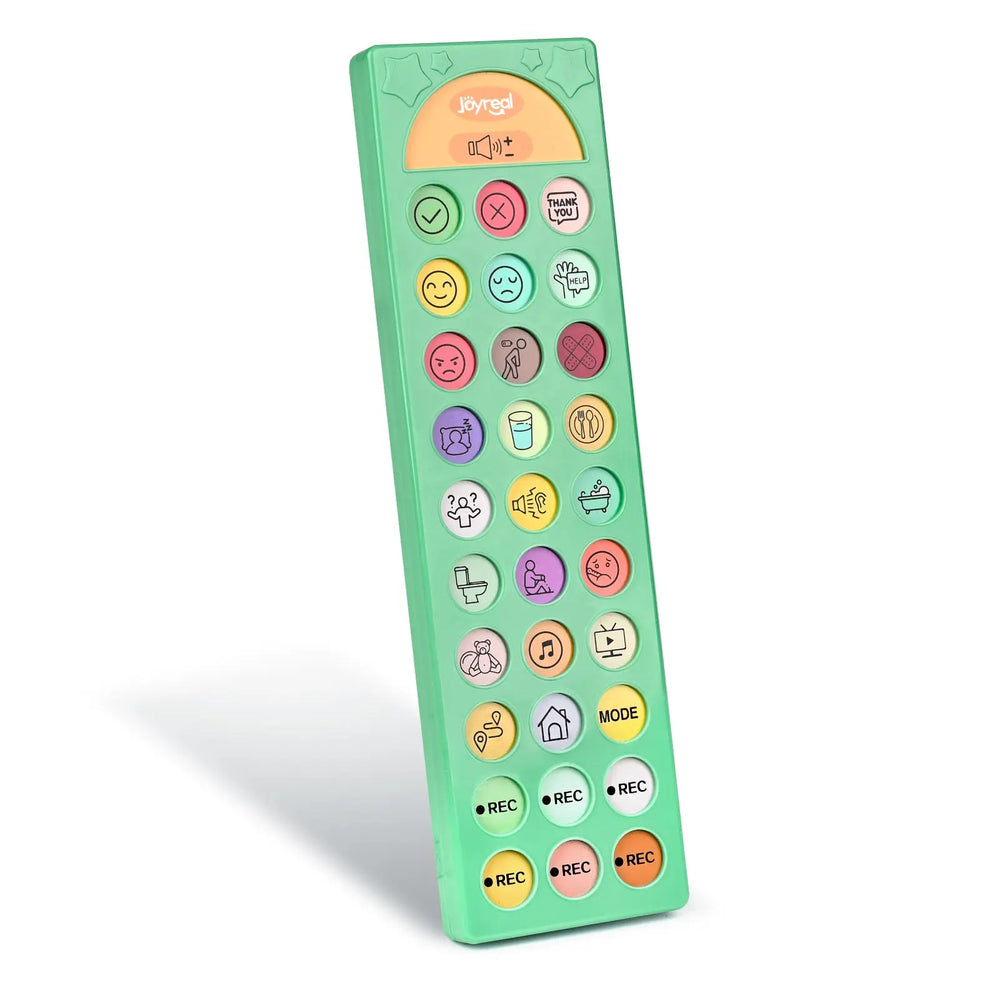
It offers two versions to meet different developmental and educational needs:
Joyreal AAC Standard Version — Everyday Communication Made Easy
The Standard Joyreal aac communication device is perfect for home and daily life.
It includes:
- Intuitive buttons with visual icons for essential words (eat, play, help, rest)
- Customizable voice options
- Lightweight and durable design for children of all ages
- Offline usability — no internet needed
This version transforms daily chaos into calm by allowing your child to express needs instantly, even without speech. Parents report noticeable reductions in meltdowns within weeks.
Joyreal AAC Upgraded Version — Phrase-Building for Learning & Teaching
For families, therapists, and schools seeking advanced functionality, the Joyreal AAC Upgraded Version takes communication and learning to the next level.
It features:
- Word pairing and phrase-building capabilities (e.g., “I want water,” “Let’s go outside”)
- Montessori-inspired interface for hands-on learning
- Educational mode to support teachers and speech therapists
- Integration with visual lesson templates for structured teaching
- Supports bilingual vocabulary expansion
This upgraded model is a game-changer for Montessori autism education and speech-language learning environments.
It not only helps children communicate — it teaches them how to build sentences, express emotions, and participate actively in learning.
💬 “My daughter started forming short phrases like ‘I want swing’ after using the upgraded Joyreal AAC for two weeks.”
— Teacher, inclusive Montessori classroom

Why Autism Communication Tools Like Joyreal AAC Work So Well
- 1️⃣ They Replace Guesswork with Clarity
Parents no longer need to guess what their child wants.
A simple tap on the Joyreal communication device can replace hours of confusion with one clear message.
- 2️⃣ They Turn Behavior into Understanding
When children can say “no,” they don’t have to scream.
When they can say “I’m scared,” they don’t need to hide.
The Joyreal AAC gives them control and emotional safety.
- 3️⃣ They Encourage Natural Speech Development
AAC tools don’t delay speech — they build it.
By linking visuals, words, and sounds, the child’s brain connects meaning to language faster.
Many parents notice first spoken words appear sooner after consistent AAC use.

How Communication Tools Reduce Daily Frustration
Turning Guesswork Into Understanding
Before tools, parents spend much of their day guessing — “Is he hungry? Is she tired?”
With communication devices, you replace frustration with clarity.
Your child no longer needs to scream to be understood — they can show or press a button instead.
How Consistent Communication Builds Trust
Every time a parent correctly responds to a child’s message, it reinforces safety and trust.
Over time, the child learns:
“I can express myself. I’ll be heard.”
And that single belief can reshape their entire world.
3 Steps for Parents: From Managing Behavior to Building Connection
- Step 1: Observe, Don’t React
Every behavior tells a story. Instead of reacting to the outburst, look for its meaning.
Ask: “What is my child trying to communicate right now?”
- Step 2: Introduce a Communication Method That Fits Your Child
Whether it’s cards, buttons, or a digital device, match the tool to your child’s comfort level.
The best tool is the one your child actually wants to use.
- Step 3: Celebrate Every Small Success
Every time your child uses a new word, symbol, or sound — celebrate it!
Progress in communication is progress in peace.
Conclusion: Communication Is Connection
A child’s meltdown isn’t defiance — it’s desperation to be understood.
When we give children tools like Joyreal AAC, we give them more than a voice — we give them dignity.
Because every child, regardless of how they speak, deserves to be heard, loved, and understood.
“Once we improved communication, the meltdowns decreased.”
That’s not just a quote — it’s a promise that communication truly transforms lives.
FAQs
Q1: What are the best autism communication tools for beginners?
- Start with simple communication toys for autism or PECS cards. Then move toward the Joyreal AAC device for advanced communication.
Q2: Does using an AAC device prevent speech development?
- No — it often encourages it! AAC tools help children link symbols and sounds to real words.
Q3: Is the Joyreal communication device suitable for nonverbal kids?
- Absolutely. Joyreal aac communication board was designed for nonverbal and minimally verbal children, offering intuitive buttons and customizable words.
Q4: How does Montessori autism learning fit into this?
- Montessori-inspired autism tools focus on hands-on, sensory-based learning — which pairs beautifully with AAC for holistic development.
Q5: Are AAC devices expensive?
- Some can be, but Joyreal provides affordable options with robust features suitable for home and school.
Q6: How long before I see changes?
- Many families report noticeable reduction in meltdowns within weeks of consistent AAC use.

Popular Guides for Parents
- DIY Busy Board: A Guide to Making Your Own
- Montessori Wooden Toys: Choose Baby Walking Toys to Boost Early Skills
- Montessori Busy Boards by Age: Safe, Skill-Building Toys for 10 Months to 4 Years
- How Do Different Colors Affect Sensory Overload in Autistic Children?
- Noah’s Ark Toy: Building Skills Through Play
- Best Busy Boards for 1 Year Old: A Parent’s Guide to Sensory Play
Recent Post

Wooden Musical Toys vs Electronic Music Toys: Which Is Better for Open-Ended Play?
For parents who want a calmer play environment, the choice between...

10 Simple Parent-Child Music Games Using a Toddler Drum Set
A toddler drum set can become much more than a noisy toy. With a fe...

Noah’s Ark Activities for Sunday School and Preschool
A Noah’s Ark toy can turn a familiar Bible story into a hands-on ac...

Noah’s Ark Toy Gift Guide: What Should Parents Check Before Buying?
A noah’s ark toy can be a thoughtful birthday, baptism, Christmas, ...

Can a Noah’s Ark Toy Be Used for Science and Nature Play?
Yes. A noah’s ark toy can be used as a starting point for simple sc...

How Can AAC Help a Child Communicate Pain, Illness, or Discomfort?
A child who cannot reliably use speech may still notice pain, illne...

How to Model AAC During Play Without Pressuring Your Child
For many children, play is one of the most comfortable places to pr...

How Can Parents Help a Child Use AAC at School and Home?
How Can Parents Help a Child Use AAC at School and Home? Children w...

AAC for Siblings and Playdates: Helping Children Join Social Play
Children do not need to use speech to take part in sibling play or ...

How to Teach Independent Play With a Busy Board Without Overhelping
Independent play does not usually begin with a parent stepping away...