


How Can Parents Help a Child Use AAC at School and Home?
How Can Parents Help a Child Use AAC at School and Home?
Children who use AAC often move between several communication environments each day: home, school, therapy, childcare, and community activities. AAC is more useful when the adults around the child understand how to support it in similar ways.
A practical AAC communication device plan does not mean every setting must use the exact same equipment. It means parents, teachers, and therapists share important vocabulary, allow enough response time, and respect the child’s communication in every environment.

Why Does AAC Consistency Matter Between Home and School?
Consistency helps a child recognize that AAC is available for real communication in more than one place. If one setting responds to “help,” “stop,” or “break” while another ignores those messages, the child may have a harder time understanding when and how the system can support them.
Consistency does not mean correcting the child’s communication or requiring identical performance. It means adults use similar expectations:
- The AAC system is kept available.
- Adults model useful words naturally.
- The child receives time to respond.
- All communication attempts are taken seriously.
- Messages such as “no,” “stop,” and “finished” are respected.
Which Core Words Should Families and Teachers Share?
Start with a small group of words that applies across routines, rather than creating a separate vocabulary list for every activity. Core words may include “more,” “help,” “go,” “stop,” “open,” “all done,” “want,” “not,” and “again.”
Add a few words connected to the child’s daily life, such as “lunch,” “outside,” “bathroom,” “music,” “car,” or “book.” The best choices depend on the child’s current system and communication needs.
Make sure the child can communicate more than requests. They should also have ways to comment, refuse, ask for a break, gain attention, and participate socially.
How Can Parents and Teachers Model AAC in the Same Way?
Adults can follow the same simple pattern: join the activity, model one or two words, wait, and respond to whatever communication comes next.
For example, during a classroom art activity, a teacher might model “more,” “help,” or “finished.” At home, a parent can use the same words during drawing, cooking, or play. The child does not need to repeat the message immediately.
Adults should avoid turning modeling into a quiz. Instead of asking, “What do you want?” several times, offer a natural model and continue the activity. For more guidance, see our article about AAC school support.
How Much Time Should Adults Give a Child to Respond?
Give the child a quiet pause after a question, model, or choice. Some children need extra time to look at the system, plan a message, and select a response. Avoid answering for the child too quickly or repeating the same prompt several times.
A response may be:
- Selecting a message on the device.
- Pointing to a picture.
- Looking toward an item or person.
- Using a gesture, sign, sound, or spoken word.
- Moving closer to or away from an activity.
- Showing agreement or refusal through body language.
Adults can acknowledge the response with simple language: “You chose music,” “You said stop,” or “You showed me help.” This keeps the interaction focused on meaning rather than perfect device use.

How Can Families Keep AAC Available During Daily Routines?
AAC is difficult to use when it is stored in a backpack, left in another room, or brought out only during therapy. Parents and teachers should agree on where the system will be kept during key routines.
At home, consider access during:
- Breakfast and meals.
- Getting dressed.
- Play and sibling activities.
- Leaving the house.
- Bath time and bedtime.
- Community outings.
At school, consider access during arrival, circle time, centers, outdoor play, lunch, transitions, and dismissal. The child may need different carrying or positioning solutions in different environments. The important point is that communication remains accessible when the child needs it.
What Should Be Included in a Home–School AAC Communication Checklist?
Keep the checklist short enough for busy adults to use. Families and teachers can review it together at the beginning of a school term or whenever communication needs change.
- What AAC system or communication methods does the child use?
- Where will the system be kept during each routine?
- Which five to ten words are most useful right now?
- How does the child communicate “no,” “stop,” “help,” and “break”?
- How much response time usually helps?
- What signs show that the child is tired, overwhelmed, or ready to stop?
- How should adults respond when the message is unclear?
- Who checks charging, batteries, accessories, or device condition when relevant?
This checklist is a communication agreement, not a performance chart. It should help adults respond more consistently without measuring how many times a child uses AAC.
How Should Teachers and Therapists Share Updates With Parents?
Use brief, practical updates instead of only reporting successes or difficulties. A useful message might say, “During snack, she used ‘more’ and pointed to the cup,” or, “He communicated ‘break’ during a noisy transition.”
Share what the child communicated and how adults responded so the other setting can use the information.
How Can Joyreal AAC Fit Into Home and School Communication?
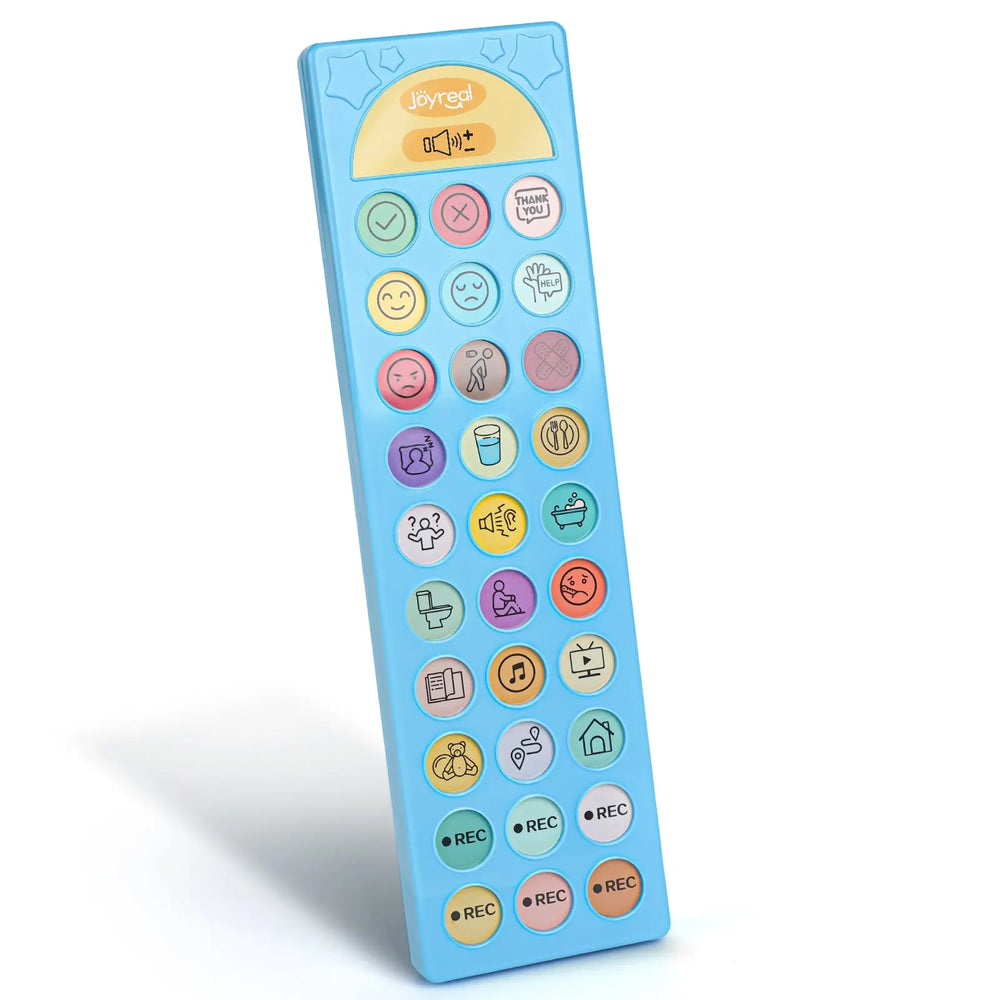
For families looking for a simple option to support short, functional messages across familiar routines, the Joyreal AAC Talking Aid can be introduced as one communication support. Parents and educators should agree on the messages they want to model, when the aid will be available, and how the child can communicate “no,” “stop,” or “finished.”

Frequently Asked Questions
Do home and school need to use the exact same AAC device?
Not always. Different environments may require different access options, but the adults should understand the child’s important messages, response patterns, and communication rights.
What if a child uses AAC differently at school and home?
That can happen. Compare the activities, access conditions, vocabulary, and communication partners in each setting. Share observations rather than assuming the child is refusing or failing to communicate.
Should adults require a child to use AAC before helping?
No. AAC should make communication easier, not create a barrier to food, comfort, safety, or support. Model useful messages and accept other communication methods.
What are AAC devices for autism?
AAC devices for autism are tools that may support communication for autistic children who cannot rely on speech alone. The appropriate system depends on the individual child, their communication needs, and their daily environments.
Final Takeaway
Parents, teachers, and therapists can support consistent AAC use by sharing a small core vocabulary, keeping communication accessible, modeling without pressure, allowing response time, and respecting every meaningful communication attempt.
A short home–school checklist can turn these ideas into everyday practice. The aim is not identical performance in every setting. It is to help the child know that their communication will be available, understood, and respected at home and at school.



Popular Guides for Parents
- DIY Busy Board: A Guide to Making Your Own
- Montessori Wooden Toys: Choose Baby Walking Toys to Boost Early Skills
- Montessori Busy Boards by Age: Safe, Skill-Building Toys for 10 Months to 4 Years
- How Do Different Colors Affect Sensory Overload in Autistic Children?
- Noah’s Ark Toy: Building Skills Through Play
- Best Busy Boards for 1 Year Old: A Parent’s Guide to Sensory Play
Recent Post

Wooden Musical Toys vs Electronic Music Toys: Which Is Better for Open-Ended Play?
For parents who want a calmer play environment, the choice between...

10 Simple Parent-Child Music Games Using a Toddler Drum Set
A toddler drum set can become much more than a noisy toy. With a fe...

Noah’s Ark Activities for Sunday School and Preschool
A Noah’s Ark toy can turn a familiar Bible story into a hands-on ac...

Noah’s Ark Toy Gift Guide: What Should Parents Check Before Buying?
A noah’s ark toy can be a thoughtful birthday, baptism, Christmas, ...

Can a Noah’s Ark Toy Be Used for Science and Nature Play?
Yes. A noah’s ark toy can be used as a starting point for simple sc...

How Can AAC Help a Child Communicate Pain, Illness, or Discomfort?
A child who cannot reliably use speech may still notice pain, illne...

How to Model AAC During Play Without Pressuring Your Child
For many children, play is one of the most comfortable places to pr...

How Can Parents Help a Child Use AAC at School and Home?
How Can Parents Help a Child Use AAC at School and Home? Children w...

AAC for Siblings and Playdates: Helping Children Join Social Play
Children do not need to use speech to take part in sibling play or ...

How to Teach Independent Play With a Busy Board Without Overhelping
Independent play does not usually begin with a parent stepping away...